The camera report for a 1950s house has one line highlighted: "Longitudinal crack, 6 o'clock." The pipe is original cast iron running under the slab, and the homeowner's first question is a fair one: "Can you just fix that crack?" Sometimes, yes. But with cast iron, a crack is usually a clue about how the pipe is aging, not the whole story. Where it sits, and what the pipe looks like around it, says a lot about the rest of the line.
Quick answers
- A crack is a clue: in cast iron, it often points to wall thinning or ground movement that may affect more than one spot.
- Location matters: cracks along the bottom of horizontal runs, where wastewater sits, often come with a thinning pipe wall around them.
- Scope the whole run: ask for the full line to be inspected on camera before anyone prices a repair.
- Don't sit on it: cracks can let sewer gas and wastewater escape, especially under a slab.
Why cast iron cracks the way it does
Cast iron was a common drain and sewer pipe in homes built through the middle of the last century. It's strong, but it corrodes, and much of that corrosion happens inside the pipe where you can't see it. Roto-Rooter's guide to camera inspections notes that cast iron is "especially prone to cracking and corrosion." Clay cracks for different reasons; see cracked clay sewer pipe.
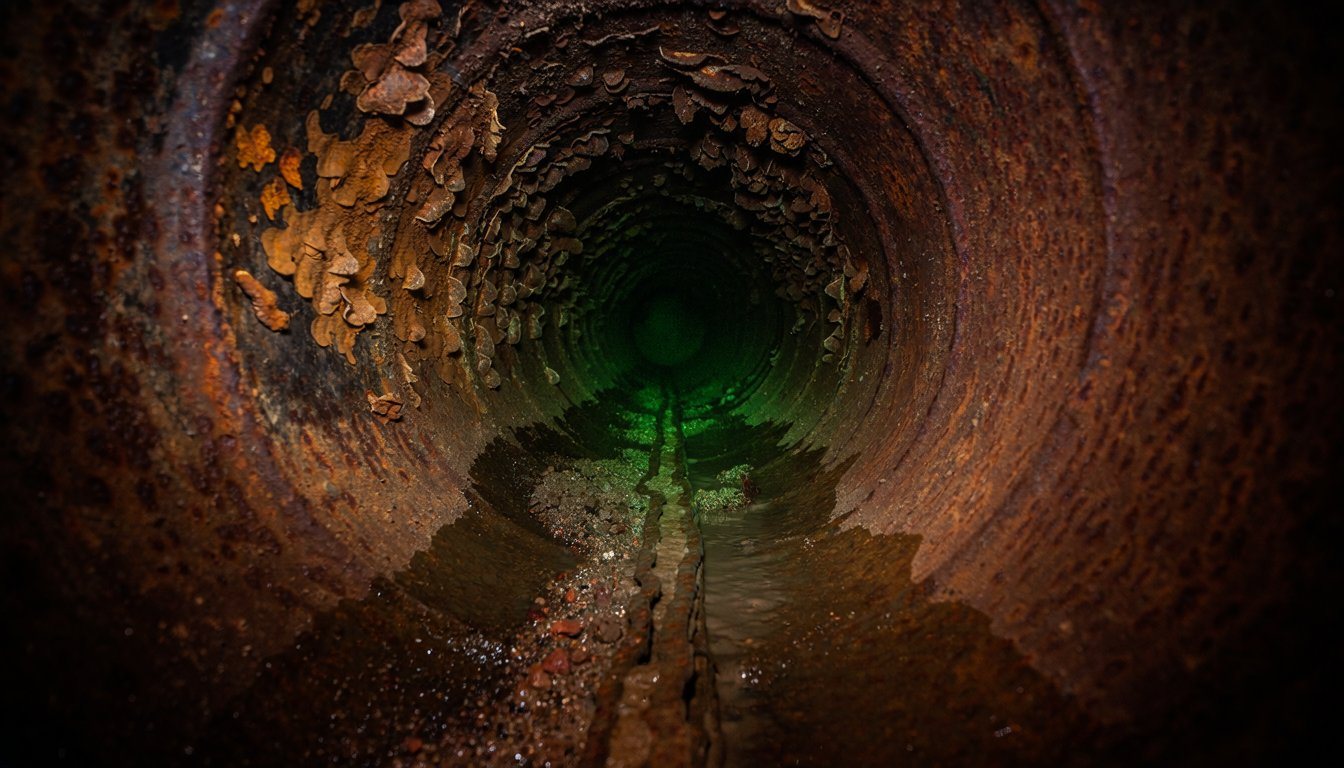
The position of the pipe matters. One plumbing company explains that "Horizontal sewer lines under slabs or in crawlspaces usually fail faster than vertical stacks because wastewater sits along the bottom of horizontal runs. That constant contact creates channeling where the bottom of the pipe corrodes away first." In our experience, that's why the bottom of a horizontal cast iron run is where cracks and holes most often show up on camera.
Clay and other pipe materials crack for their own reasons; our guide to cracked sewer line repair covers causes and signs across all materials.
The corrosion you can't see from the crack
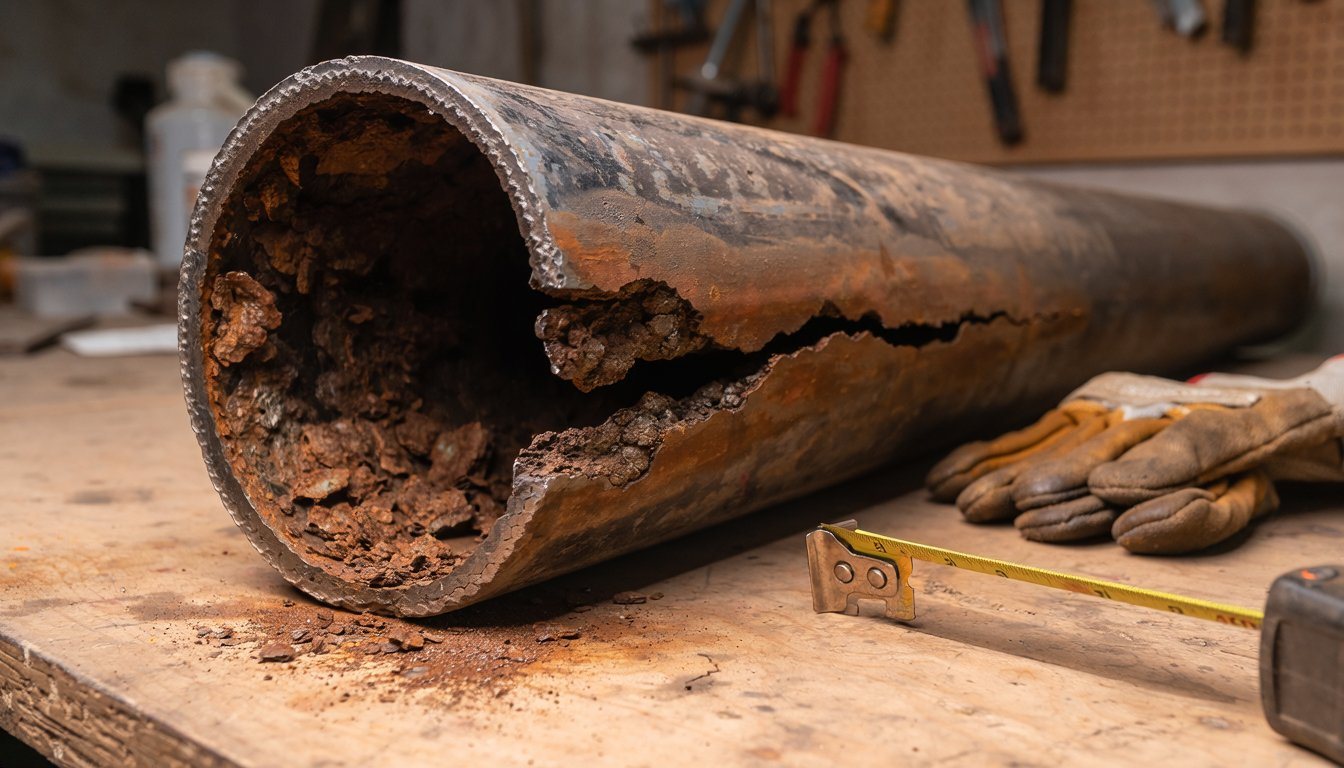
Cast iron doesn't always rust away the way steel does. A failure-analysis paper in the Journal of Failure Analysis and Prevention describes graphitic corrosion, and says that "the corroded surface of the component part being attacked tends, unless physically disturbed, to retain its original shape and, to some extent, its original external appearance." The same paper adds that "In that which has corroded, there is little, or no strength left." In plain terms, a cast iron pipe can look intact on camera and still be weak, which is why a crack in one spot deserves a closer look at the surrounding wall.
Xylem, which sells pipe assessment services, states that "Internal pitting and graphitization corrosion can lead to cast iron failure." It also notes that "Corrosion is the primary cause of failure for any metallic pipe material" (its page is written about pressurized water mains and sewer force mains, so treat it as background on the material rather than a finding about home drain lines). For a homeowner, the practical point is that the crack you can see may be the first place the wall gave out, not the only weak place.
Ground movement and Los Angeles conditions
Corrosion isn't the only reason cast iron cracks. Nuflow, a trenchless lining company, lists outside causes too: "Shifting soil, seismic activity, and settlement can exert pressure on sewer pipes, leading to cracks or fractures." That matters in Los Angeles, where slabs shift, hillside lots settle and older houses have lived through decades of small earthquakes. In our experience, a crack near a joint or a change of direction in an older Southern California house is at least as likely to trace back to movement as to corrosion.
Cast iron is also stiff. Xylem lists "No elastic behavior and lower mechanical strength" among the material's traits compared with other pipe materials. A pipe that can't flex much has little room to absorb a slab that drops a fraction of an inch, so a crack can be the pipe's way of taking up movement it can't bend to accommodate.
Where the crack is, and what it may mean
Inspection reports usually describe cracks by direction. The trenchless industry reference Trenchlesspedia puts the two basic shapes simply: "Circle breaks in the line span the entire circumference of the pipe," while "Split breaks transverse the length of the line." It adds that "Either type of crack in the line can allow for soil contamination or root infiltration."
Direction alone doesn't tell you the cause. Outside forces crack pipe too: an engineering reference on concrete pipe notes that "Longitudinal cracks are formed as a result of excessive soil and traffic loads or inadequate pipe bedding," and that "Circumferential cracks may occur owing to loads imposed during construction and uneven bedding." In our experience, cast iron responds to load and settling in comparable ways.
So in practice, the useful questions are about location and surroundings. In our experience:
- A crack along the bottom of a horizontal run, with heavy scale, rough walls or a visible channel around it, often means the wall is thinning from the inside. Other sections of the same run, laid at the same time and carrying the same flow, may be in similar shape.
- A crack at or near a joint, or in one spot with clean pipe on either side, is more likely tied to settling, a load or a single point of stress, and may be a more local problem.
- A crushed or broken section can come from heavy load, ground movement or advanced deterioration, and the camera view of the neighboring pipe helps tell which.
One crack, whole run
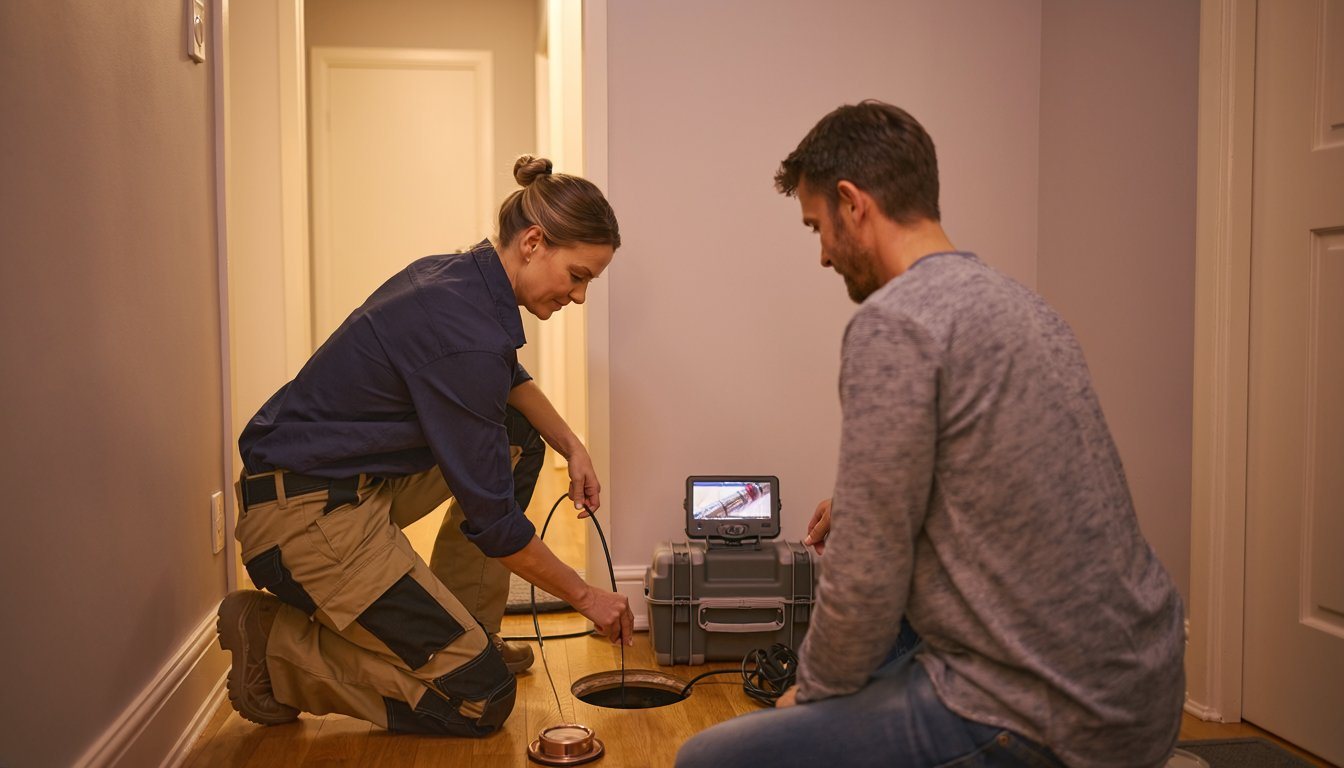
Because a cast iron line is usually the same age and material from end to end, one crack is a reason to look at the rest of it. Roto-Rooter notes that "a sewer camera inspection can reveal minor leaks and structural weaknesses before they become significant." In our experience, the most useful inspection covers the full run, including branches under the slab, not just the section near the problem.
Ask for the video, not just the written summary, and ask the inspector to note the pipe's condition between defects. Our sewer camera inspection guide explains what to expect. If you haven't had an inspection yet, the warning signs are covered in our cracked sewer line guide.
A worked example of reading the footage
Here is an illustrative case, not a real job. A camera passes through 60 feet of cast iron under a slab and logs four defects: three cracks along the bottom within one 15-foot stretch, and one circumferential crack at a joint near the house. Divide the defects by the footage and you get one every 15 feet on average, which sounds evenly spread. It isn't. Three of the four (75 percent) sit in a quarter of the run (15 of 60 feet, or 25 percent). In our experience, that clustering points to a sagging or low section where wastewater lingers, which is a different problem from one isolated joint crack. The two findings can call for different repairs, and only the video shows which is which.
Questions to put to the inspector
Before anyone quotes a fix, in our experience these answers make the quote easier to judge:
- How much of the run did the camera see? If it stopped at a bend, a heavy scale build-up or a break, the unseen section is still unknown.
- Is the crack at the bottom, the side or the top? Bottom cracks that follow a rough, scaled channel read differently from a clean split in otherwise smooth pipe.
- What does the pipe look like between the defects? Ask for a plain description: smooth, scaled, pitted or flaking.
- Is there a belly or offset near the crack? A dip or shifted joint points to movement in the ground, which any repair also has to account for.
- Where are the cleanouts and where does the line tie in? Branches from bathrooms and the kitchen are often cast iron too and may not have been scoped.
A written answer to each of these, matched to timestamps on the video, gives you something to compare when a second contractor looks at the same footage.
Permits and paperwork in Los Angeles
Fixing a cracked drain or sewer line is not exempt work in the City of Los Angeles. LADBS states that "Plumbing Permits are required for any installation or modification of drainage systems, waste and vent systems, fuel gas piping, potable water piping, rainwater piping, lawn sprinkler system, and subsurface drainage piping on swimming pool water circulating systems." Work that reaches the public sewer or the street is handled separately by the city's Bureau of Engineering; our sewer camera inspection guide points to those agencies. In our experience, it's worth asking any contractor up front who pulls the permit and when the inspection happens, and keeping the camera video with the permit paperwork, since a future buyer's inspector may ask for both.
What happens next
Once the whole run has been seen, the options usually fall into a few groups, and the right one depends on the pipe's overall condition, not just the crack: If part of the line is replaced with PVC, our cast iron to PVC guide explains how to choose the transition point. Our cast iron pipe repair guide compares the repair options, from sleeves to replacing a section.
- A spot repair for a single, local defect in otherwise sound pipe.
- Lining, which in our experience usually starts with cleaning the scale out first; see our guide to descaling cast iron sewer pipe.
- Replacement of a section or the whole run; our cast iron sewer pipe replacement guide covers costs and how lining compares.
Don't let it sit
A crack isn't always an emergency, but it isn't harmless. The same plumbing company warns that "Cracks in cast iron pipes allow sewer gases to escape indoors." Under a slab, a crack can also leak wastewater into the soil for a long time before anyone notices. In our experience, it's worth getting a plan in place soon after a crack shows up on camera, even if the work itself can be scheduled.
Medici Construction Group is one licensed option for cast iron sewer pipe work, holding California A, B and C-10 licenses under CSLB #1114433.
Frequently asked questions
Can a cracked cast iron sewer pipe be repaired?
Often, depending on the rest of the pipe. A single crack in otherwise sound pipe may be spot repaired, while a line that's thinning along its length is usually lined or replaced. A full camera inspection shows which situation you're in.
What causes cast iron sewer pipes to crack?
Internal corrosion is a common cause, especially along the bottom of horizontal runs where wastewater sits. Soil loads, settling, poor bedding and ground movement can also crack pipe.
How do you find a crack in a cast iron sewer pipe?
With a sewer camera inspection. A camera run through a cleanout shows cracks, corrosion and other defects that can't be seen from outside, including under a slab.
Can a cracked cast iron pipe be lined?
In many cases, yes, usually after the pipe is cleaned of scale. Whether lining fits depends on how much of the pipe wall is left and the condition of the whole run.
Is a cracked cast iron sewer pipe an emergency?
Not always, but it shouldn't be ignored. Cracks can let sewer gas escape indoors and leak wastewater, particularly under a slab, so plan the repair soon after it's found.
Does one crack mean the whole cast iron line needs replacing?
Not necessarily. It means the whole line should be inspected. If the pipe around the crack is thinning or heavily scaled, other sections may be in similar shape; if the rest is sound, a local repair may be enough.
Can tree roots get into a cracked cast iron sewer pipe?
Yes. Nuflow notes that "Tree roots seeking moisture and nutrients can infiltrate sewer pipes through tiny cracks and joints." Roots plus a scaled interior is a common reason a cracked cast iron line clogs repeatedly.
Does repairing a cracked cast iron sewer pipe need a permit in Los Angeles?
Generally yes for work inside the property line. LADBS requires plumbing permits for installation or modification of drainage systems, and work connecting to the public sewer falls under separate city rules. Ask your contractor who pulls the permit.