Quick answers
- The manufacturer's "unit price" typically covers only 40 to 60 percent of a prefab ADU's final installed cost.
- Foundation, crane, delivery, utility trenching, and site prep are usually quoted separately and can add $60,000 to well over $100,000 depending on the lot.
- Factory build time is meaningfully faster than stick-built (12 to 14 weeks vs. 28 to 36), but total project timeline often ends up similar once California's 60-day statutory permit review window is included.
- Homeowners still need a general contractor for the foundation, crane coordination, utility hookups, and inspections: the manufacturer builds and delivers the unit, not the site.
- Tight, narrow, or hillside lots in Los Angeles routinely trigger overage fees once a project needs crane reach or trenching beyond a manufacturer's included allowance.
A homeowner gets a manufacturer's quote of $260,800 for a 500-square-foot prefab ADU and books it expecting a fast, predictable project. Two surprises usually follow. First, the foundation, crane, trenching, and permits add another $100,000 or more before the unit is livable. Second, the "12-week factory build" that sold them on prefab in the first place doesn't shorten the overall timeline nearly as much as expected, once California's statutory permit review window gets added back into the schedule.
The unit price is a floor, not a total
The single number that should reframe how every prefab ADU quote gets read: industry guidance puts the factory unit's price at roughly 40 to 60 percent of the project's final installed cost. The rest, foundation, crane, delivery, utility connections, permits, and site prep, gets quoted separately, often by a different party than the manufacturer. A quote that only shows the unit price isn't wrong, but it isn't the number to budget against. It's the floor.
What a factory quote includes, and what it doesn't
Manufacturer pricing structures vary, but the split is consistent: one price for the factory-built unit and its design, and a separate price for getting it onto a piece of land and connected to utilities. Abodu, a California ADU manufacturer, publishes its pricing this way: the "Home Price" covers the factory-built unit, architectural and interior design, civil engineering, permits and plan check, fire sprinklers, and delivery to the property. A separate "Installation Price" covers foundation and site work, utility trenching up to 50 feet and connections, crane setup up to 100 feet, and a dedicated project manager. Anything beyond those included allowances, utility work past 50 feet, craning past 100 feet, demolition, tree removal, unique site engineering, is quoted separately.
Abodu's unit prices for its 2026 lineup run from $234,800 for a 385-square-foot studio up to $393,800 for a 1,195-square-foot three-bedroom, with installation typically adding roughly $64,000 to $105,000 depending on the model. That's one representative example, not an industry universal: other manufacturers structure and price their offerings differently. Villa Homes, another California-focused manufacturer, prices its base units in a comparable but distinct range, and every manufacturer's website should be read the same way: find out explicitly what the published number includes before comparing it to anyone else's.
The extras, itemized: foundation, crane, trenching, site prep
Here's what typically shows up as a separate line item once the factory-built unit itself is priced:
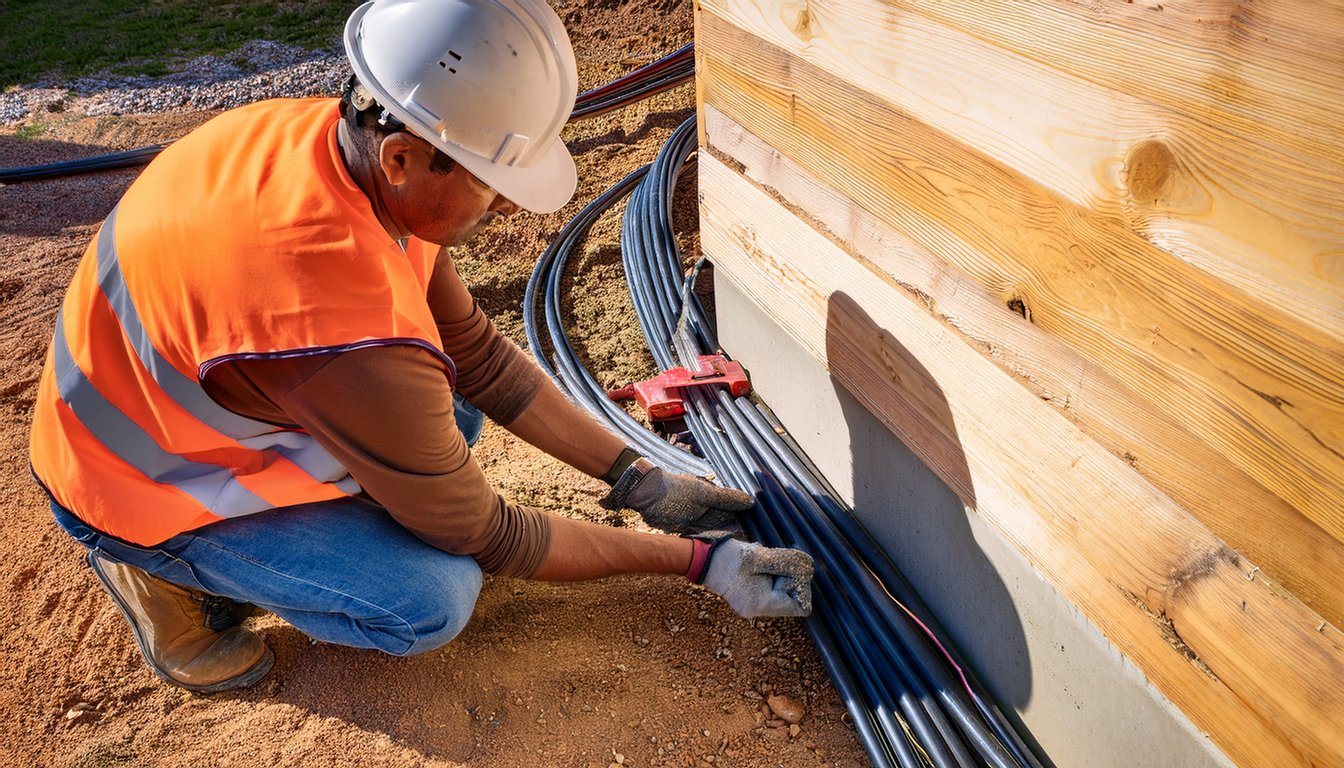
- Foundation: a modular or manufactured unit still needs a permanent foundation built on site. HomeGuide puts this at $6,000 to $20,000, or roughly $7 to $30 per square foot, depending on whether it's a simple slab or a stem-wall foundation suited to sloped ground.
- Delivery: transporting the finished module from the factory to the property. HomeGuide cites $3,000 to $12,000 or more, depending on the size, number of modules, and distance from the factory.
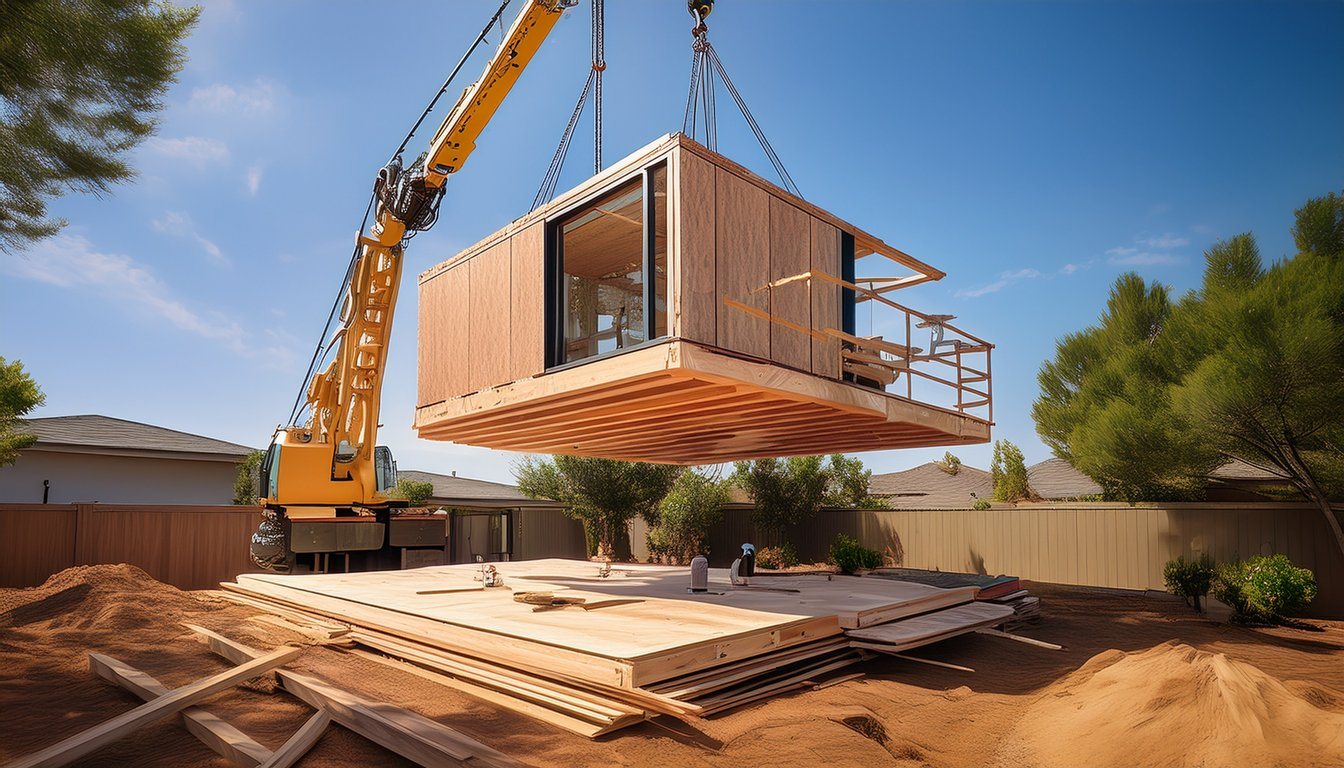
- Crane setup: lifting the module off the transport trailer and setting it onto the foundation, priced separately from delivery. A rough-terrain crane, a type suited to uneven ground, typically runs $300 to $600 per day (more on the fuller crane cost range below), before accounting for any access complications.
- Utility trenching and hookups: connecting the unit to water, sewer, and electrical. HomeGuide prices general trenching at $5 to $12 per linear foot, water lines at $30 to $50 per linear foot, sewer lines at $40 to $180 per linear foot, and PVC electrical conduit at roughly $6.00 to $13.50 per linear foot installed, and a separate electric meter can add more on top. If the panel itself needs upgrading to support the new unit, see our electrical panel upgrade cost guide; if the sewer line needs work to make the connection, our sewer line replacement cost guide covers that separately.
- Site prep and grading: getting the lot construction-ready before the unit ever arrives. One ADU-specific cost breakdown puts an easily accessible flat lot at around $25,000 for sitework when utility tie-ins stay within the property; the same source puts slope at $10,000 to $30,000 or more for grading and retaining walls. As that source puts it, sitework "is often the least predictable expense in an accessory dwelling unit project unless thorough planning is done upfront".
Add those up against a $260,800 base unit quote and the gap between "factory price" and "what I actually paid" becomes obvious well before the project starts.
Do you still need a general contractor?
Yes. Our guide to choosing an ADU builder covers who is licensed to lead the job. A prefab or modular ADU manufacturer builds and typically delivers the unit, but someone still has to prepare the foundation, coordinate the crane set, run and connect the utilities, and manage the inspections that follow, and in California, that work generally falls to a licensed general contractor, whether hired directly by the homeowner or through the manufacturer's own installation arm. Site work for a prefab ADU is not meaningfully lighter than site work for a stick-built one; it just runs on a different, tighter sequence, because the crane and delivery truck show up on a fixed date the site has to be ready for. A GC managing that site-side scope is what keeps a foundation delay from turning into a very expensive idle crane and a truck with nowhere to unload.
What makes a tight lot cost more: crane access and delivery
Crane rental itself is a real, separate cost. As noted above, a rough-terrain crane runs roughly $300 to $600 per day, with a broader conservative range across crane classes of $1,500 to $10,000 per day depending on size and duration. On top of the base rental, tight lots add cost in a specific way: a manufacturer's installation price typically includes crane reach up to a set distance (Abodu's allowance, for example, covers craning up to 100 feet and trenching up to 50 feet). A narrow driveway, a hillside lot, or alley-only access that pushes the crane or trench beyond that included allowance turns into a quoted-separately overage, exactly the kind of LA-lot condition that turns a clean factory quote into a site-specific one.
The module itself also has to get from the factory to the property, and that trip is regulated. In California, a load wider than 8.5 feet triggers an oversize-load permit requirement, and anything wider than 12 feet requires a pilot car escort at roughly $150 to $300 per car per day. A single-trip transport permit runs $15 to $100 depending on load dimensions, and processing typically takes three to five business days, longer during peak construction season. None of this is exotic, but it's real cost and real lead time that a factory's per-unit price sheet doesn't carry.
Factory-built vs. stick-built: what's actually faster
The factory-build phase really is faster than building on site: one builder's own comparison puts modular and manufactured ADU factory builds at 12 to 14 weeks, against 28 to 36 weeks for that same builder's stick-built process. But that comparison only covers the build itself, not the full project. Under California Government Code Section 66317, a local agency has up to 60 days to act on a complete ADU application, and that statutory clock runs the same length regardless of how the unit gets built: it doesn't shrink just because the unit is factory-made. The result is a counterintuitive finding worth planning around: the overall timeline, from the time a homeowner authorizes the project to the time they move in, is typically about the same for manufactured versus stick-built construction, even though the factory build itself is faster. In our experience, the advantage shows up more in schedule predictability, since a fixed factory build slot is easier to plan around than an open-ended on-site construction sequence, than in a dramatically shorter total timeline. Our ADU timeline guide covers where the rest of the months go. For factory-built space on top of an existing house, see our guide to modular second story addition cost.
How a factory-built ADU gets permitted and inspected
California regulates factory-built housing under its own certification framework. Per the state's Department of Housing and Community Development, factory-built housing components sold in California must bear an insignia of approval issued by HCD under California Health and Safety Code Section 19980, issued only through an HCD-approved quality assurance agency and only for units with prior plan approval, and the insignia has to be placed on the unit before it ships. This program applies to factory-built housing generally rather than being an ADU-specific certification, but for a prefab or modular ADU built this way, it means the structure clears a formal state-level review before it ever leaves the factory: a materially different sequence from stick-built construction, where every phase (foundation, framing, rough electrical and plumbing, insulation, drywall) gets inspected on site, one at a time, as the project progresses. It doesn't necessarily mean fewer inspections overall once the unit is on site and being connected to utilities, but the structure itself has already cleared a formal certification process before local inspectors ever see it in the yard.
Is prefab actually cheaper for your lot?
The honest answer depends more on the specific lot than on prefab versus stick-built as a category. A useful way to check: add the manufacturer's base unit price, a realistic estimate for foundation and site prep based on how difficult the lot's access and grading actually are, a realistic crane and delivery cost given how far the trench and crane reach will need to extend, and a realistic total timeline that includes California's statutory permit review window, not just the factory build phase. Compare that total against a stick-built quote for the same square footage; our ADU construction cost guide covers stick-built pricing by type and size in detail. For an easily accessible, flat lot, prefab's cost and schedule case is often quite strong. For a tight, sloped, or hard-to-access LA lot, the extras above can close much of the gap, sometimes all of it. Either way, the comparison only works when it's done on true all-in numbers, not on the two manufacturers' sticker prices.
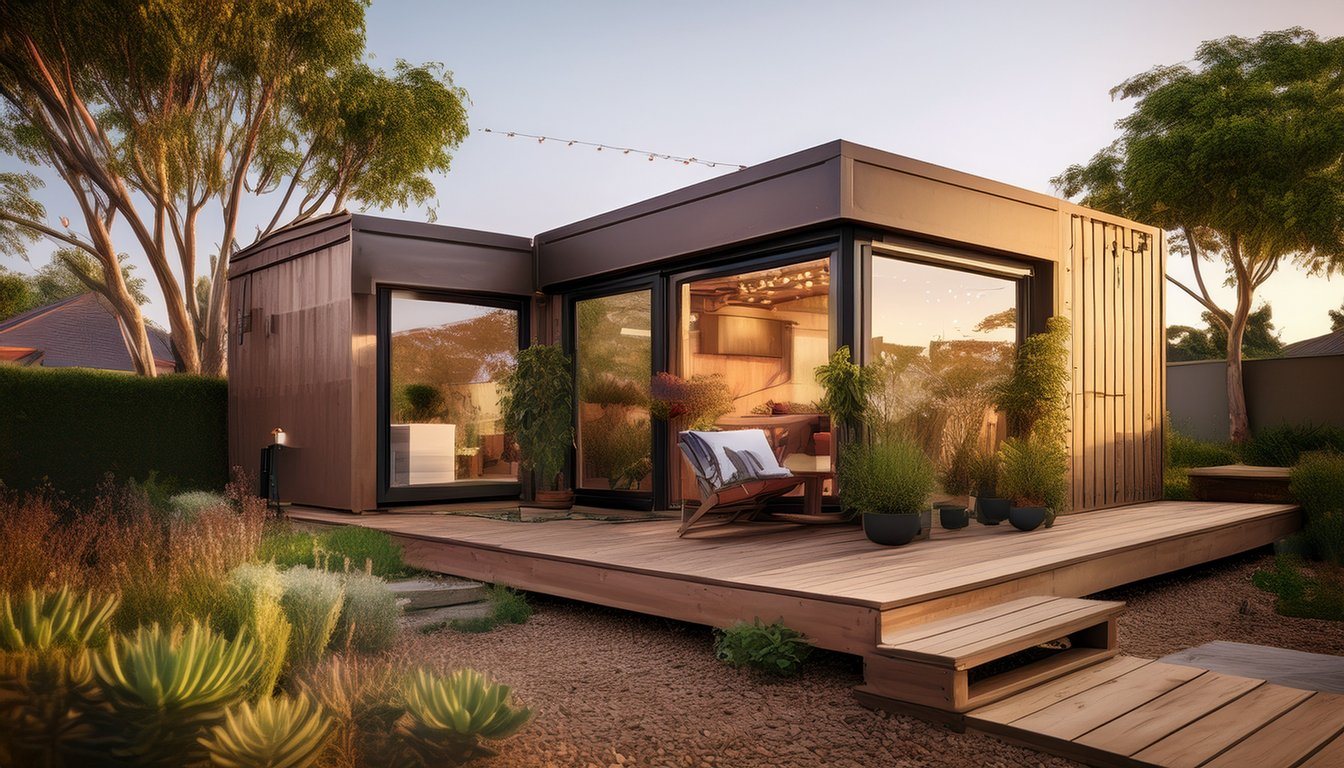
A prefab ADU can be a strong option in Los Angeles, but only when the site-work costs and the real permitting timeline are priced in from the start, not discovered after the deposit is paid. Before signing with any manufacturer or contractor, verify who's licensed to do the site-side work on the CSLB license lookup. Medici Construction Group is one licensed option for ADU site work and installation, holding California A, B and C-10 licenses under CSLB #1114433.
Frequently asked questions
What's included in a prefab ADU manufacturer's quote, and what isn't?
Most manufacturers quote the factory-built unit, design, engineering, and permitting separately from installation. Installation typically covers foundation, site work, utility trenching up to a set distance, and crane setup up to a set distance: anything beyond those allowances, plus demolition, unusual site engineering, or extended trenching and craning, is quoted separately.
Do I still need a general contractor for a prefab ADU?
Yes. The manufacturer builds and typically delivers the unit, but the foundation, crane coordination, utility hookups, and inspections are site work that a licensed general contractor manages, whether hired directly or through the manufacturer's installation arm.
Is a prefab ADU actually cheaper than a stick-built ADU?
It depends on the lot. The factory unit price is typically 40 to 60 percent of the final installed cost, and on a tight, sloped, or hard-to-access lot the remaining site-work costs can close much of the gap with stick-built construction. Comparing true all-in totals, not sticker prices, is the only reliable way to know.
Are prefab ADUs really faster to build than stick-built ADUs?
The factory build itself is faster (roughly 12 to 14 weeks versus 28 to 36 weeks in one builder's own comparison), but the overall project timeline often ends up similar for both, since California's statutory permit review window applies regardless of how the unit is built.
How does financing work differently for a prefab ADU?
Prefab manufacturers generally structure payments around their own factory schedule: a deposit before production starts, with further payments tied to build milestones rather than on-site progress. A construction loan built around a stick-built project's on-site draw schedule doesn't always map cleanly onto that structure, so it's worth confirming with a lender ahead of time how a chosen financing product handles a manufacturer's deposit and payment timing before signing a contract. Our ADU financing guide compares the loan types that fund a build.
Does a tight or sloped lot cost more for a prefab ADU?
Yes. Narrow driveways, hillside grading, and alley-only access commonly push crane reach or utility trenching beyond a manufacturer's included allowance, and each of those triggers a separately quoted overage on top of the base installation price.