Two Los Angeles homeowners can ask for "a panel upgrade" and get quotes thousands of dollars apart, and both can be honest. The phrase covers two different jobs. One is swapping the panel on your side of the meter. The other is a full service upgrade that also brings in your utility, LADWP in the City of Los Angeles or Southern California Edison across much of the county. For how the job itself runs, see our guide to the electrical panel upgrade from permit to power-on.
Rewiring America puts the gap in plain numbers. A panel upgrade typically costs $2,000 to $4,000, and when a utility service upgrade is needed too, the total can reach $5,000 to $25,000. This guide explains where that line falls for LA homes, what each part costs, and when you may be able to skip the upgrade.
The short answer
| Job | What changes | Typical cost |
|---|---|---|
| Panel replacement, same size | New breaker panel, same amperage | About $518 to $2,192 (HomeAdvisor) |
| Panel upgrade to 200 amps | New panel, larger capacity, often a new meter socket | $1,300 to $3,000 (This Old House) |
| Panel plus utility service upgrade | Adds LADWP or SCE work on the service side | $5,000 to $25,000 (Rewiring America) |
| Avoid the upgrade | Circuit splitter or smart panel with a load plan | $400 to $700 splitter; $3,000 to $5,000 smart panel plus install |
What national cost guides say
The big cost guides agree on the basic panel job:
- Angi says professional upgrades cost between $1,200 and $2,000, with 100-amp panels at $800 to $1,500 and 200-amp panels at $1,300 to $2,000 installed.
- HomeAdvisor says replacing an electrical panel costs $1,346 on average, with most homeowners spending $518 to $2,192. Its overall range runs from $125 to $4,500 depending on amperage.
- This Old House puts a 100-to-200-amp upgrade at $1,300 to $3,000.
- HomeGuide lists a national average of $1,475 for panel replacement.
In our experience, labor makes up most of that price. Electricians charge $40 to $250 per hour, and Angi says installation typically takes four to eight hours and permits run $50 to $300. That is a national range; the actual LADBS fee depends on the job. Larger services cost more. The 200-amp job is broken down in the next section.
What these guides mostly leave out is the utility side, and in Los Angeles that is where quotes split apart.
Cost to upgrade to 200 amp service: the meter divides the job
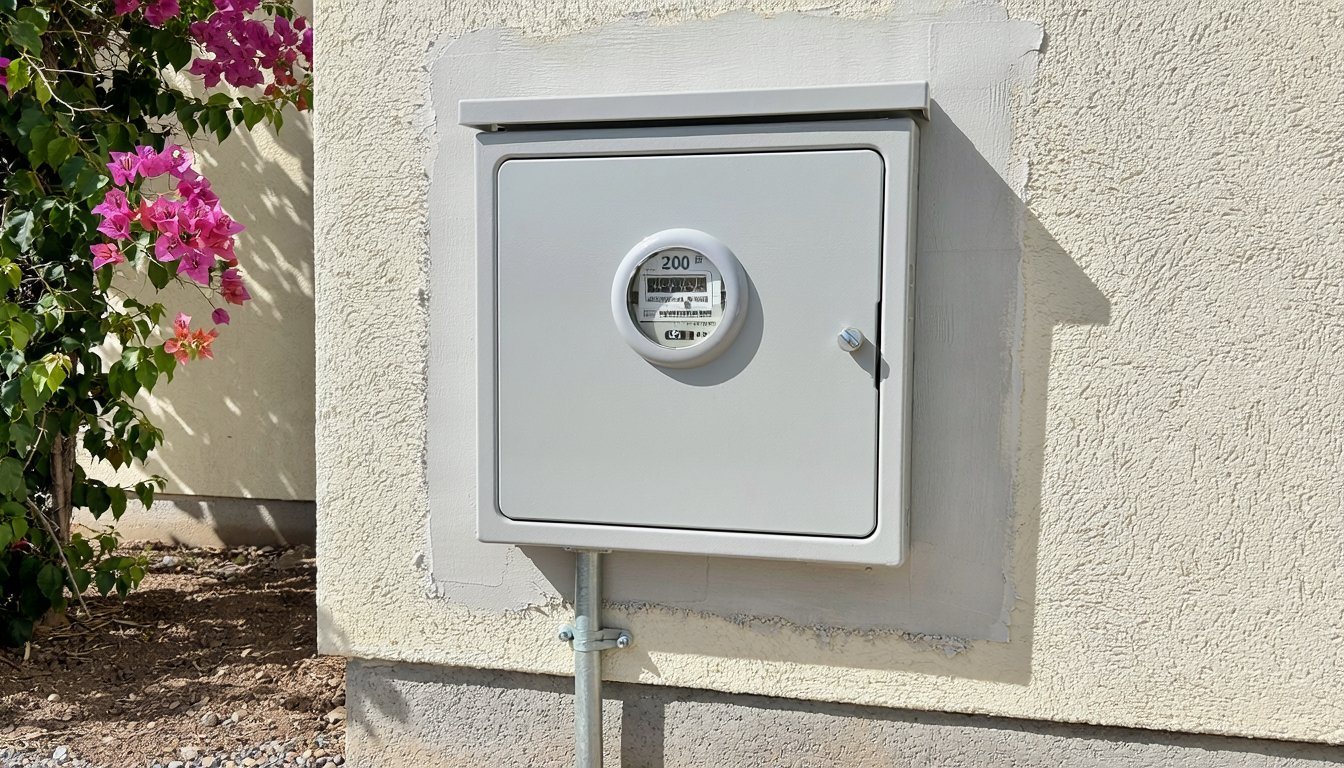
In our experience, going from 100 to 200 amps is the upgrade most LA homeowners are pricing, and it can be two different jobs: a panel swap on your side of the meter, or a panel swap plus a utility service upgrade. Your electrical service has two owners, and the utility's own rules define where one side ends. If only the meter base needs replacing, see meter base replacement cost.
Southern California Edison's service rules say this directly. The customer is "solely responsible to plan, design, install, own, maintain, and operate facilities and equipment beyond the Service Delivery Point." The same rule states that only SCE-authorized personnel may connect or disconnect service conductors at SCE's lines.
A panel swap stays on your side. In our experience, if your existing service can carry the new panel, the utility's role is mostly a disconnect and reconnect. A service upgrade can involve utility work on its side, and LADWP lists conduit work in public property, transformer work, distribution line work and street resurfacing among the items that may carry charges. That is when the utility's work, fees and schedule become part of your project.
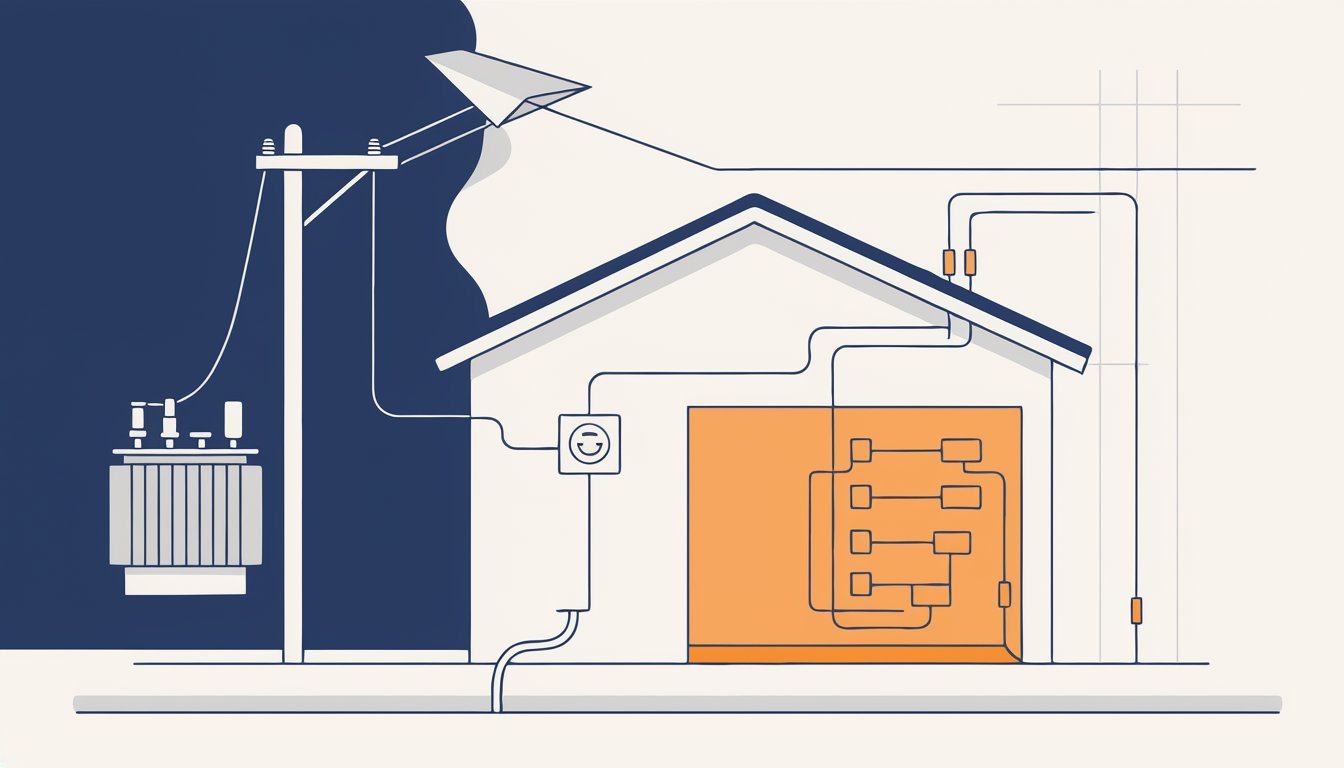
If LADWP serves your home (City of Los Angeles)
- Meter spot request. LADWP says that for single-family residential services up to 320 amps, meter spots can now be requested online.
- Timing. When only a meter installation is needed, LADWP says it generally occurs within 10 working days. Otherwise, installation times vary with the amount of service and distribution work LADWP crews need to do.
- Charges. LADWP notes that charges may apply for conduit work in public property, transformer work, distribution line work or street resurfacing. When the existing service is adequate, there is typically no installation charge.
- Permit. LADBS states that "Electrical Permits are required for any electrical work." Plan check is required when the total load exceeds 400 amperes or equipment is rated 600 amperes or more. Most single-family upgrades stay below that line. Our electrical permit cost guide shows how the fee is calculated. For what work needs a permit and what is exempt, see our electrical permit guide.
For LADWP's full requirements, check its current Electric Service Requirements before design. Rules and forms are updated periodically.
If SCE serves your home (much of LA County)
SCE's tariff rules set who pays for what. Under Rule 15, SCE will complete a distribution line extension without charge as long as its estimated cost stays within the allowance. For permanent residential service, that allowance is $3,084 per meter or residential dwelling unit. Under Rule 16, any special or added facilities you request are installed at your expense. If you ask SCE to do work that is normally your responsibility, you pay SCE its estimated installed cost.
Ask SCE, or your contractor, early whether your job fits inside the allowance. Rule 16 is clear that special or added facilities you request are at your expense, so get the utility's estimate in writing before you sign a contractor's bid.
What pushes an LA panel quote up
- Amperage. Bigger panels and services cost more, and plan check starts above 400 amps of total load. Our 400 amp service cost guide covers the largest residential upgrade.
- Overhead vs underground service. Underground service can mean trenching, conduit and surface restoration. We will explain why some jobs need a trench to the street in a separate guide.
- Moving the panel. This Old House puts panel relocation at $800 to $3,000. Angi estimates about $300 more for extra wiring when the panel moves away from the service point.
- Patching. HomeAdvisor says to budget $150 to $300 for permits and drywall repairs. In LA, stucco patching around an exterior panel adds to that.
- Older panels. In our practice, we often recommend replacing Federal Pacific Stab-Lok panels when we find them. For context, the U.S. Consumer Product Safety Commission closed its investigation of FPE Stab-Lok breakers without finding the data showed a serious risk to consumers, while noting that the breakers failed certain UL calibration tests. Have a licensed electrician assess the panel you actually have.
- Subpanels and new circuits. Adding an ADU, EV charger or kitchen circuits alongside the upgrade adds materials and labor.
Signs you need a panel upgrade
HomeAdvisor lists several reasons to replace a panel:
- It is over 25 years old. HomeAdvisor puts a panel's lifespan at 25 to 40 years with proper maintenance.
- Lights flicker persistently.
- Breakers trip often when high-load devices run.
- There are burn marks around the panel, or hissing or crackling sounds.
- Appliances overheat, or you feel shocks on contact.
When the service entrance cable itself needs replacing, our service entrance cable cost guide explains how the route sets the price. Larger commercial buildings use switchgear rather than a single panel at the service; our guide to how switchgear works explains the difference in function.
The CPSC's advice applies to any panel. Investigate why a breaker trips rather than simply resetting it. Burn marks, heat or crackling are reasons to call an electrician right away, not to wait for a quote.
Do you need an upgrade at all?
Adding an EV charger, heat pump or induction range does not automatically mean a bigger panel. Rewiring America says "most homes can fully electrify on an existing 100 Amp electrical panel with some simple planning upfront." The planning starts with a load calculation by a licensed electrician to see how much capacity is really left; if the answer points past 200 amps, our guide to 400 amp service explains when that step makes sense. If the upgrade is for an EV, first check whether you need a Level 2 charger at all. If the upgrade is for solar or a battery, the utility also has to approve the connection; see our guide to the solar interconnection agreement, and our solar interconnection costs guide for what the connection adds to the bill. If the service has room and you only need more circuits, our subpanel installation cost guide covers that cheaper route.
If capacity is tight, there are cheaper options than a service upgrade:
- Smart splitters share one circuit between two loads, such as a dryer and an EV charger. Rewiring America puts them at $400 to $700.
- Smart panels manage loads automatically, at $3,000 to $5,000 plus installation, per Rewiring America.
Rewiring America also notes that a panel upgrade often has to be coordinated with a service upgrade, which is the utility's responsibility and can mean months-long delays. A load calculation before you commit can save both the cost and the wait. We will cover EV-specific planning in a separate guide on whether you need a panel upgrade for an EV charger.
Rebates and tax credits in 2026
- Federal tax credit. The IRS lists the Energy Efficient Home Improvement Credit for qualifying property placed in service before December 31, 2025. It covered panels of 200 amps or more that supported qualifying equipment, capped at $600. It does not apply to 2026 projects.
- California HEEHRA. The California Energy Commission reports that as of February 24, 2026, single-family HEEHRA rebates are fully reserved statewide. Multifamily rebates remain available, up to $14,000 per unit, and a Phase II program is still under development.
- SCE Charge Ready Home. SCE offers rebates for electrical panel upgrades needed to install a Level 2 EV charger: up to $4,200 for income-qualified households and up to $2,100 in disadvantaged communities. Our guide to the SCE panel upgrade rebate covers who qualifies and what the job must include.
- LADWP customers. Check LADWP's current residential programs before you budget, since offers and eligibility change.
How long a panel upgrade takes
Angi puts the panel work at about four to eight hours, and your power is off for that window. The calendar time depends on the permit and the utility. For LADWP, a meter-only installation generally occurs within 10 working days. Jobs that need LADWP or SCE service work take longer and depend on the crew's schedule.
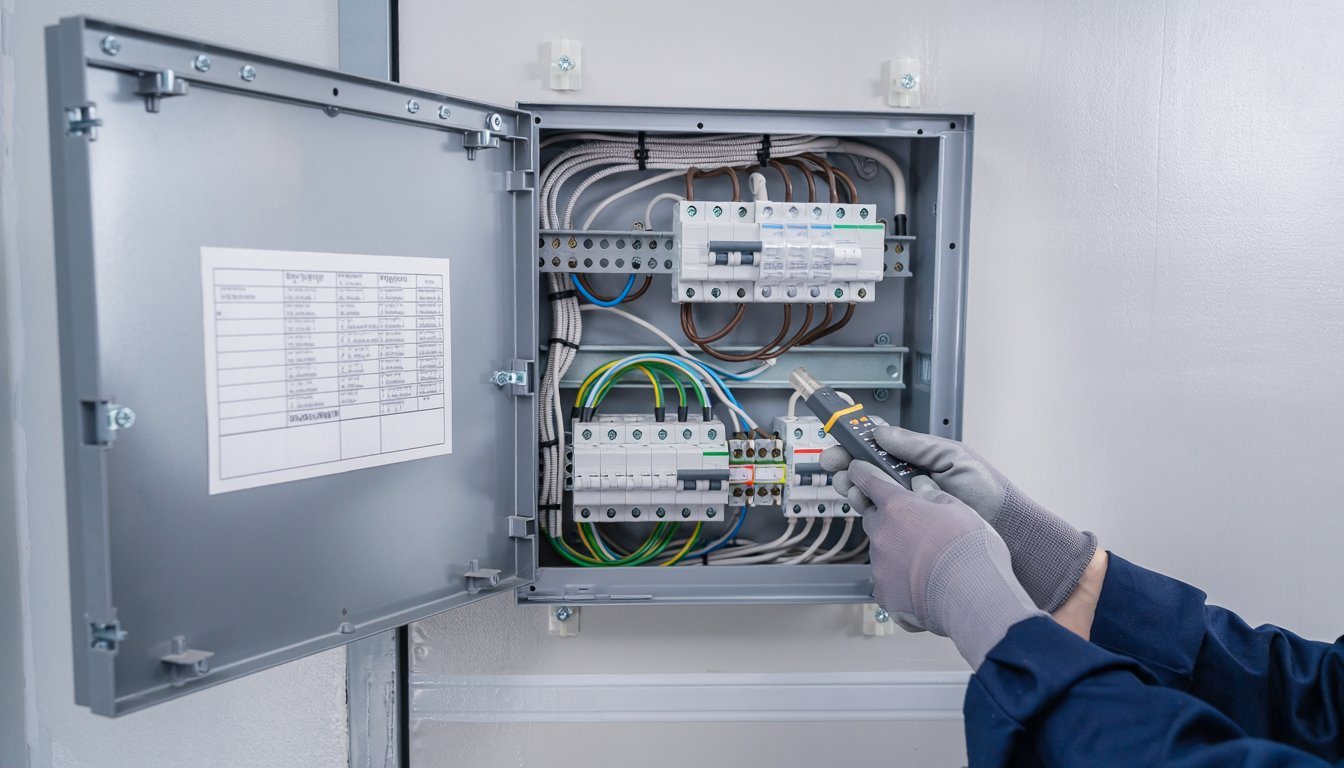
What an LA panel upgrade bid should include
- Utility. Whether you are an LADWP or SCE customer, and whether the job is a panel swap or a service upgrade.
- Load calculation. The numbers behind the recommended amperage, not just "you need 200 amps."
- Equipment. Panel brand, amperage, number of spaces, and whether the meter socket is replaced.
- Permit. Who pulls the LADBS (or county) electrical permit, and whether the fee is included.
- Utility coordination. Who requests the meter spot or service work, and whether utility fees are included or excluded.
- Trenching and restoration. For underground service, who digs, who restores the surface, and at what price.
- Patching. Stucco, drywall and paint around the panel.
- Circuits. Which existing circuits move over, and what new circuits (EV, ADU, heat pump) are included.
- Outage window. The expected power-off time and the inspection date.
Medici Construction Group is one licensed option for panel and service upgrades, holding California A, B and C-10 licenses under CSLB #1114433. Whoever you hire, check the license on the CSLB license lookup and ask for a line-item bid.
Frequently asked questions
How much does an electrical panel upgrade cost in Los Angeles?
This Old House puts a 100-to-200-amp panel upgrade at $1,300 to $3,000, and Angi puts 200-amp panels at $1,300 to $2,000 installed. When LADWP or SCE service work is also needed, Rewiring America puts totals at $5,000 to $25,000.
How much does it cost to upgrade to 200 amp service?
This Old House puts a 100-to-200-amp upgrade at $1,300 to $3,000. Utility charges can add to that if your service needs new conductors, underground conduit or transformer work.
Does LADWP charge for a panel upgrade?
Often not, when the existing service is adequate. LADWP notes that charges may apply for conduit work in public property, transformer work, distribution line work or street resurfacing.
Do I need a permit to upgrade my electrical panel in Los Angeles?
Yes. LADBS requires electrical permits for any electrical work. Plan check is also required when total load exceeds 400 amperes or equipment is rated 600 amperes or more.
How long does a panel upgrade take?
Angi puts the panel work at four to eight hours. For LADWP customers, a meter-only installation generally occurs within 10 working days. Service upgrades that need utility crews take longer.
Can I avoid a panel upgrade for an EV charger or heat pump?
Often. Rewiring America says most homes can fully electrify on an existing 100-amp panel with planning. A load calculation, a circuit splitter or a smart panel may be enough.
Are there rebates for panel upgrades in 2026?
Some. SCE's Charge Ready Home offers up to $4,200 for income-qualified households upgrading a panel for an EV charger. California's single-family HEEHRA rebates were fully reserved as of February 24, 2026. The federal tax credit applied only to property placed in service before December 31, 2025.