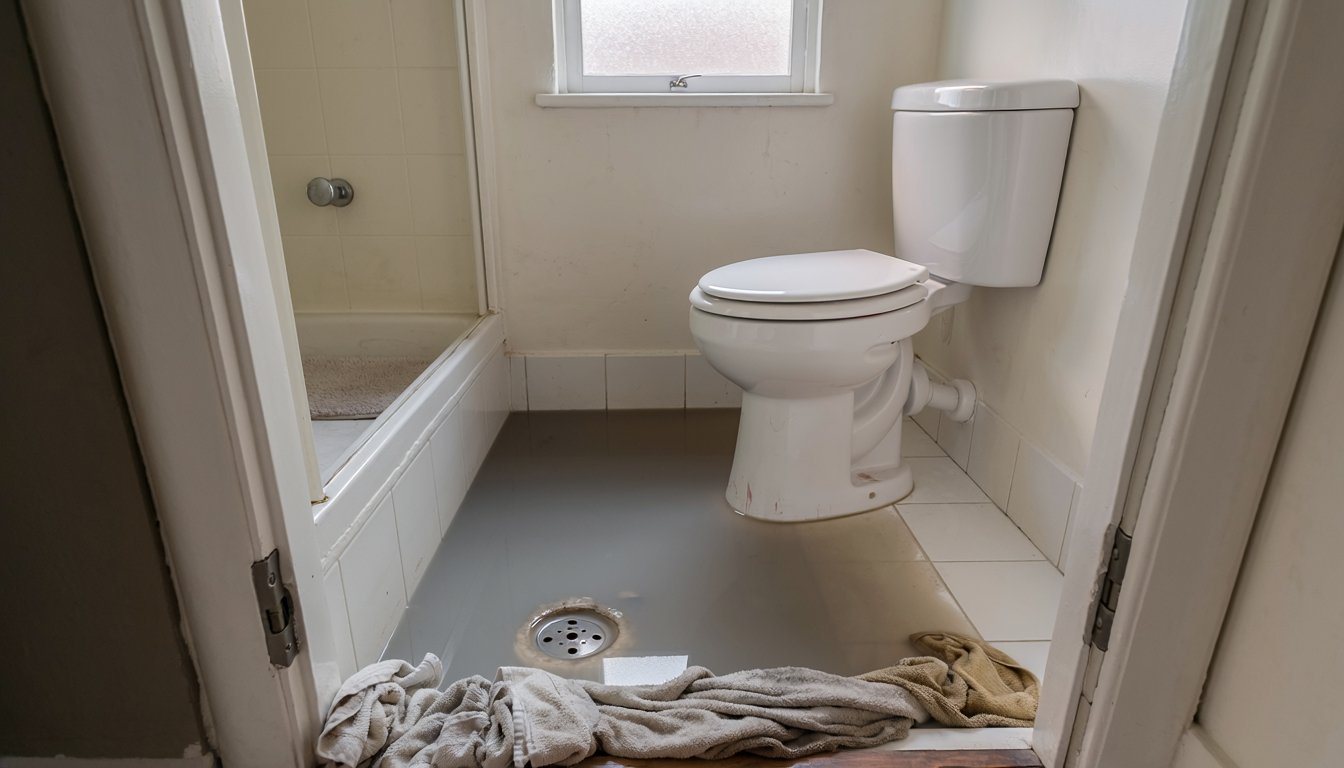
Picture a house whose lowest shower drain sits a few feet below the lid of the next manhole up the street. One day the public sewer main clogs downstream. Sewage rises in the manhole and looks for the lowest way out. That is the shower. LA County Public Works describes exactly these homes: properties built so that "the drain of the lowest plumbing fixture (bath tub, shower, etc.) is lower than the upper manhole of the public sewer."
That one comparison, your lowest drain against the manhole cover, decides whether an LA home needs a backwater valve. After that come the permit, getting the right device, and a yearly check so it works when it matters. This guide covers all of it, plus what installation costs.
Quick answers
- Who is required to have one: LA Sanitation says "If the lowest plumbing fixture in your home (like a basement tub or shower) is lower than the street manhole cover, your property requires a backwater valve."
- Permit: yes. LA Sanitation says these valves "require a permit from the Los Angeles Department of Building and Safety (LADBS)."
- Cost: HomeServe puts installation at $200 to $1,000 on average nationally. Digging to reach the line can add more.
- Maintenance: the LA County Sanitation Districts say to "Inspect the valve at least once per year."
- Insurance: the Insurance Information Institute said in 2012 that sewer backups "are not covered under a typical homeowners insurance policy."
What a backwater valve does
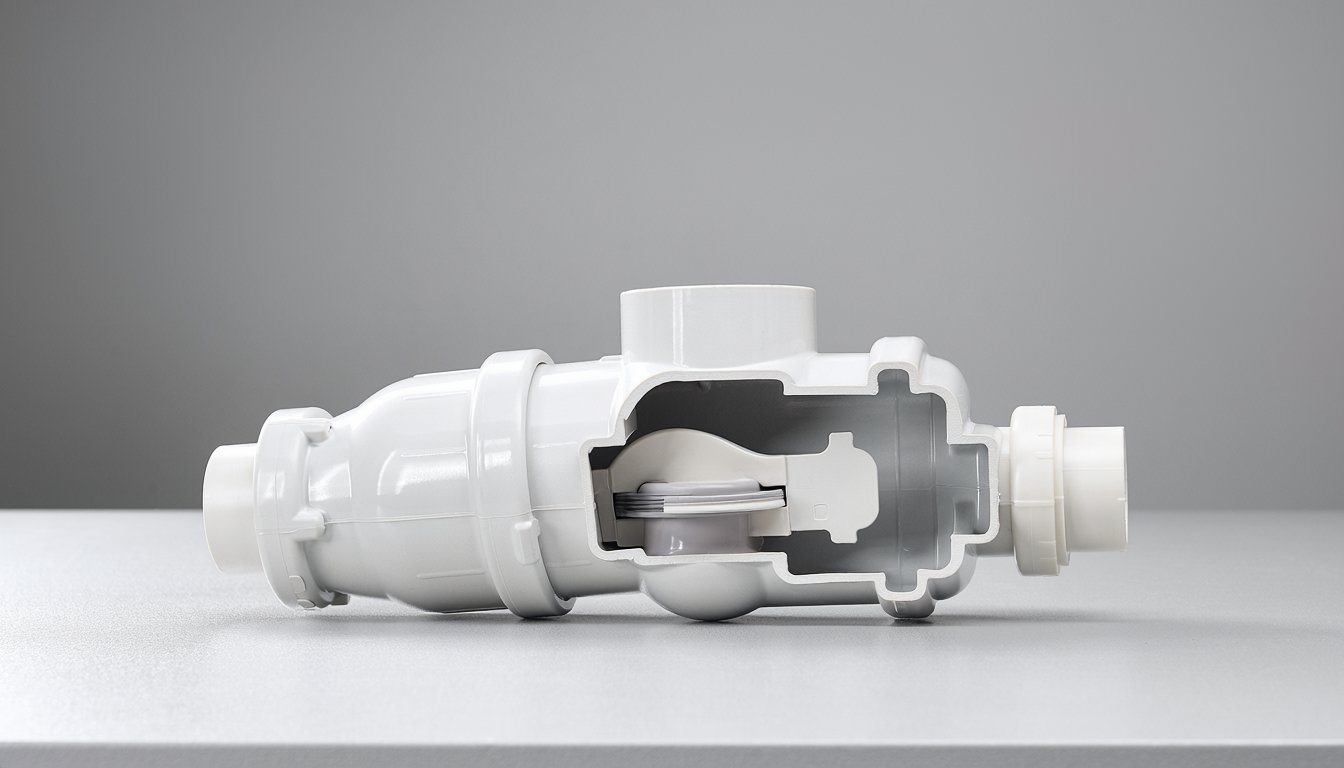
The LA County Sanitation Districts define it as "a device installed on your sewer pipes that allows sewage to flow out to the public sewer and prevents sewage from backing up into your property." LA County Public Works says it "is designed to automatically shut to prevent leakage out of the plumbing fixture" when sewage from a blocked public sewer backs up the line.
It only works if it is looked after. The Insurance Information Institute puts it carefully: "A properly installed and maintained backwater valve allows sewage to go out, but not to come back in."
Do you need one? The manhole-cover test
In the City of Los Angeles, LA Sanitation states the rule plainly: if your lowest fixture "is lower than the street manhole cover, your property requires a backwater valve." The LA County Sanitation Districts put it the same way: "If the drain is lower than the cover, a backwater valve is required."
The rule comes from the California Plumbing Code, section 710.1. A city building guideline that quotes it reads: "Fixtures installed on a floor level that is lower than the next upstream manhole cover of the public, or private sewer shall be protected from backflow of sewage by installing an approved type of backwater valve."
How to check your house
- Find the manhole. In our experience, the one that matters is the next manhole up the street from where your sewer line connects, not the one downhill.
- Find your lowest drain. A lower-level shower, laundry, floor drain or basement bath.
- Compare elevations. On a hillside or on homes set below the street, the answer is often obvious. When it is close, a plumber or surveyor can measure the difference.
- See if you already have one. The Sanitation Districts say to "Look for an access cover along your private sewer as it exits the building."
Homes that pass the test are not required to have one. The same code guideline says "Fixtures on such floor level that are not below the next upstream manhole cover shall not be required to be protected by a backwater valve." If you have had backups anyway, the cause may be your own line. Our sewer camera inspection guide covers how to find out.
Backwater valve vs check valve vs backflow preventer
These names get mixed up, and so do the prices. A backwater valve sits on your sewer line and keeps sewage from coming back in. A backflow preventer usually sits on the water supply or irrigation line and keeps dirty water from getting into clean water. One plumbing company explains the difference simply: "A check valve is usually used to prevent liquids from contaminating a clean water supply, for example. A backwater valve is often intended to protect your sewage line, though."
In our experience, many online "backflow preventer cost" figures are for the water-supply device, not a sewer backwater valve. When you compare quotes, make sure everyone is pricing the same thing.
Types of backwater valves
- Automatic flap valves. The most common type. Manufacturer Jay R. Smith says "The flapper style operates like a one-way door, automatically preventing backflow," but notes "it may trap waste flowing out, requiring frequent maintenance."
- Knife gate valves. The same source says the blade "can easily cut through normal sewage debris and forms a positive seal" and "is less likely to get stuck open from debris."
- Manual valves. "These valves are operated by hand using a wheel handle." HomeServe notes they are "easier to install in older homes" but someone has to close them when a backup starts.
- Floor drain valves. For a single low drain, Jay R. Smith describes "floor drains with integral backwater valves that use a ball float to ensure wastewater doesn't enter the room."
Where it goes, and the permit
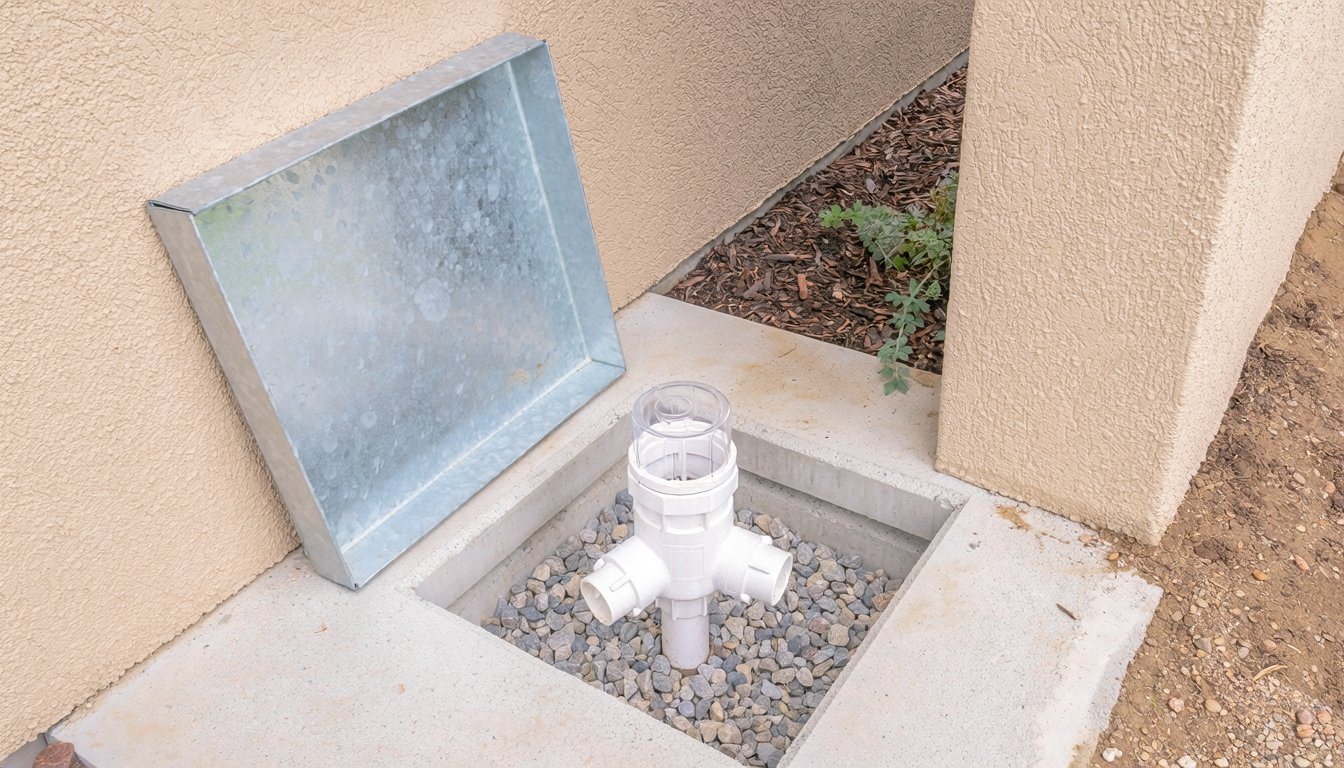
The valve goes on your private sewer line where it can be reached. The Sanitation Districts say it must be "enclosed in a masonry pit fitted with a removable cover to make it accessible for inspection and repair, unless it is continuously exposed." The city guideline quoted above adds that "When a backwater valve is required it shall be located upstream of the cleanout."
In the City of LA, it needs a permit. LA Sanitation says these valves "require a permit from the Los Angeles Department of Building and Safety (LADBS) and regular plumbing checks," and LADBS says plumbing permits "are required for any installation or modification of drainage systems."
One warning from the Sanitation Districts is worth passing to anyone who works on your line: "Don't ever use the backwater valve as a cleanout. Sewer snakes can damage backwater valves."
What installation costs
HomeServe puts backwater valve installation at "between $200 and $1,000" on average, covering the valve and labor. That is a national figure for a simple install.
In our experience, LA quotes vary mostly with what it takes to reach the line, not with the valve: an exterior install usually means digging down to the sewer pipe beside the foundation and building the access pit, an interior install can mean cutting a slab, and depth, old cast iron or clay pipe, and the distance to a cleanout all move the price. Make sure the permit is in the quote. If the camera shows your line is failing, it can make sense to add the valve during a sewer line replacement rather than pay to dig twice.
Maintenance: the yearly check
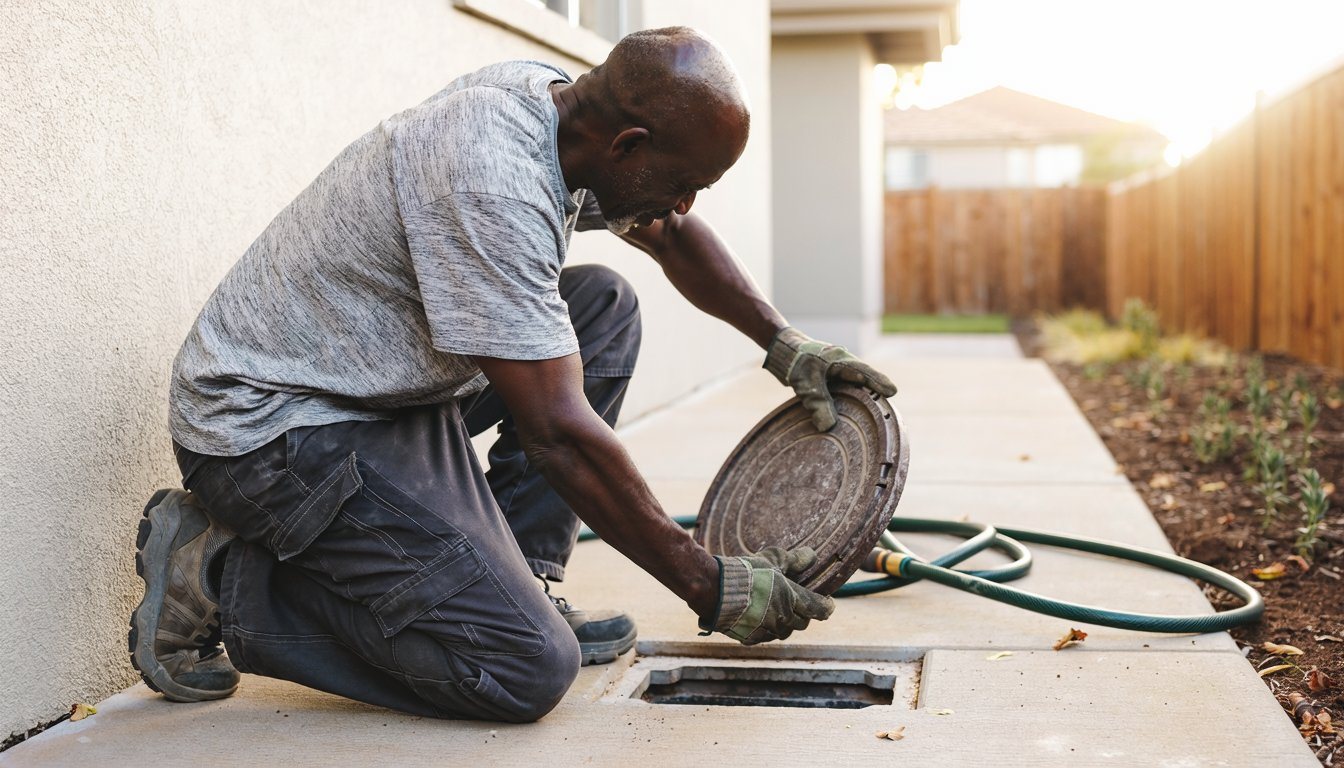
A valve that is stuck open protects nothing, and one stuck shut can back up your own drains. The Sanitation Districts advise: "Inspect the valve at least once per year to ensure proper operation and flush the entire device and surrounding pipe with a hose to remove any accumulated debris." LA County Public Works says "regular maintenance is required to ensure that it is operating properly at all times." HomeServe warns that "a faulty backwater valve can cause significant problems, such as preventing waste from flowing out of your home."
In our experience, the fall is a good time for this check, alongside cleaning your yard drains before the rains.
Insurance and who is responsible
In LA, the pipe from your house to the public sewer is yours. LA Sanitation says owners must maintain and repair their whole lateral, and the Sanitation Districts say owners "are responsible for the proper operation and maintenance of their sewer pipes and backwater valves, if required." Our water and sewer backup coverage guide covers limits, costs and exclusions.
Insurance is a separate question. In its 2012 release, the Insurance Information Institute said sewer backups are not covered by a typical homeowners policy and "must be purchased either as a separate product or as an endorsement to a homeowners policy." Ask your insurer what yours covers today. If you are dealing with a backup now, start with our sewer backup guide.
Hiring someone to install one
Ask for the manhole-cover comparison in writing, the valve type and why, where the access pit will go, whether the permit is included, and what happens if they find a damaged pipe when they dig. Get a price for the whole job, not just the valve.
Check any contractor's license before you sign. Our guide on how to check a California contractor's license walks through it. Medici Construction Group is one licensed option for backwater valve installation, holding California A, B and C-10 licenses under CSLB #1114433. Whoever you hire, start with the measurement.
Frequently asked questions
What is a backwater valve?
A device on your sewer line that lets sewage flow out to the public sewer and stops it from backing up into your property, per the LA County Sanitation Districts.
Who is required to have a backwater valve in Los Angeles?
Homes whose lowest plumbing fixture is lower than the street manhole cover. LA Sanitation says those properties require a backwater valve.
How do I know if I already have a backwater valve?
Look for an access cover along your private sewer as it exits the building. A small pit with a removable lid near the foundation is the usual sign.
How much does a backwater valve cost to install?
HomeServe puts it at $200 to $1,000 on average nationally. In our experience, excavation, slab cutting and pipe condition drive LA quotes higher.
Do I need a permit to install a backwater valve in LA?
Yes. LA Sanitation says backwater valves require a permit from LADBS.
How often should a backwater valve be inspected?
At least once a year, with the valve and nearby pipe flushed with a hose, per the LA County Sanitation Districts.
What is the difference between a backwater valve and a backflow preventer?
A backwater valve protects your house from sewage coming back in through the sewer line. A backflow preventer usually protects the clean water supply from contamination. They are different devices with different prices.
Where is a backwater valve located?
On your private sewer line, usually near where it leaves the house, in a pit with a removable cover. The code guideline places it upstream of the cleanout.
Does homeowners insurance cover sewer backup?
Often not by default. The Insurance Information Institute said in 2012 that coverage must be purchased as a separate product or an endorsement. Check your own policy.