Most homeowners don't go looking for a descaling quote. It shows up as a line item inside a sewer lining estimate, on a pipe they knew was old but didn't know had a problem beyond that. If you're staring at a quote with "descaling" on it and no idea what you're actually paying for, this is what that line item covers, what it should cost, and when it isn't the right fix.
Quick answers
- What it removes: tuberculation, the rust buildup that narrows a cast iron pipe's interior over decades, using a mechanical process, not a chemical one.
- Cost: published national ranges run roughly $200 to $1,500-plus depending on scale severity, length and access, with no strong LA-specific figure available.
- Usually paired, not standalone: descaling is most often quoted as prep work inside a sewer lining job, because a liner needs bare pipe wall to bond to.
- Not a structural fix: if the pipe has thinned enough, removing the scale can expose new leaks rather than solve anything; a camera inspection decides whether descaling or replacement is the right call.
- Scope of this guide: this covers descaling's own cost. For lining cost, permits and the LA rebate, see our sewer pipe lining cost guide. A future guide will cover cleaning cast iron pipe yourself; this one is about hiring it out.
What descaling actually is, and why cast iron needs it
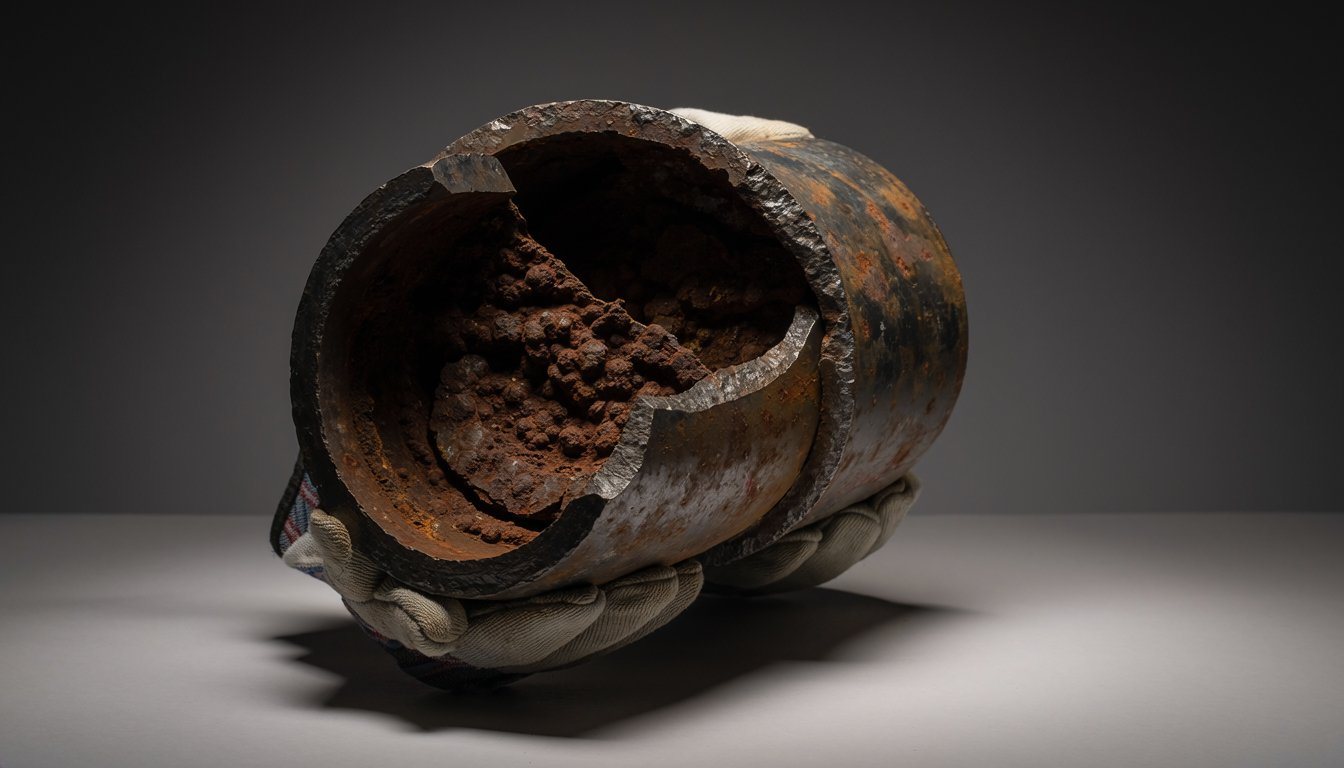
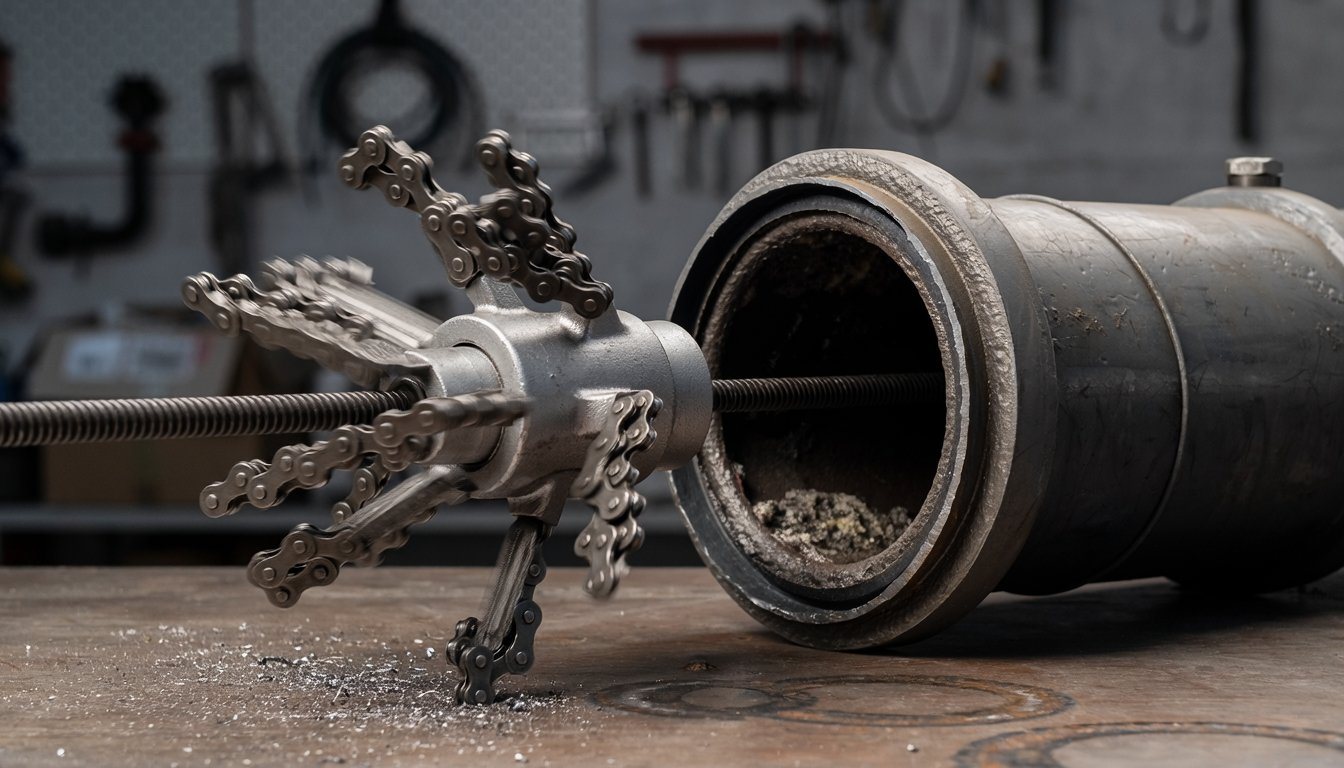
Cast iron sewer pipe corrodes from the inside as bacteria interact with the iron, building up rust deposits called tuberculation that narrow the pipe's interior over decades. Descaling removes that buildup and restores the pipe's original bore. For cast iron specifically, that means a mechanical process: a chain knocker spinning chains against the pipe wall, or a robotic spinning-head cutter, not a chemical descaler, which several sources caution against for cast iron. It's a different job than a routine drain-cleaning snake, which clears a clog but doesn't touch scale bonded to the wall.
This is a cost guide, not a diagnostic one. If you want help reading what a camera inspection shows about the severity or cause of the corrosion, that's covered in more depth elsewhere; this post sticks to what descaling itself costs and when it's the right call.
What descaling costs
Published figures vary widely because so much depends on how much scale has built up, not just the pipe's length. Cost generally scales with severity, which is easiest to think about in terms of how much of the pipe's original diameter is still open when a camera inspection checks it. The bands below are illustrative, not an industry-standard scale; ask your contractor to show you the camera footage and explain where your pipe falls before accepting a price tied to a "tier":
| Severity | Pipe diameter still open | What it usually means for cost |
|---|---|---|
| Minimal | Over 80% | Descaling usually isn't needed yet |
| Light | 70% up to 80% | Lower end of the range, shorter job |
| Moderate | 50% up to 70% | Mid-range pricing, more pass-throughs needed |
| Heavy | Under 50%, at risk of full blockage | Upper end, longest job, highest chance of exposing further issues |
Angi lists sewer cleaning services at "$200 to $300" for a light-scale job, with camera line inspections running "$250 to $1,300" depending on access and length. Regional plumbing sites quote higher for heavier scale on longer runs, with per-foot add-ons for severity and access. These figures come from a mix of national consumer sites and regional plumbing companies of uneven reliability, not a single strong national aggregator, and none of it is Los Angeles-specific, so treat any number here as a starting range to compare quotes against, not a quote itself.
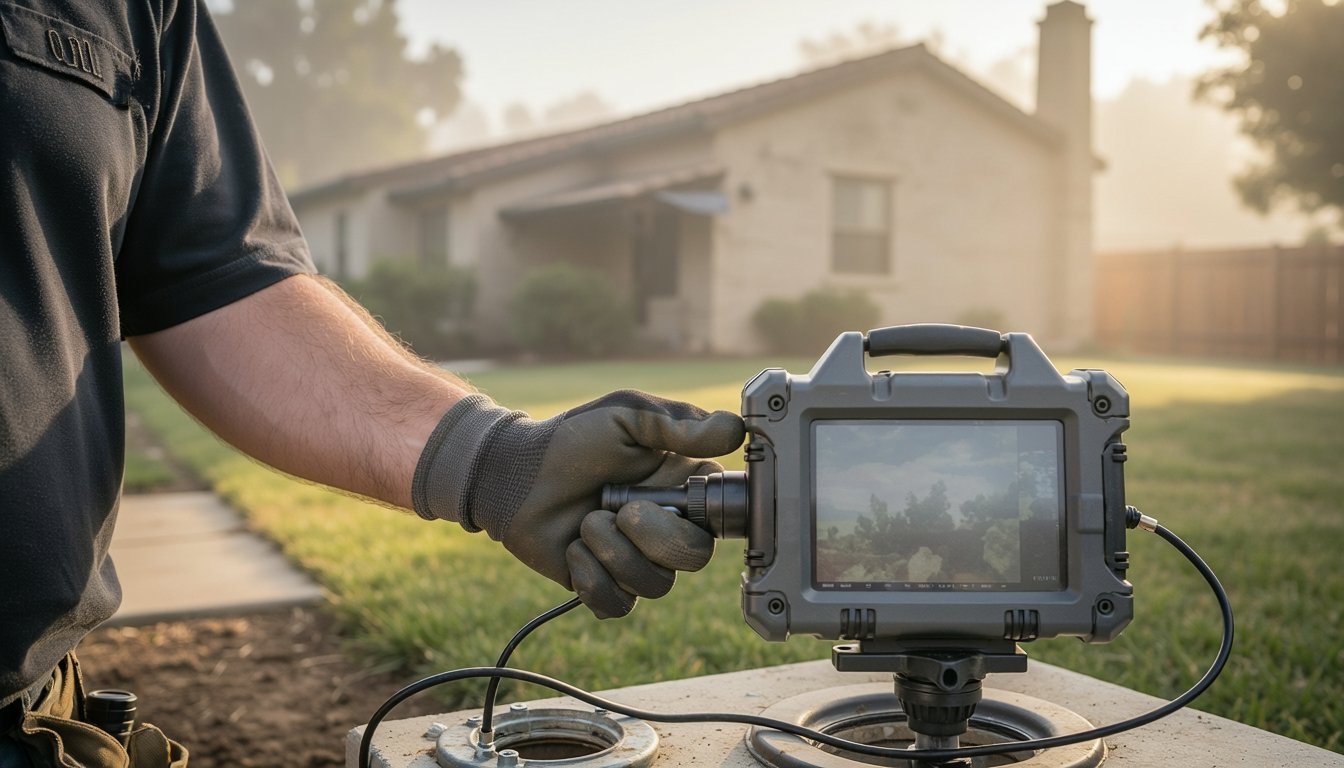
A legitimate quote should bundle a camera inspection into the price, both to scope the job before descaling and to confirm the result after. If a quote is a single flat number with no mention of a before-and-after inspection, ask why.
A typical example: a homeowner gets a lining quote for a 40-foot cast iron run under the yard, and it comes back higher than the same length quoted for a neighbor's newer clay lateral. The difference usually isn't the liner itself, it's that the cast iron run needed a descaling pass first, priced separately or folded into the total. Two contractors bidding the same job can land on different numbers not because one is overcharging, but because they're assessing different severity from the same camera footage, or one is quoting a mechanical pass and the other a longer, more thorough one. Asking each contractor to show you the before footage and explain which severity tier they're pricing to is the fastest way to make two quotes comparable.
Why descaling is usually paired with lining, not sold alone
Cured-in-place pipe lining needs the liner to bond directly to the pipe wall. Tuberculation between the liner and the pipe means poor adhesion and a liner that can fail early. That's why descaling so often shows up as a line item inside a lining estimate rather than a service you'd hire separately: the lining contractor has to clear the scale before the liner goes in, whether or not the quote itemizes it that way. If you're comparing lining quotes and one is meaningfully cheaper, check whether descaling and the pre-lining camera pass are actually included. Our sewer pipe lining cost guide covers what lining itself costs by segment, LA's permit requirements for the lower lateral, and the city's sewer lateral repair rebate; none of that is repeated here. For the cast iron side of that pricing, including branch reopenings and bends, see our guide to cast iron pipe lining.
When descaling isn't the right fix
Cast iron that has thinned enough can develop new leaks once the scale that was helping hold the wall together gets removed. That's not a reason to skip descaling on a pipe that needs it, but it is a reason to be honest about what descaling does and doesn't do: it restores flow and prepares the pipe for lining, it doesn't add structural strength back to a wall that's already failing. A camera inspection, before and after, is what determines whether descaling and lining is the right path or whether the pipe has gone past that point, not a guess based on the home's age. Our guide to cracked cast iron sewer pipe explains what a crack can say about the rest of the run. When replacement makes more sense, our cast iron to PVC guide covers switching materials.
This isn't a guide to diagnosing how serious a crack is or to repair methods for a pipe that's already cracked or leaking; a future guide will cover crack severity and repair options in more depth. If descaling reveals a section too far gone to line, the honest alternative is replacing that section; our cast iron sewer pipe replacement cost guide covers what replacement costs depending on where the pipe runs.
Why this comes up so often in Los Angeles
LA's older housing stock, especially construction from before the 1960s, commonly used cast iron for building drains and laterals, which is why the tuberculation and descaling conversation surfaces here more than in newer-construction markets. That doesn't mean every older LA home has a scale problem worth acting on; it means a camera inspection is worth doing before assuming a full-line replacement is the only option, and worth doing again after descaling to confirm the work actually restored the bore.
What to ask before you approve a descaling job
- Is a camera inspection included, before and after? Without it, nobody can confirm the scale is actually gone or that the pipe survived the process intact.
- Is the price tied to a severity tier or camera findings, or is it a flat guess? A number that isn't tied to what the camera shows is hard to compare against another quote.
- Is descaling being sold on its own, or paired with a specific lining plan? If lining is the real goal, ask to see both prices together, not descaling in isolation.
- What happens if descaling reveals the pipe needs replacement instead? Get the contingency in writing before work starts, not as a surprise mid-job.
- Is the method mechanical or chemical? Mechanical (chain knocker or spinning head) is the appropriate method for cast iron; a chemical descaler is a red flag on this material.
- Is the contractor licensed for sewer lateral work in Los Angeles? Check the license on the CSLB license lookup before signing anything.
- How is the removed debris handled? A quote should say where the scale and spoil go, not leave it unaddressed.
- What's the warranty on the descaling itself? Not every contractor offers one, since scale can rebuild over time, but the terms should be in writing, not a verbal promise.
- Will the crew reopen branch connections afterward? A mechanical pass can flatten or obscure a branch tie-in; confirm it's checked and reopened as part of the job, not left for you to discover later.
None of these questions require you to know more than the contractor does. They just make sure the quote in front of you is actually pricing the job you have, on the pipe you have, rather than a generic number pulled from a national average. Medici Construction Group is one licensed option for sewer line repair, holding California A, B and C-10 licenses under CSLB #1114433. Whoever you hire, get the camera footage, the severity tier, and the contingency plan in writing before the work starts.
Frequently asked questions
How much does it cost to descale a cast iron sewer pipe?
Published national ranges start around $200 to $300 for a light-scale job and climb well past $1,000 for heavier scale on a longer run, with camera inspection often bundled in. None of the available figures are Los Angeles-specific, so use them as a comparison starting point, not a quote.
What is pipe descaling and how is it different from drain cleaning?
Descaling removes tuberculation, rust buildup bonded to the pipe wall, using a mechanical chain knocker or spinning-head cutter. A routine drain-cleaning snake clears a clog but doesn't remove that wall-adhered scale.
Does descaling cast iron pipe work, or is it just a temporary fix?
Angi states that descaling "can extend their lifetime by upwards of 50 years" for a pipe that's still structurally sound. It's not a fix for a pipe that's already thinned to the point of leaking; a camera inspection is what tells you which situation you're in.
Is descaling done before or instead of pipe lining?
Before, in most cases. A liner needs to bond to the pipe wall, so tuberculation has to come out first or the liner won't adhere properly.
Can descaling cause a cast iron pipe to leak?
It can expose a leak that was already there. If scale had been plugging a thin or pinholed section, removing it can reveal the problem rather than create one. That's why a before-and-after camera inspection matters.
How do I know if my LA home has cast iron sewer pipe?
Home age is a starting clue, since cast iron was common in construction before the 1960s in Los Angeles, but the only way to confirm it is a camera inspection of the actual line.
How often does cast iron sewer pipe need to be descaled?
Angi recommends cleaning pipes "every 18 to 22 months," noting that older homes can need more frequent maintenance. Camera inspection findings, not a fixed calendar, should be what actually decides if a given pipe needs it again.
How long does the descaling process take?
A regional plumbing source estimates "most residential pipe descaling takes 2 to 4 hours" including the camera passes before and after, depending on the property and how much buildup there is. Heavier scale or harder access can run longer.