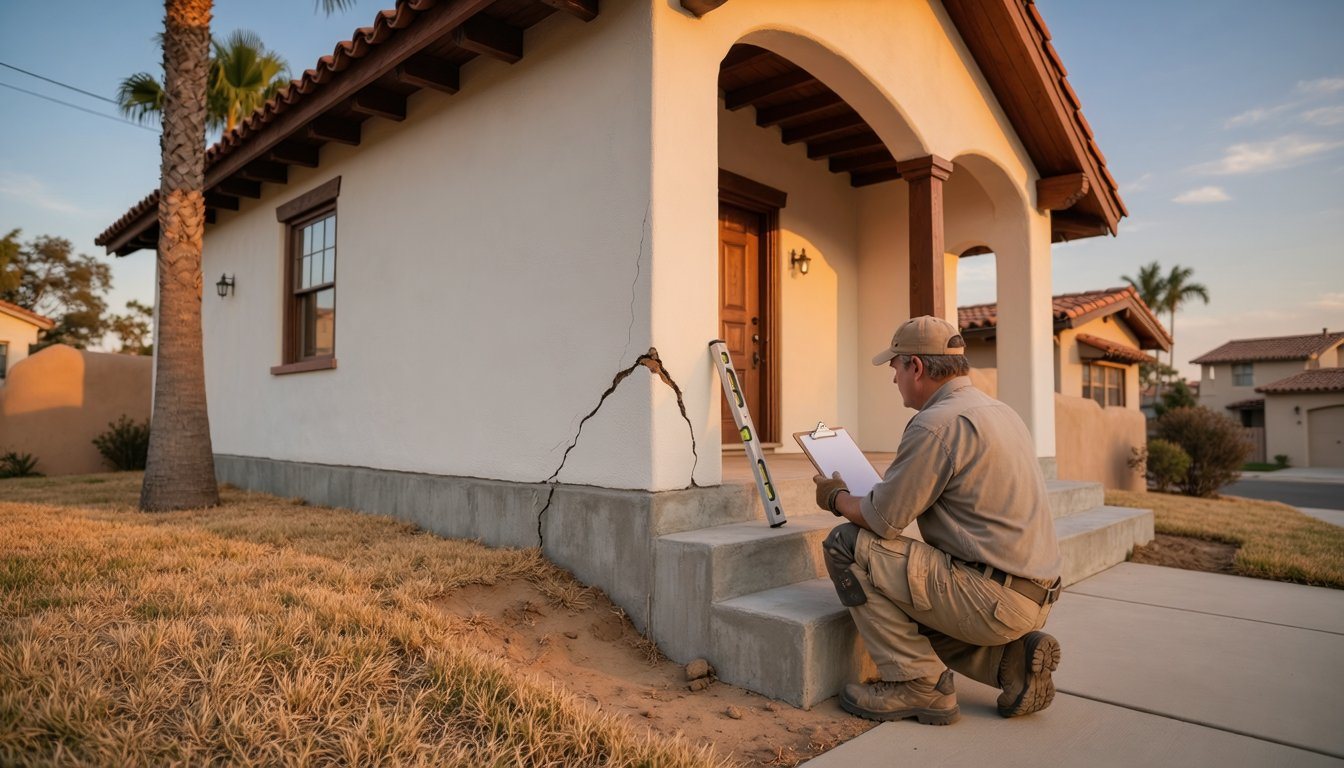
Picture a 1920s bungalow in Mid-City with a stair-step crack by the front door and a bedroom door that started sticking last winter. One contractor looks at the crack and quotes $600 to inject it. Another looks under the house and quotes $18,000 for new supports. Both quotes can be right. The first priced the symptom. The second priced the cause.
That gap is what scares most owners about foundation work. The good news is that the jump from a small number to a big one usually comes from a short list of things you can check before you sign. For Los Angeles, Angi puts the average cost at $5,962, with a range of $3,192 to $9,252. This guide breaks that down by problem and foundation type, then walks through the line items that push an LA quote up. If you're pouring a new foundation rather than fixing an existing one, our new-construction foundation cost guide covers pricing by type instead. If you haven't confirmed there's a problem yet, our guide to common foundation warning signs covers what a sticking door or a sloping floor usually means before you call anyone.
The short answer: foundation repair costs by problem
| Problem or item | Typical cost | Source |
|---|---|---|
| Foundation crack repair | $250 to $800 | Angi |
| Foundation leaks | $2,000 to $7,000 | Angi |
| Home settling | $5,000 to $25,000 | Angi |
| Piers, each | $1,400 to $3,200 (a typical home 8 to 12 piers) | Forbes Home |
| Mudjacking a slab | $500 to $1,300 | Angi |
| Polyurethane foam leveling | $8 to $25 per sq ft | Angi |
| Foundation leveling | $600 to $4,000 | Forbes Home |
| Pier and beam repair | About $9,500 average | Forbes Home |
| Full foundation replacement | $20,000 to $100,000 | NerdWallet |
| Structural report | $300 to $1,000 | Angi |
| Soils report | $500 to $3,000 | Angi |
| Permits (national range) | $75 to $150 | Angi |
What LA homeowners pay, and why it is higher here
National guides put the average a little lower. HomeAdvisor lists a national average of $5,174, with most jobs between $2,225 and $8,133. NerdWallet splits the work into tiers: $250 to $800 for minor issues, $1,000 to $12,000 for moderate ones, and $15,000 to $100,000 or more for major work.
Los Angeles runs higher per square foot. Angi's LA page puts local work at $3 to $15 per square foot, compared with a national $1.50 to $12, and says "strict earthquake safety codes and higher-than-average labor costs make foundation repair in Los Angeles more expensive compared to most of the country." The same page puts professional rates at $200 to $300 per hour.
Soil is the other LA factor. In our work across the LA area we see a lot of clay-rich soil that swells when wet and shrinks when dry. Geology.com notes that expansions of ten percent or more are not uncommon in expansive soils. The state takes this seriously: the California Geological Survey notes that its geologic reports for schools, hospitals and essential buildings must address special design and construction provisions for foundations bearing on expansive soils. In our experience, wet winters followed by long dry summers keep that cycle going under LA houses, and hillside lots add slope movement on top of it. That is why a soils question often ends up in an LA foundation bid.
Cost by problem
Cracks. A single crack is usually the cheapest repair on the list, at $250 to $800. This Old House puts a hairline crack caught early at $200 to $800. The price stays low only when the crack is stable. Our foundation crack repair guide covers how to tell a shrinkage crack from one that signals movement.
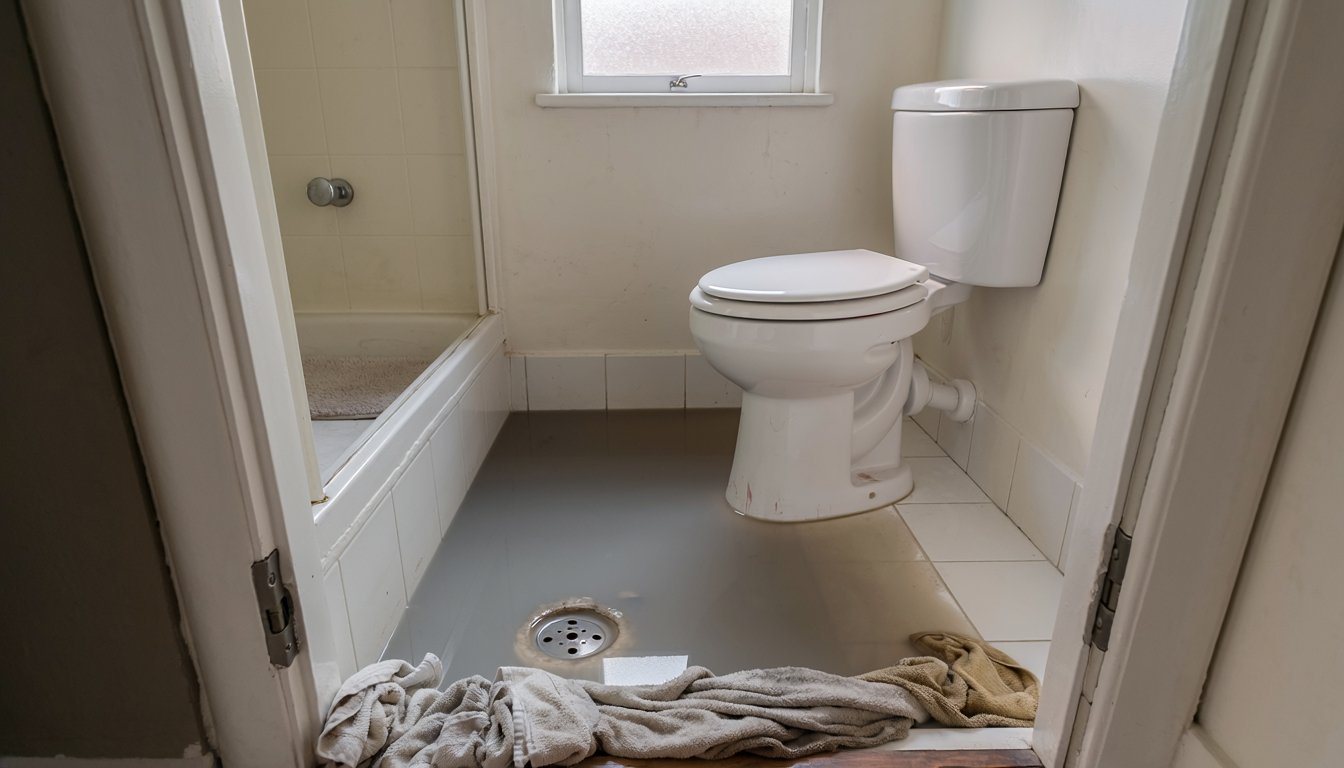
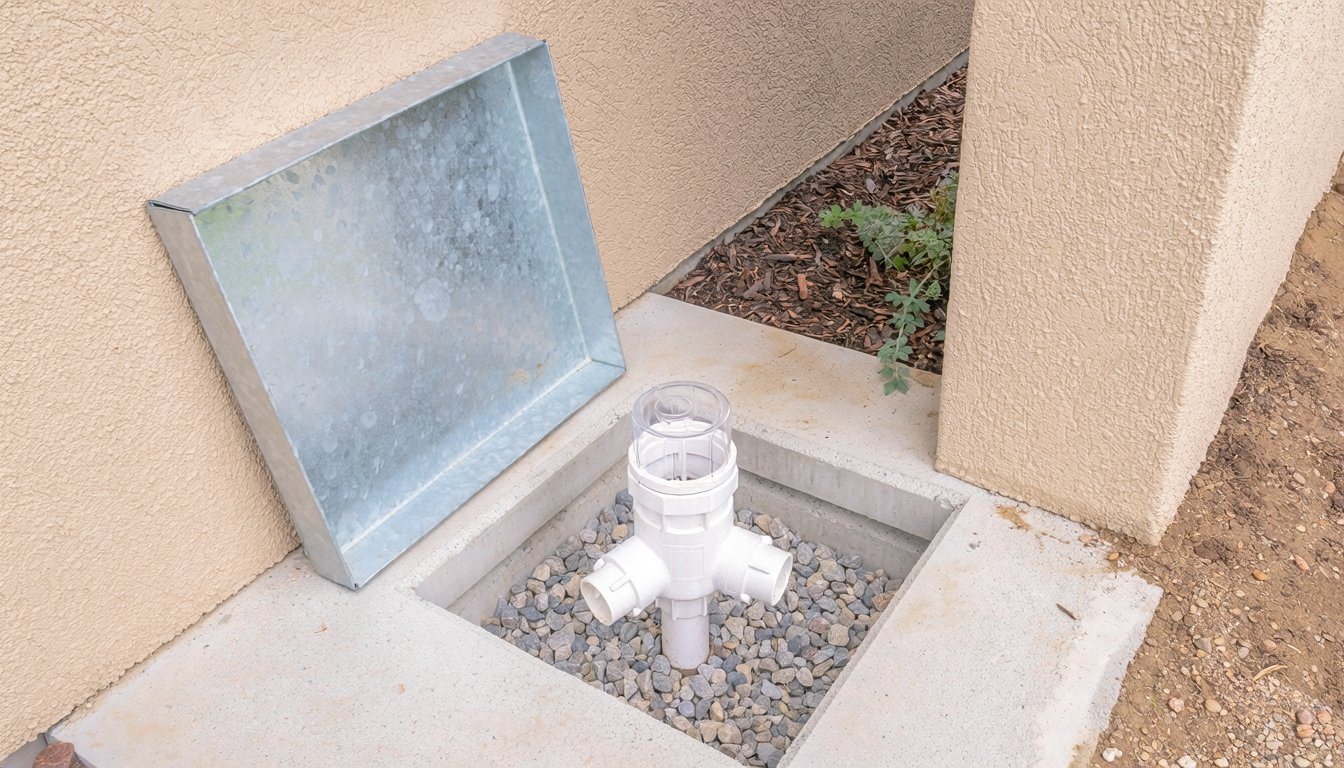
Leaks and drainage. Angi puts foundation leaks at $2,000 to $7,000 and poor soil drainage at $800 to $15,000. If the fix is a French drain, Forbes Home puts the average at $6,200, with a range of $1,600 to $13,000.
Settling and sinking. This is where the big numbers live. HomeGuide puts moderate settling at $4,500 to $15,000 and severe sinking at $15,000 to $40,000, and lists wall cracks or sticking doors among the signs of settlement. Bowing walls, which Angi prices at $4,000 to $12,000, are mostly a basement problem. In our experience they come up far less often in LA, where most houses sit on slabs or raised foundations.
Cost by foundation type
Slab foundations. On a slab, the common fixes lift and level the concrete. Angi lists mudjacking at $500 to $1,300 and polyurethane foam at $8 to $25 per square foot. Forbes Home puts foundation leveling at $600 to $4,000. When the slab needs support underneath instead, piers come in, and Forbes Home prices underpinning at $12,000 to $52,500 for a full job. HomeGuide prices mudjacking by area at $4 to $9 per square foot, and Forbes Home puts concrete slab leak repair at $1,200 to $3,500, a common add-on when a pipe under the slab is part of the problem. For how leveling itself works on each foundation type, see how to level a house foundation. Building a new one instead? Our raised foundation cost guide covers new construction.
Raised and pier-and-beam foundations. In our work, many LA houses sit on a perimeter foundation with a crawl space, and some older ones on piers and posts. Forbes Home puts pier and beam repair at an average of $9,500, with reshimming at $1,500 to $5,500, replacing or adding piers at $2,000 to $4,000, and replacing beams at $4,500 to $10,000. By size, it runs from $7,000 to $12,000 for 1,000 square feet up to $17,000 to $30,000 for 2,500 square feet. If the problem is the concrete perimeter wall itself, our stem wall repair cost guide breaks down the levels of repair, from crack fixes to section replacement.
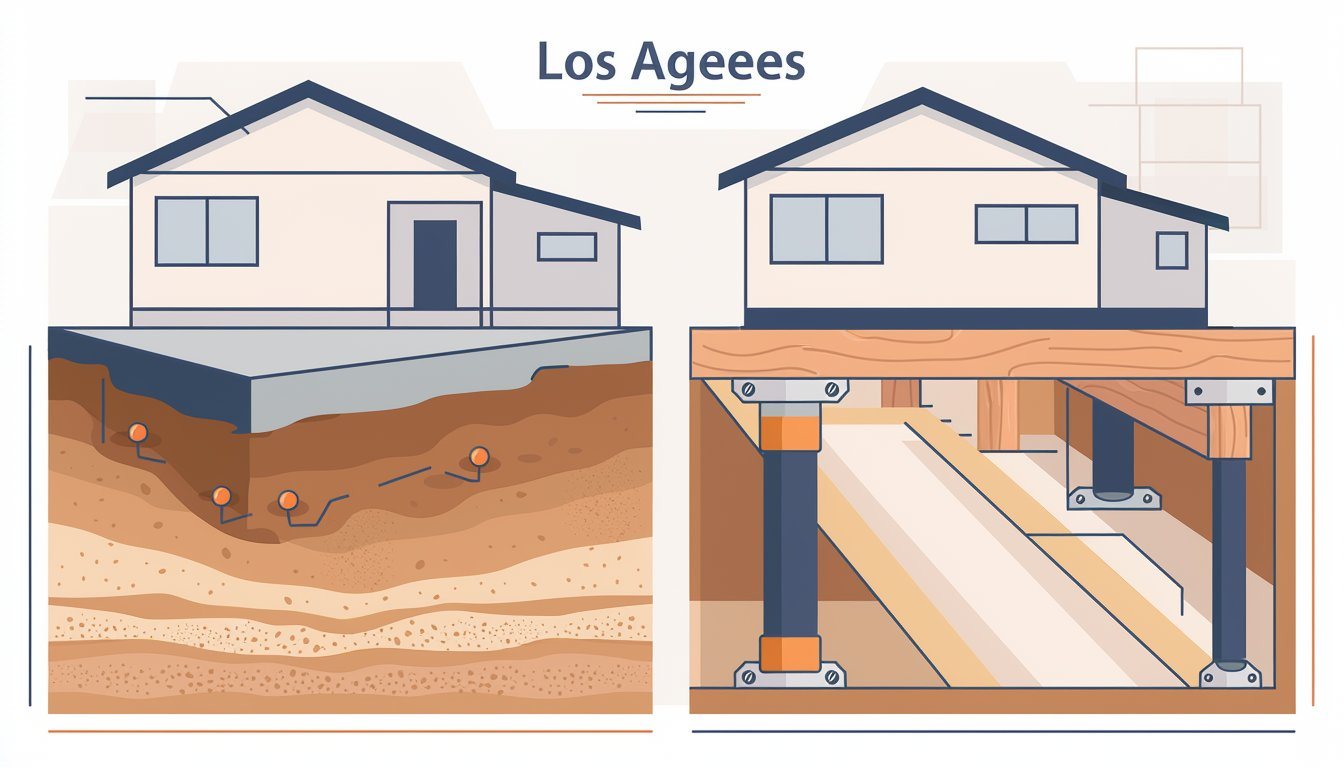
Older raised foundations. In our experience, older LA neighborhoods have many pre-1980 wood-framed houses on raised foundations. These are the homes the state's Earthquake Brace + Bolt program targets, since an EBB seismic retrofit is only done on wood-framed, pre-1980 homes with a raised foundation. When a repair crew is already under one of these houses, bolting and bracing can make sense in the same job. Our seismic retrofit cost guide and our guide to Earthquake Brace + Bolt contractors cover that side. For the oldest pier-and-post houses, an engineer can advise whether replacing it with a continuous perimeter foundation makes sense. HomeGuide puts a full rebuild at $16 to $19 per square foot, or $23,000 to $48,000 total, not including the cost to lift the house. A chimney sits on its own separate footing from the main foundation, with its own code requirements, covered in our chimney footing guide.
The line items that make an LA quote jump
When two bids for the same house are thousands apart, one of these items is usually the reason.
- The engineer's report. Angi puts structural reports at $300 to $1,000. NerdWallet says a structural engineer inspection can run $1,500 or more. The report is what turns a guess into a scope.
- A soils or geology report. Angi puts soil reports at $500 to $3,000. For work that needs a grading permit, LADBS asks applicants to "submit one copy of soil and/or geology reports along with Department approval letters with all plans submitted for plan check."
- The permit. In the City of Los Angeles, "a permit from LADBS is required for any private property construction, alteration, or repair work on buildings." Angi's LA page says nearly all repairs require LADBS permits and contractors must carry a minimum $25,000 bond. Plan check and inspections add time as well as fees.
- The number of piers. Forbes Home notes that a typical home could have anywhere between eight and 12 piers, so a bid for four piers and a bid for ten are different jobs. Our guide to how much per pier for foundation repair shows how count and depth turn a per-pier price into a total.
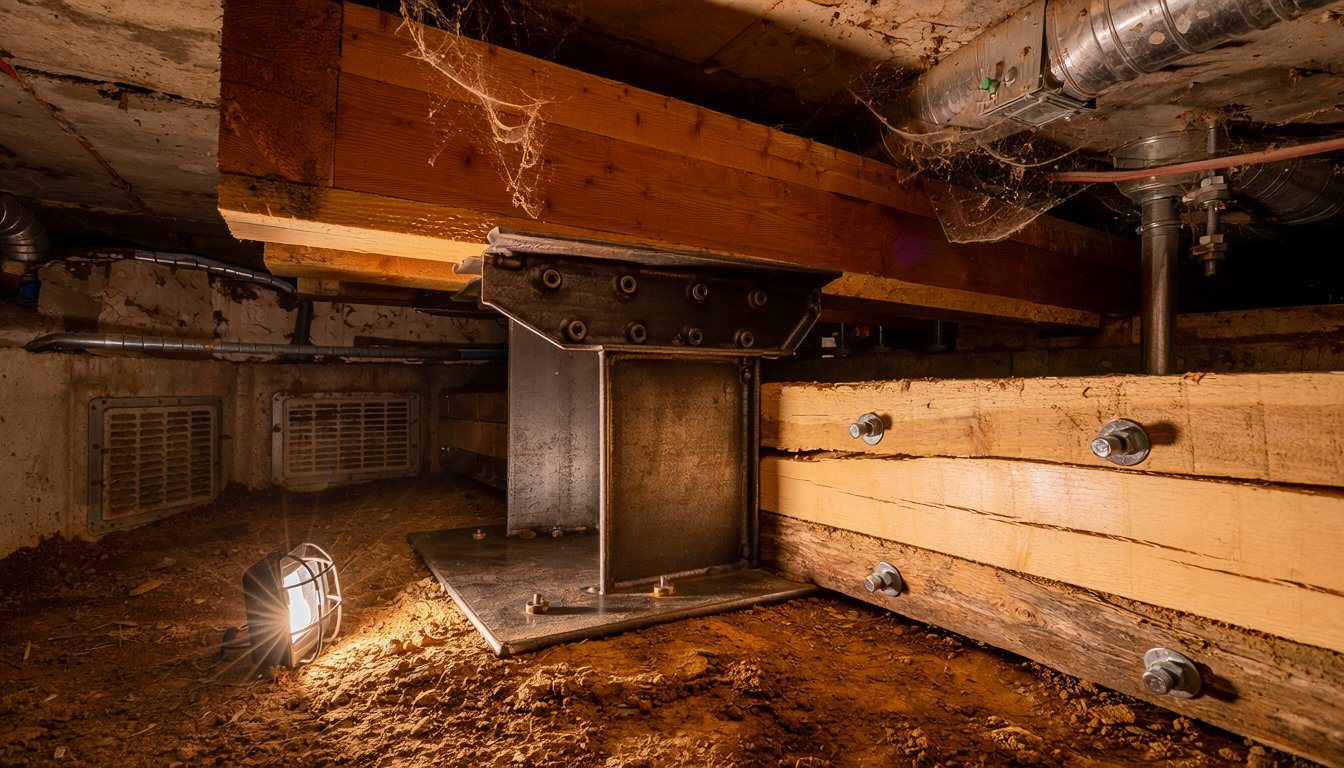
- Framing under the floor. Raised foundations often hide damaged joists. Angi puts minor sistering at $100 to $300 per joist, major repairs up to $1,000 per joist, and full replacement at $1,000 to $2,000 per joist.
- Drainage correction. In our experience, a repair that ignores the water that caused it tends to come back, so good bids include grading, downspouts or a drain.
How a $600 quote turns into $18,000: an example
Go back to the Mid-City bungalow. This is an illustration built from published price ranges, not a quote for any real house, but it shows how the line items stack up.
If the stair-step crack is old and stable, the job is the crack itself, which HomeAdvisor prices at $250 to $800. That is the $600 quote. But HomeGuide lists sticking doors among the signs of settlement, so the second contractor starts with an engineer. A structural report at $300 to $1,000 finds that two corners of the raised foundation have dropped and the posts under them have rotted.
Now the scope changes. Replacing or adding supports under a raised foundation runs $2,000 to $4,000 per Forbes Home, and a job that needs work at several points adds up quickly. The crew finds two cracked joists and sisters them at $100 to $300 each, or replaces them at $1,000 to $2,000 each if they are too far gone. The engineer traces the cause to a downspout dumping water at one corner, so a drainage fix goes in; Forbes Home puts a French drain at $1,600 to $13,000 depending on length. Add the permit and inspections, and a total in the high teens is not a surprise.
Neither contractor was wrong. The first priced a crack. The second priced a house that is settling, and fixed why. The lesson is to pay for the diagnosis first, then compare bids that solve the same problem.
How to compare foundation repair bids
- Start with the cause. Ask whether the bid is based on an engineer's report, and get a copy.
- Same scope, side by side. Line up piers, depth, leveling method and framing repairs so you are comparing the same job.
- Permit included. Confirm who pulls the permit and whether plan check, reports and inspections are in the price.
- Drainage included. Check whether the bid fixes the water that caused the problem.
- Warranty. Ask what it covers, how long it lasts and whether it transfers when you sell.
- Finish repairs. Ask whether drywall, stucco and flooring touch-ups after lifting are included.
- License. Check the contractor on the CSLB license lookup.
Medici Construction Group is one licensed option for foundation repair, holding California A, B and C-10 licenses under CSLB #1114433. Whoever you call, ask for the engineer's findings before you compare prices. Our guide to the foundation repair process covers where bidding fits in the sequence and the closeout documents to ask for.
Frequently asked questions
How much does foundation repair cost in Los Angeles?
Angi puts the LA average at $5,962, with most jobs between $3,192 and $9,252. A single crack can cost a few hundred dollars, while settling repairs and replacements run into the tens of thousands.
Is foundation repair covered by homeowners insurance?
Usually not for gradual problems. NerdWallet explains that settling and small cracks are "considered normal wear and tear and wouldn't be covered by most home insurance." Damage from a sudden, covered event is a different question for your insurer. Our guide to whether homeowners insurance covers foundation repair walks through the policy wording and how to document the cause.
Do I need a permit for foundation repair in Los Angeles?
In the City of Los Angeles, LADBS requires a permit for any repair work on buildings. If you live outside the City of Los Angeles, ask your contractor which building department issues the permit.
Do I need to move out during foundation repair?
Usually not. This Old House says "most foundation repairs don't require you to leave your home," though larger projects take more planning.
How long does foundation repair take?
This Old House puts minor repairs at 1 to 3 days, medium projects at 3 to 5 days, and major structural work at 5 to 7 days or more. Permits and engineering add time before work starts.
How long do foundations last?
InterNACHI's life expectancy chart lists poured-concrete footings and foundations at 100+ years with regular maintenance and normal wear. Soil movement, water and earthquakes are what cut that short.
Is it worth repairing or replacing a foundation?
Most problems are repairs, not replacements. Replacement, at $20,000 to $100,000, usually only makes sense when an engineer finds the foundation itself has failed, as with some very old pier-and-post houses.