Many Los Angeles homeowners pick a retrofit contractor the way they pick a plumber: whoever answers first with a fair price. With the Earthquake Brace + Bolt grant, that habit can cost you the $3,000. The program's contractor guide is blunt: "Only contractors listed on the Directory are eligible to complete an EBB retrofit." Hire someone who is not on that list and the work does not qualify.
The second trap is time. Once you are accepted, the program sets deadlines for the bid, the permit, the build and the paperwork. A contractor who is booked for four months, or who has never filed EBB paperwork, can push you past them. This guide explains what an EBB contractor is, how the deadlines work, what a good bid should include for an LA house, and what the grant covers.
What an EBB contractor is
EBB is run by the California Residential Mitigation Program, which was formed in August 2011 to provide grants and other incentives for residential earthquake retrofits. The program is funded with contributions from the California Earthquake Authority's Loss Mitigation Fund and with money from the FEMA Hazard Mitigation Grant Program. It is a real state program, not a marketing offer from a contractor.
An "EBB contractor" is not a license type. It is a contractor who meets the program's rules. Under the current FEMA-funded rules, the contractor must be a California licensed general contractor with a type A or B license, must be listed on the EBB Contractor Directory, and must have one or more employees or associated personnel who have completed the FEMA EBB training videos and quizzes offered on the CRMP website.
You search the Directory on CRMP's Find a Contractor page, by ZIP Code and distance, or by business name, contractor name or license number. CRMP is clear that the list "is not an endorsement or approval of any given contractor" and that confirming the license is the homeowner's job. So check any name you find on the CSLB license lookup as well. We explain what to look for in our guide to checking a California contractor license.
You can also do the work yourself. CRMP notes that only EBB participants may choose to complete their retrofit as a do-it-yourselfer. The catch is money: under the program rules, "labor will not be reimbursed" when a homeowner works as an owner-builder, so the grant only offsets your materials and permit costs.
The EBB clock, step by step
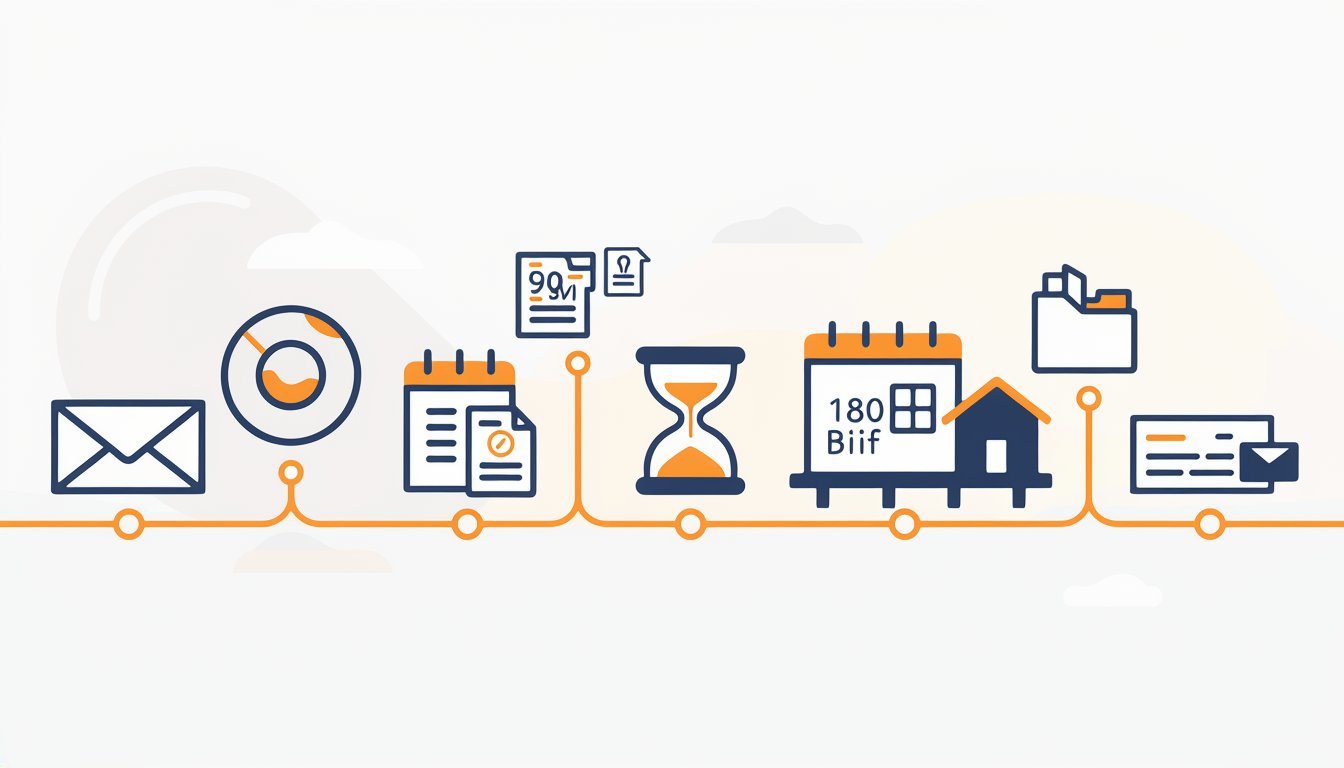
The deadlines are the reason your contractor choice matters so much. Here is the sequence under the FEMA-funded EBB Program Rules (effective September 14, 2026). Your acceptance email tells you which set of rules applies to you, so check it.
- Register and wait. Registered homeowners are randomly selected after registration closes, and more are accepted off the waitlist in the following months.
- Do not start early. CRMP says "You must not obtain a permit or begin retrofit construction work before being accepted". The building permit has to be dated after your acceptance.
- The 90-day window. Within 90 days of the acceptance email, you must say whether a contractor or you will do the work, submit a bid from an EBB Participating Contractor, and upload the building permit, plans, photos and proof that you live in the house.
- FEMA review. The rules say the FEMA approval process is expected to take 4 to 10 weeks, and work must not begin until CRMP approves it to proceed.
- The build. The retrofit must be completed within 180 days of that approval. Homeowners on the CRMP-funded track instead have nine months from the day they were accepted.
- Close-out. Within 30 days after completion, you submit your close-out documents, including a Payment Authorization Form, through the Property Owner Dashboard.
- Payment. "Incentive payments typically will be mailed within four (4) weeks following final approval by CRMP", and the invoice you submit states whether the payment goes to you or the contractor.
The practical lesson: shortlist two or three Directory contractors while you wait to hear back, and ask each one about their schedule. You cannot pull a permit or start work before acceptance, but you can make calls. A contractor who can price your house, pull the permit and upload a bid inside 90 days is worth more to you than one who is slightly cheaper and cannot start until spring.
What the contractor should scope on an LA house
Bids differ most on scope, and scope starts with whether your house fits the program. CRMP says an EBB seismic retrofit is only done on wood-framed, pre-1980 homes with a raised foundation, with cripple walls or a stem wall in the crawl space. The house must also be in a program ZIP Code, which you can check with CRMP's ZIP Code lookup. A house that already has a completed Chapter A3 brace and bolt retrofit does not qualify. If the stem wall is cracked or crumbling, see stem wall cracks before bolting.
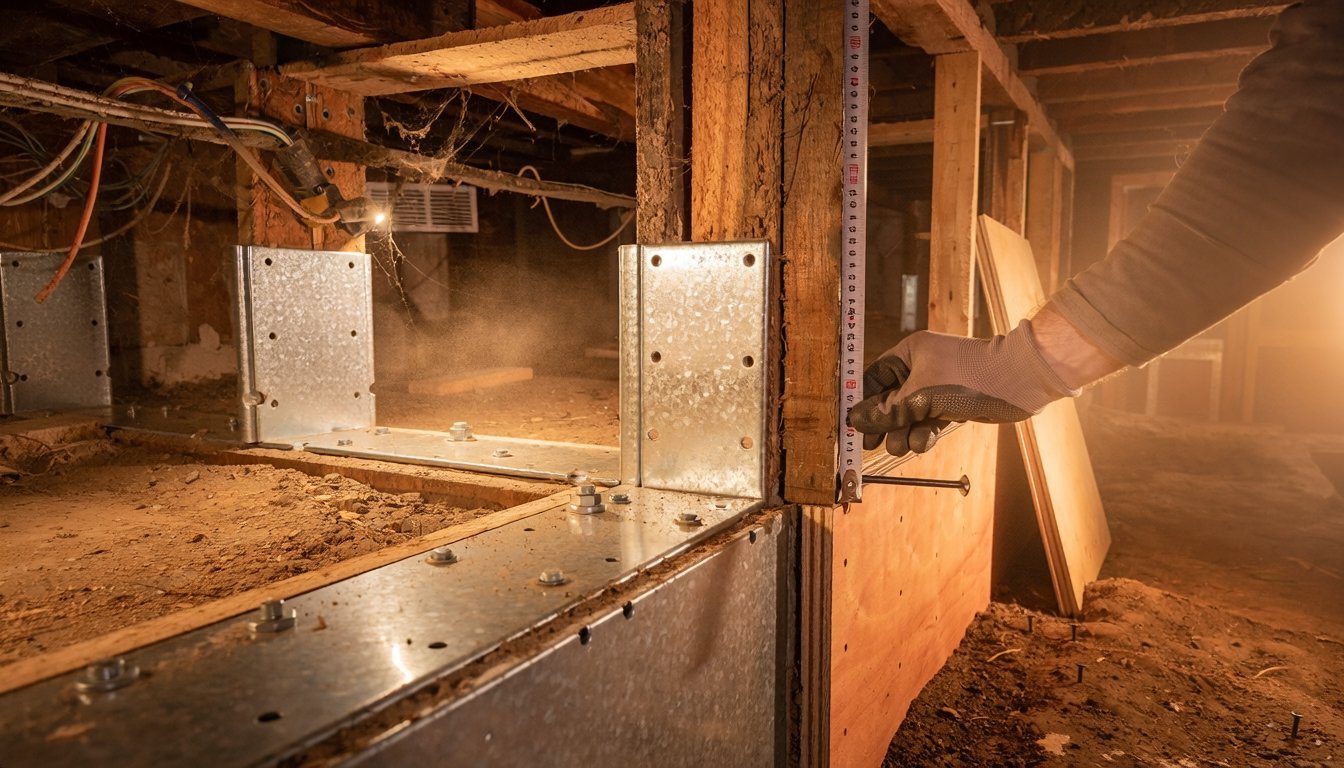
Cripple wall height changes the job. The standard EBB retrofit is for short (4 feet or less) walls between the wooden frame of the house and the foundation. For taller walls, the contractor guide says "an engineered solution is required, or contractors may use FEMA P-1100, if allowed by the local building department" for walls over 4 feet and up to 7 feet. A good contractor measures your crawl space before pricing it. A bid that never mentions wall height is a guess.
Permits depend on where you live. Your permit comes from your local building department. In the City of Los Angeles that is LADBS, and many retrofits there use LADBS Standard Plan No. 1, which covers one-, two- and three-story residential buildings with raised wood floors, up to four dwelling units. LADBS says the plan must be "followed exactly as prescribed," and that "any deviation or special details for a specific project must be approved by a LADBS Construction Services Center before the permit is issued." If you live outside the City of Los Angeles, ask your contractor which building department will issue your permit and which plan or engineering they will use.
Two items catch people. "EBB requires that the water heater be properly strapped and braced," so that belongs in the bid. And "EBB does not cover any work done on chimneys," so chimney work, if you want it, is a separate line you pay for yourself.
How to compare EBB contractor bids
Put two or three bids side by side and check each against this list. In our experience, the cheapest bid often leaves out one of these items, and the difference shows up later as a change order.
- Directory listing. Search the company on the EBB Contractor Directory yourself.
- License. A or B license, active, checked on the CSLB lookup.
- Measured scope. Cripple wall height, the number and type of anchors or foundation plates, and how much wall gets plywood bracing.
- Permit path. Who pulls the permit, from which department, and under which plan or engineering.
- Water heater strapping. Included or not.
- Schedule. Can they get a bid and permit uploaded inside your 90-day window and finish inside the build period?
- Payment terms. The rules have the invoice state whether the payment goes to the homeowner or the contractor. Be wary of paying 100% up front when the grant arrives weeks after final approval.
- Paperwork help. Who uploads the photos, invoice and close-out documents to CRMP's Property Owner Dashboard.
A practical tip: ask each contractor to go into the crawl space while you are there, or to send photos of what they saw. In our experience, a bid written after a real inspection lists wall heights, the number of anchors and any damaged framing, while a bid written from the street tends to be a flat price with vague wording. Ask how the contractor handles a surprise, such as rotted mudsill or a wall taller than expected, and how that affects the price before work continues. Those answers tell you more than the headline number.
Medici Construction Group is one licensed option for Earthquake Brace + Bolt retrofits, holding California A, B and C-10 licenses under CSLB #1114433. Whoever you call, confirm the company appears on the EBB Directory before you sign. For the broader vetting questions beyond the grant itself, see our guide to hiring a seismic retrofit contractor.
What the grant covers and what you pay
The base grant is up to $3,000 toward a code-compliant seismic retrofit. Whatever the job costs above that is yours, which is why the scope details above matter. For typical totals on an LA house, see our seismic retrofit cost guide.
Income-eligible homeowners can get more. CRMP defines an income-eligible household as one with income at or below $94,480. The Supplemental Grant is smaller in Southern California than in the north: up to $2,650 for brace and bolt and $1,125 for bolt-only in Southern California, versus $7,000 and $2,800 in Northern California. Income-approved applicants can also get help up front, including up to $250 for the cost of one contractor's bid and the full cost of the building permit, deducted from total grant funds.
On taxes, CRMP says FEMA-funded CRMP grants, including EBB and EBB Supplemental grants, "are not taxable at the state level in California, or at the federal level." If your acceptance puts you on the CRMP-funded track, confirm the treatment with a tax professional.
After the work: two more savings
- Earthquake insurance. The CEA offers premium discounts for retrofitted homes built before 1980, wood framed, with the water heater secured. Raised-foundation homes built 1940 to 1979 get 20%, and those built in 1939 or earlier get 25%.
- Property tax. California's Section 74.5 excludes seismic retrofit work from reassessment. The BOE-64 claim "must be filed with the assessor prior to, or within 30 days of, completion of the project," supporting documents are due within six months of completion, and the exclusion expires upon a change in ownership.
If registration is closed or you were not selected
CRMP says registration is offered for a limited time, at least once per year. As of this update, the 2026 dates had not been posted, so check CRMP before you plan around them. If you registered and were not picked, you may still be accepted off the waitlist in the following months.
The hard choice is whether to wait. Work done before acceptance does not qualify, so retrofitting now means giving up the grant for this house. In our experience, owners who plan to sell soon or who feel exposed after a quake often go ahead without it, and owners with time on their side register and wait. Either way, the scope and bid checklist above applies.
Frequently asked questions
How do I find an EBB approved contractor?
Search CRMP's EBB Contractor Directory by ZIP Code, name or license number, then verify the license on the CSLB website. The Directory is not an endorsement.
Can any licensed contractor do an EBB retrofit?
Can I hire a contractor before I am accepted?
You can talk to contractors and collect estimates, but you must not obtain a permit or begin work before being accepted.
How long do I have to finish?
Under the FEMA-funded rules, 180 days from CRMP's approval to proceed. On the CRMP-funded track, nine months from acceptance. Your acceptance email says which applies.
How is the EBB grant paid?
After you submit the close-out documents, payments typically are mailed within four weeks of final approval by CRMP, to the payee your invoice designates.
Can I do the retrofit myself?
Yes, EBB allows owner-builders, but labor will not be reimbursed, and you pull the permit yourself.
Is the EBB grant taxable?
CRMP says FEMA-funded EBB grants are not taxable at the state or federal level. On the CRMP-funded track, ask a tax professional.