A crack in your foundation does not automatically mean the house is failing. Concrete cracks as it dries, and the American Concrete Institute states that cracking due to drying shrinkage "can never be eliminated in most structures." Its own guidance says some amount of cracking is normal to expect on every project. What matters is why a crack formed and whether it is still moving.
That question gets lost in most search results. When we reviewed the search results for "foundation crack repair," many of the top pages sold DIY injection kits made for poured basement walls that leak water. The foundations we work on around Los Angeles are mostly slabs and raised perimeter foundations, many over clay soils that swell and shrink, in a region that gets earthquakes. The fix that works depends on which of those forces cracked the concrete.
Why Los Angeles foundations crack
- Drying shrinkage. ACI notes that concrete's tensile strain capacity can be 150 × 10⁻⁶ or less, well below typical shrinkage strain of 600 × 10⁻⁶. When the concrete is restrained, it cracks. In our experience, these are usually thin, fairly straight cracks that show up early.
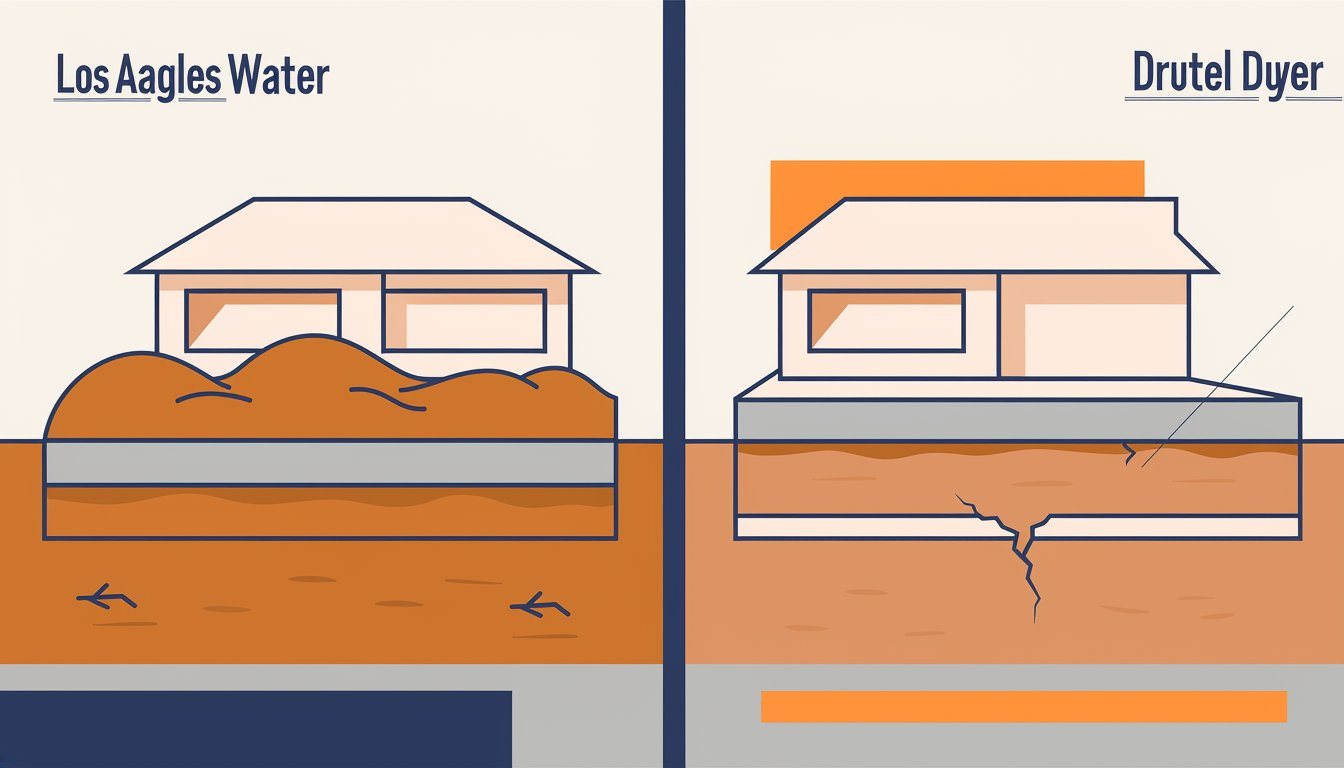
- Expansive soil. Clay-rich soils take on water and swell, then shrink as they dry. Geology.com notes that expansions of ten percent or more are not uncommon and that the shrinking can remove support from a building. California treats this as a design hazard. The California Geological Survey notes that the state building code requires special design provisions for foundations bearing on expansive soils, among other problem soils, in the code chapter it reviews for schools, hospitals and essential buildings. Wet winters followed by dry summers keep that cycle going in LA.
- Earthquakes. After a quake, FEMA advises owners to "have a building professional check the building for cracks and damage, particularly around the foundation, chimneys and masonry walls." Not every crack you notice afterward is new. The standard residential damage guidance from CUREE stresses establishing the cause of cracks, because many come from shrinkage or settlement rather than the earthquake.
- Settlement and drainage. CUREE's guidance lists settlement alongside shrinkage as a common non-earthquake cause of foundation cracks. In our experience, the usual triggers are water pooling against the foundation, leaking lines and poorly compacted fill, and hillside lots add slope movement.
Know your foundation type first
A slab-on-grade house has its floor poured directly on the ground, so cracks show up in the garage floor, under flooring, or at the slab edge outside. A raised foundation has a concrete perimeter wall (a stem wall) and a crawlspace, so cracks show up on the exterior of that wall or from inside the crawlspace. (When that wall needs more than a crack repair, our stem wall repair cost guide covers the next levels.) Basement-focused advice often misses the way these two foundation types crack. For what to look for and when, see our guide to foundation crack inspections. If your slab is post-tensioned, read our post-tension slab crack repair guide before anyone cuts or drills.
Seal, repair or call an engineer first
Width is the first filter published guidance uses:
| What you see | Typical path |
|---|---|
| Hairline or small vertical crack, 1/8 inch or less, not growing, dry | Monitor it. This Old House says small vertical cracks no wider than 1/8 inch can be sealed with epoxy yourself. |
| Wider than 1/8 inch | Get a professional evaluation. HomeAdvisor flags cracks wider than 1/8 inch as possible structural problems. |
| Wider than 1/4 inch | Plan on repair. Angi reports that the National Association of Home Builders requires repair of any foundation crack of more than one quarter of an inch. |
| Any crack that is growing, letting water through, or newly appeared | Structural engineer first. Angi lists these as reasons to consult one. |
| New or wider cracks after an earthquake | Building professional first, per FEMA's earthquake safety checklist. |
Width alone does not settle it. Direction, offset and changes elsewhere in the house also matter. We will cover those in a separate guide on how to tell if a foundation crack is structural.
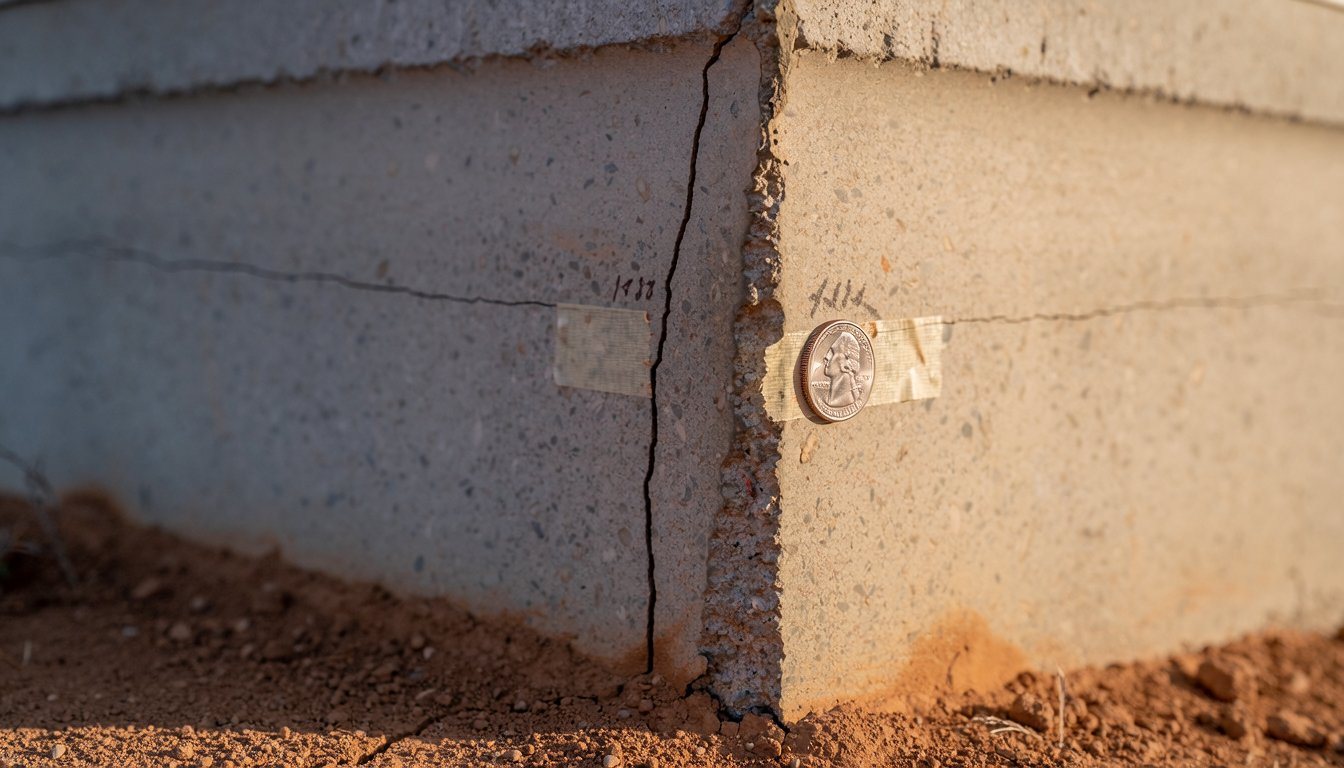
Is it still moving? A simple way to check. Draw a short pencil line across each end of the crack and write the date next to it. Take a photo with a coin beside the crack for scale. Recheck each month, and after heavy rain or an earthquake. A crack that grows past your marks or widens in the photos is active, and that changes which repair will hold.
Repair methods and what each one fixes
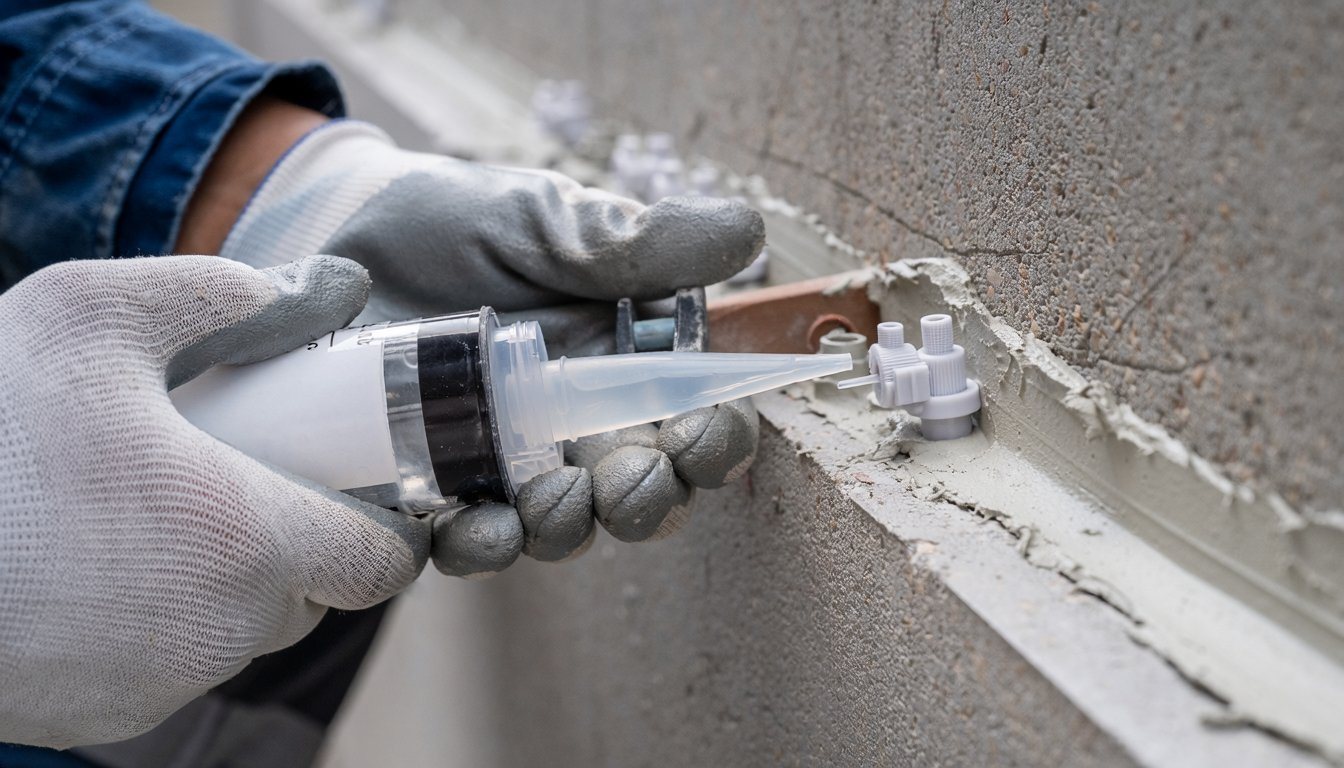
HomeAdvisor notes that a typical crack fix involves injecting either epoxy or polyurethane foam. The two do different jobs.
Epoxy injection
Epoxy bonds the two sides of the crack back together. The ACI field guide says epoxy injection "can restore structural integrity and reduce moisture penetration through concrete cracks 0.002 in. (0.05 mm) in width and greater." It also sets two limits: "If the crack is subject to subsequent movement, an epoxy repair may not be applicable." And before any repair, "the cause of the damage must be assessed and corrected." In LA terms, epoxy fits a stable crack. It does not fit a crack that is still opening because the soil underneath is moving.
Polyurethane injection
Polyurethane stays flexible. Waterproofing contractor U.S. Waterproofing explains that because epoxy is rigid, movement will crack it and water seepage returns, while flexible urethane "moves with the wall." It is the usual choice when the goal is stopping water rather than restoring strength.
Repair from the outside
On raised foundations and slab edges, the crack is often easiest to reach from outside. In our practice, the work is to expose the face, clean and seal the crack, then fix the drainage feeding it. Because ACI says the cause must be corrected before any repair, regrading soil away from the wall and correcting downspouts can matter as much as the sealant.
Underpinning and structural repair
When the foundation itself has settled, sealing the crack only hides the symptom. Underpinning deepens the foundation or adds new support points under it. It is engineered work that should follow an engineer's diagnosis. On expansive or hillside sites, ask whether the engineer needs a soils report first.
What foundation crack repair costs
Crack repairs themselves are usually modest. HomeAdvisor puts them between $250 and $800, and This Old House says a hairline crack caught early might cost $200 to $800. An engineer's visit is often money well spent before bigger work. Angi puts a structural report around $550, typically $350 to $800. Costs climb when the problem is settlement rather than the crack, which our foundation repair cost guide covers in detail.
Permits in Los Angeles
LADBS states that "a permit from LADBS is required for any private property construction, alteration, or repair work on buildings within the City of Los Angeles." Structural foundation repair falls under that. If you are only sealing a cosmetic hairline crack, confirm with LADBS before assuming no permit is needed. Any contractor doing structural work should pull the permit and schedule the inspection.
What to ask before you hire
- License. Check the contractor's license and classification on the CSLB license lookup.
- Diagnosis. What do they think caused the crack, and is it still moving? A bid that goes straight to a product without a cause is a warning sign.
- Engineer. For wide, growing or post-earthquake cracks, does the scope follow an engineer's recommendation?
- Soils. On hillside lots or known expansive soil, is there a soils report, or will one be needed?
- Permit. Who pulls the LADBS permit, and is the fee in the price?
- Method. Epoxy, polyurethane or structural repair, and why that one fits your crack.
- Drainage. Does the bid fix the water or soil problem behind the crack, or only the crack?
Medici Construction Group is one licensed option for foundation crack repair, holding California A, B and C-10 licenses under CSLB #1114433. Whoever you call, bring photos of the crack and your marks so they can tell you whether it needs sealing, repair or an engineer first.
Frequently asked questions
Not sure whether your crack needs repair at all? Our guide to foundation cracks covers which cracks are normal and when to worry.
Can I repair a foundation crack myself?
For a small, stable vertical crack no wider than 1/8 inch, This Old House says epoxy sealing can be a DIY job. Anything wider, moving or structural should be evaluated first, and structural repair in Los Angeles needs an LADBS permit.
Is epoxy or polyurethane better for foundation cracks?
Epoxy restores strength in a stable crack. The ACI field guide says it may not be suitable if the crack keeps moving. Polyurethane stays flexible and is typically used to stop water.
Does homeowners insurance cover foundation crack repair?
Usually not. NerdWallet explains that homeowners insurance doesn't usually cover foundation cracks unless a sudden, accidental event such as a burst pipe caused them. Settling and wear are excluded. In California, the Department of Insurance notes that "your homeowner's insurance does not cover earthquake damage", which needs a separate earthquake policy. Our guide to whether homeowners insurance covers foundation repair explains which causes are excluded and what to document before filing.
Do I need a permit to repair a foundation in Los Angeles?
For structural repair, yes. LADBS requires a permit for construction, alteration or repair work on buildings in the City of Los Angeles. Confirm with LADBS before skipping a permit for cosmetic sealing.
Should I call a structural engineer or a contractor first?
For a small, stable crack, a licensed contractor can assess and seal it. For a wide, growing, leaking or post-earthquake crack, call an engineer first so the repair addresses the cause, then have a contractor build what the engineer specifies.