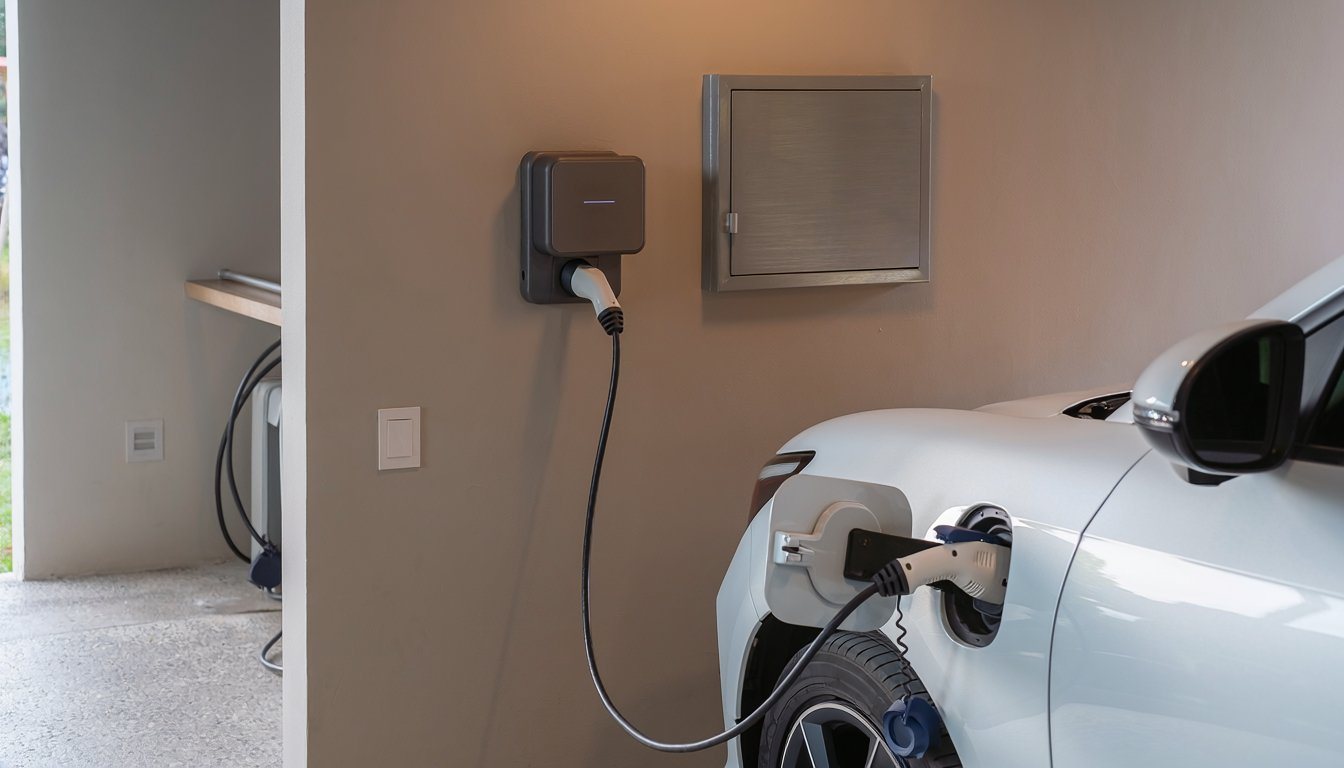
Two neighbors on the same Los Angeles street buy the same Level 2 charger. One gets a quote under $1,000. The other gets a quote several times that. The charger is identical. What differs is the house: in the first, the electrical panel sits on the garage wall a few feet from where the car parks; in the second, the car parks in a detached garage across the driveway from an older, full panel.
That is why EV charger installation cost varies so much. Angi puts the Los Angeles average at $909, with most jobs between $482 and $1,340. National guides run higher: HomeGuide says a complete Level 2 installation costs "$1,200 to $3,000 on average." This guide covers what sits behind those numbers, what you can do about the expensive parts, and which rebates still apply now that the federal credit has ended.
Quick answers
- Average in LA: $909, with a typical range of $482 to $1,340, per Angi's Los Angeles cost page.
- Full national range: HomeGuide's $1,200 to $3,000 average for a complete Level 2 job; more when a panel upgrade or long wire run is involved.
- Permit: Required. LADBS says any electrical work needs an electrical permit.
- Federal tax credit: Gone for new installs. The IRS says you "can't claim the credit" for charging property placed in service after June 30, 2026.
- Rebates: LADWP customers can get up to $1,000 toward a charger; SCE's Charge Ready Home program offers up to $2,100 or $4,200 for eligible households.
What EV charger installation costs in Los Angeles, line by line
An EV charger installation quote bundles several separate costs. Here is how the published figures break down:
| Cost item | Typical range | Source |
|---|---|---|
| Total installation, Los Angeles average | $909 ($482 to $1,340) | Angi, Los Angeles |
| Level 2 charger (LA) | $800 to $2,280 | Angi, Los Angeles |
| Electrician labor (LA) | $80 to $150 per hour | Angi, Los Angeles |
| Permit (LA) | $100 to $200 | Angi, Los Angeles |
| New outlet installation | $150 to $350 | HomeGuide |
| Dedicated circuit | $250 to $900 | HomeGuide |
| Wiring run to a garage or shed | $10 to $25 per linear foot | HomeGuide |
| Panel upgrade, if needed | $800 to $2,000 | Angi, national |
Angi's LA page also notes the city's 9.75% sales tax on equipment. For the charger itself, Consumer Reports lists popular home units from about $300 to $800, so a large share of a typical quote is labor and wiring, not the box on the wall.
Level 1 vs Level 2: do you need to pay for installation at all?
Level 1 charging uses a 120-volt AC plug, the same kind of outlet found throughout a house. The U.S. Department of Energy says many owners "meet their daily driving range requirements by charging overnight with Level 1 equipment, requiring no additional cost or installation." To work it out with your own miles and rate plan, see do you need a Level 2 charger at home.
The trade-off is speed. The DOE's Alternative Fuels Data Center estimates Level 1 adds "Approximately 5 miles of range per 1 hour of charging," while Level 2 at 240 volts adds "Approximately 25 miles of range per 1 hour of charging." In our experience, an LA driver with a short daily commute and a dedicated outlet near the parking spot can often live with Level 1 for a while. Longer commutes, two EVs, or a larger battery are what usually justify Level 2.
The four things that move a Los Angeles quote
1. The distance from the panel to where you park
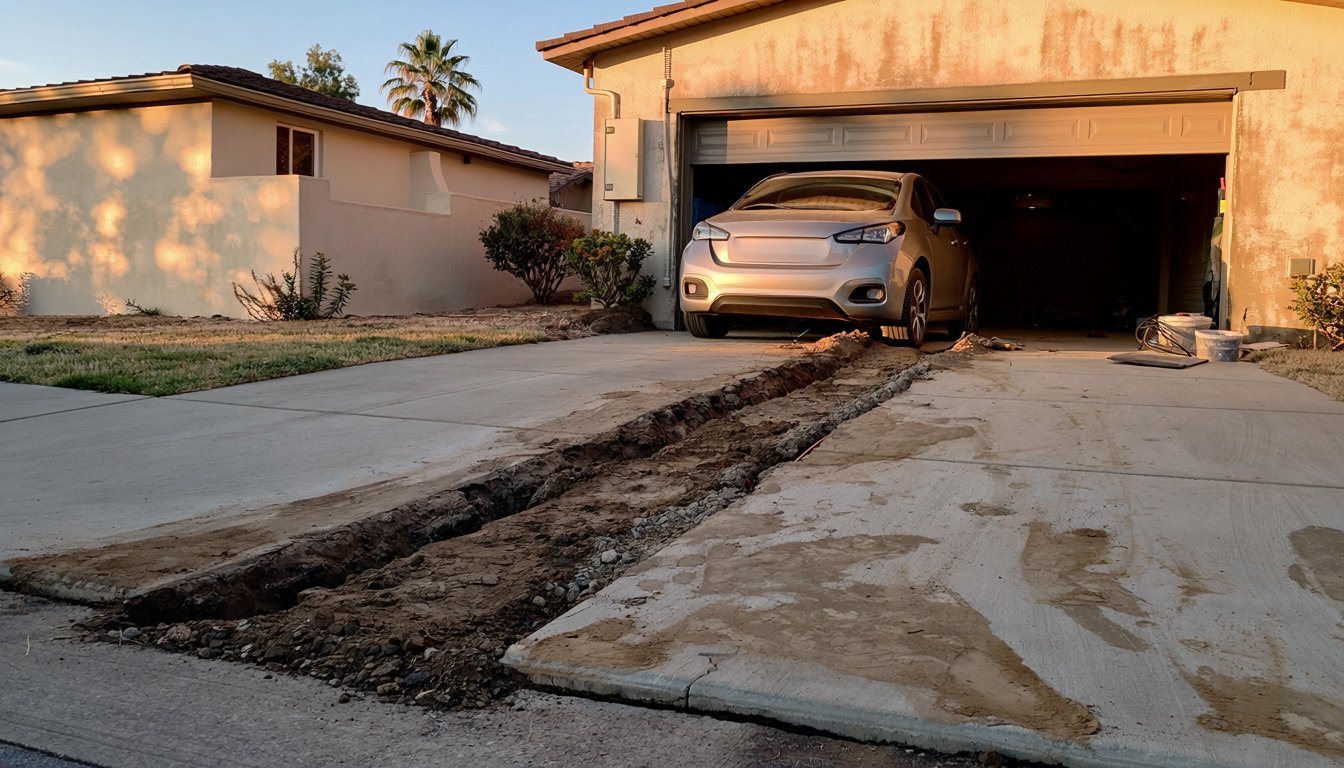
Wire is priced by the foot. HomeGuide puts wiring runs at "$10 to $25 per linear foot." An attached garage that shares a wall with the panel needs only a short run. In our experience, a detached garage, a carport at the back of the lot, or a driveway spot across a walkway is where costs climb, because the wire may need to run through an attic, along exterior walls in conduit, or underground in a trench. Ask the electrician to walk the route and price it before you pick a charger location. If the charger is in a detached garage, our underground conduit cost per foot guide covers the run out to it.
2. Whether your panel has room
A Level 2 charger is one of the largest loads in a house. The DOE notes that "Some homes might have insufficient electric capacity for Level 2 equipment. However, a qualified electrician can add circuits to accommodate the capacity needed for Level 2 charging." If the load calculation shows the panel is short, an upgrade adds $800 to $2,000 by Angi's national figure, and more when the utility service also has to change. Our electrical panel upgrade cost guide covers LA panel pricing in detail, and our 400 amp service guide covers when a larger service is actually needed.
3. Hardwired charger or a NEMA 14-50 outlet
Some chargers plug into a 240-volt outlet; others are wired directly to the circuit. HomeGuide prices a new outlet at $150 to $350 and a dedicated circuit at $250 to $900. In our experience, the cost gap between the two is small once the circuit is run. A plug-in unit is easier to take with you when you move; a hardwired unit is often the better choice outdoors and for higher charging speeds.
4. Circuit size and the charger you pick
The DOE says residential Level 2 units commonly run "at up to 30 Amps, delivering 7.2 kW of power." In our experience, electricians size EV circuits under the continuous-load rules in the National Electrical Code, which is why a charger set to draw 40 amps usually needs a 50-amp circuit. A charger that can be set to a lower amperage can sometimes fit a panel that a full-power unit would not.
Load management: an alternative to a panel upgrade
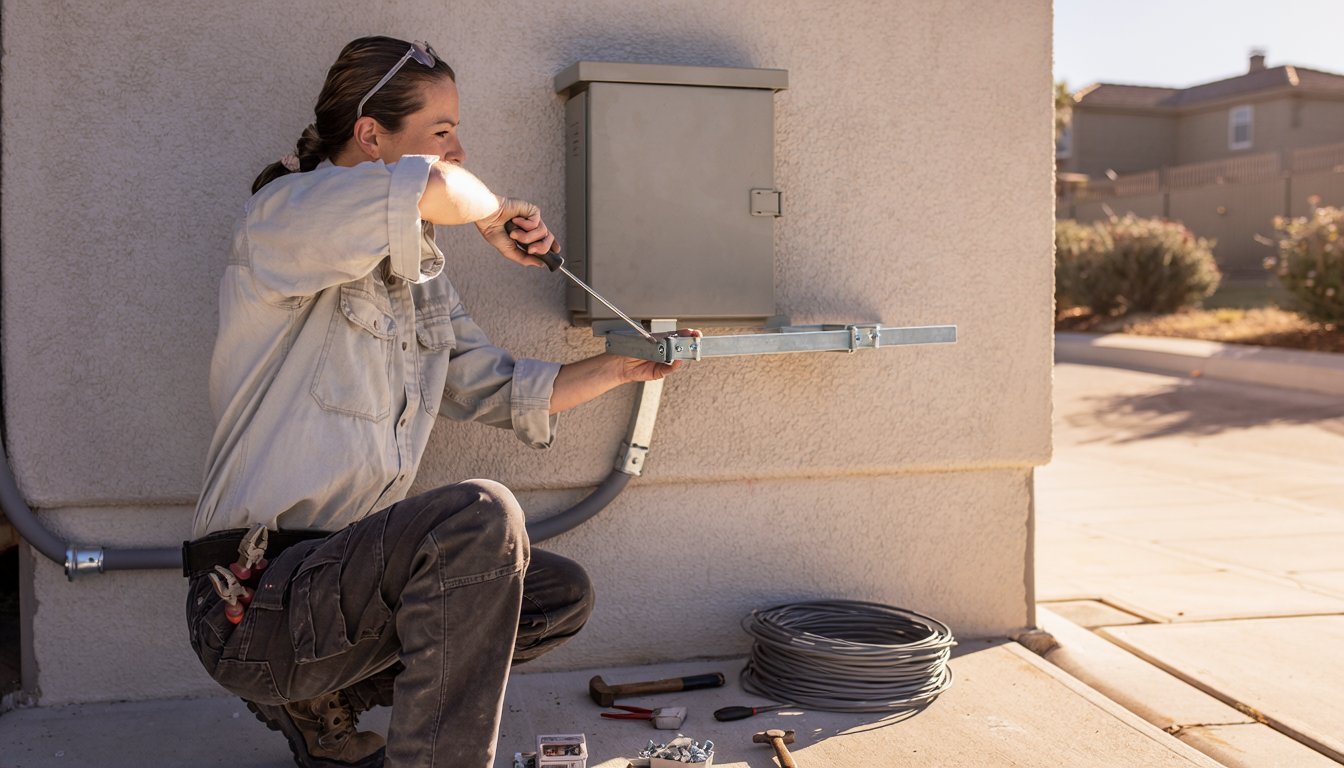
If your panel is close to full, a panel upgrade is not the only answer. In general terms, load management equipment watches the home's total draw and slows or pauses the charger when other large appliances are running, so the combined load stays within the panel's rating. One charger manufacturer, Emporia, states that this approach is "allowed by the National Electric Code (NFPA 70, sections 625.42 and 750.30) as a legitimate alternative to electrical panel upgrades."
Emporia estimates that a system "costing roughly $600-$1,000 can avoid a panel upgrade that commonly costs $5,000-$10,000." Treat those as a manufacturer's figures, not an independent survey. In our experience, load management works well when the panel is tight but not overloaded. It will not fix a panel that is failing, has no breaker space, or is a model the electrician recommends replacing anyway. Ask for a written load calculation, then compare both options.
Permits and inspection in Los Angeles
A Level 2 installation adds a new 240-volt circuit, so it needs a permit. LADBS states that any electrical work needs an electrical permit, and it says permits for simple projects that do not require plan check "are readily issued as Express Permits or e-permits when done online." After the work is done, an inspector checks it. A permitted, inspected installation also matters for rebate paperwork, for insurance and when you sell the house. Our electrical permit guide explains what the permit and inspection record get you.
Newer homes can be cheaper to equip. California's green building code requires new one- and two-family homes with attached garages to be "EV Capable." As summarized by Permit Sonoma, the panel must "provide capacity to install a 40-ampere 208/240-volt minimum dedicated branch circuit and space(s) reserved," labeled "EV CAPABLE." If your panel directory has that label, much of the hard work is already done.
Rebates and credits in 2026: what still applies
The federal credit has ended for new installs
Many cost guides still mention the federal 30C tax credit. According to the IRS, the One Big Beautiful Bill Act "changed the termination date for the section 30C alternative fuel vehicle refueling property credit from December 31, 2032, to June 30, 2026," and "You can't claim the credit for alternative fuel vehicle refueling property placed in service after June 30, 2026." A charger installed this fall does not qualify.
LADWP: up to $1,000 toward the charger
In our experience, most homes inside the City of Los Angeles are LADWP customers, while many surrounding LA County cities are served by Southern California Edison. LADWP's Residential EV Charger Rebate Program lists a maximum charger rebate of $1,000, a $250 rebate for a separate EV meter, and an additional $500 for customers in LADWP's EZ-SAVE or Lifeline programs. Applicants must be "LADWP account holders ... with an active LADWP electric meter on a residential rate plan," and the rebate "cannot exceed your actual costs minus any financial incentives you received from third parties." Confirm the program is funded and open before you buy.
SCE: Charge Ready Home for eligible households
For SCE customers, the utility's Charge Ready Home program offers up to $4,200 for income-qualified households (enrolled in programs such as CalFresh or Medi-Cal, or earning under 80% of area median income) and up to $2,100 in designated disadvantaged communities. The program notes that panel upgrades are "often necessary for installing an electric vehicle charger." As with any rebate, check current funding before you schedule work; our guide to the SCE panel upgrade rebate covers eligibility and the paperwork.
Your electric bill tells you which utility serves you. In our experience, lining up the rebate paperwork before the installation, not after, avoids the most common reason claims get rejected.
Condos and rentals
California law limits how far an HOA or landlord can block a charger. For condos, Civil Code Section 4745 makes void any governing-document provision that "effectively prohibits or unreasonably restricts the installation or use of an electric vehicle charging station" in an owner's unit or designated parking space. Reasonable rules are allowed if they do not significantly raise the cost or lower the efficiency of the station. For chargers at a business or commercial property, see our guide to commercial EV charging station cost. For larger shared charging sites, see our explainer on commercial EV charging hubs.
For renters, Civil Code Section 1947.6 requires landlords to approve a written request to install a charger at an assigned space, with exemptions such as properties with fewer than five parking spaces. The landlord can require the tenant to pay for installation, permits and electricity. In our experience, condo and apartment installs cost more than single-family ones because the wire run to a shared garage is usually longer.
How to get an accurate quote
Get at least two quotes, and ask each electrician the same questions:
- Did you do a load calculation on my panel, and does the charger fit without an upgrade?
- What is the exact wire route and length from the panel to the charger location?
- Is the permit, inspection and any wall or stucco patching included?
- Hardwired or plug-in, and what amperage will the circuit be?
- Will you provide the invoices and details my utility needs for the rebate?
Check any contractor's license before you sign. Our guide on how to check a California contractor's license walks through it. Medici Construction Group is one licensed option for EV charger installation, holding California A, B and C-10 licenses under CSLB #1114433. Whoever you hire, have them measure the route and check the panel before you settle on a price.
Frequently asked questions
How much does it cost to install an EV charger in Los Angeles?
Angi puts the Los Angeles average at $909, with most jobs between $482 and $1,340. Long wire runs, detached garages and panel upgrades push the price higher.
How much does a Level 2 charger installation cost?
HomeGuide puts a complete Level 2 installation at $1,200 to $3,000 on average nationally. The charger itself is often $300 to $800 of that for popular home models.
Do I need a permit to install an EV charger in LA?
Yes. LADBS requires an electrical permit for any electrical work, and a Level 2 charger adds a new 240-volt circuit. LADBS issues express permits or e-permits for simple projects that do not require plan check. For how the fee itself is calculated, see our electrical permit cost guide.
Is the federal EV charger tax credit still available?
Not for new installations. The IRS says the 30C credit can't be claimed for charging property placed in service after June 30, 2026.
Does LADWP offer an EV charger rebate?
Yes. LADWP's Residential EV Charger Rebate Program lists up to $1,000 for the charger, $250 for a separate EV meter, and an extra $500 for EZ-SAVE or Lifeline customers. Check that the program is open before you buy.
Is a hardwired charger or a NEMA 14-50 outlet cheaper?
HomeGuide prices a new outlet at $150 to $350 and a dedicated circuit at $250 to $900. In our experience, the difference is small once the circuit is run; the wire route matters far more.
Do I need a licensed electrician to install an EV charger?
In our experience, yes for a Level 2 charger: the job adds a new 240-volt circuit that has to be permitted and inspected, and utility programs such as SCE's Charge Ready Home expect licensed work.
Can my HOA stop me from installing an EV charger?
Not outright. California Civil Code Section 4745 voids HOA rules that effectively prohibit or unreasonably restrict a charger in your unit or designated parking space, though reasonable rules are allowed.