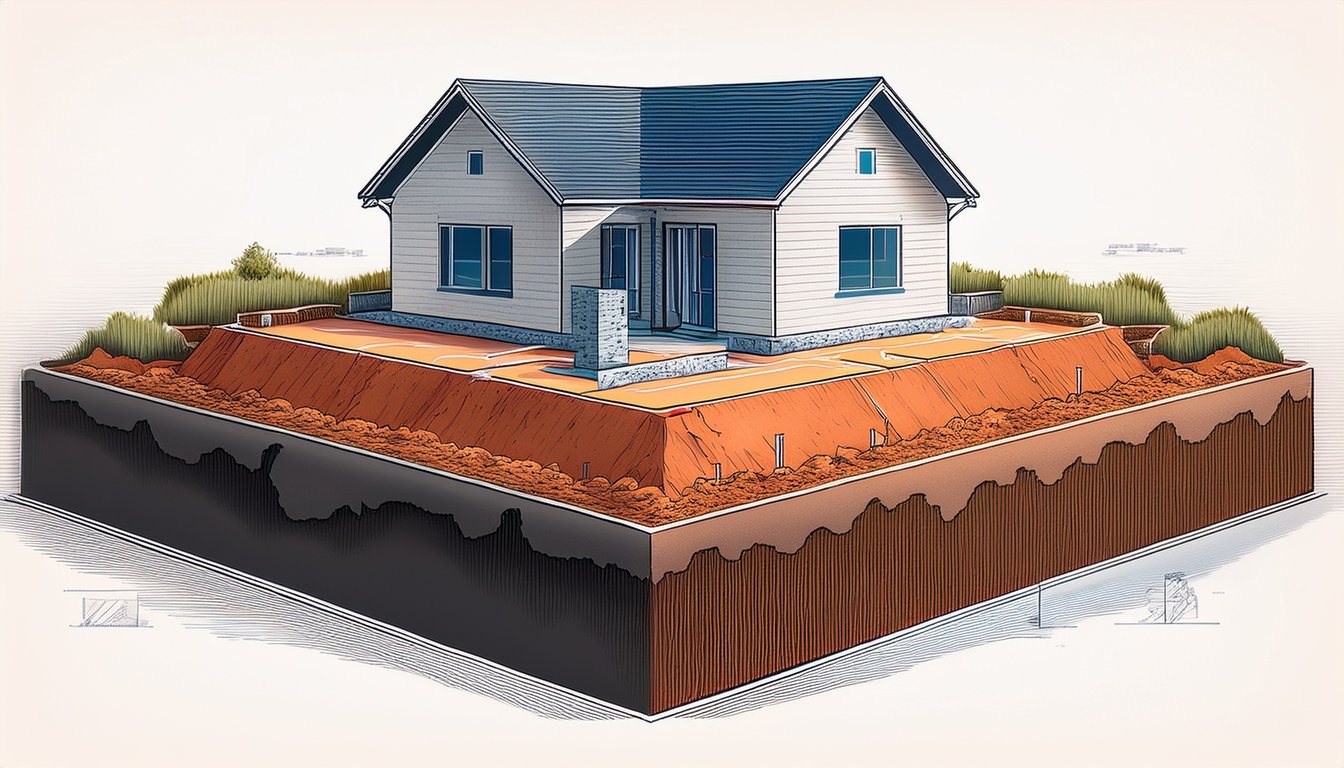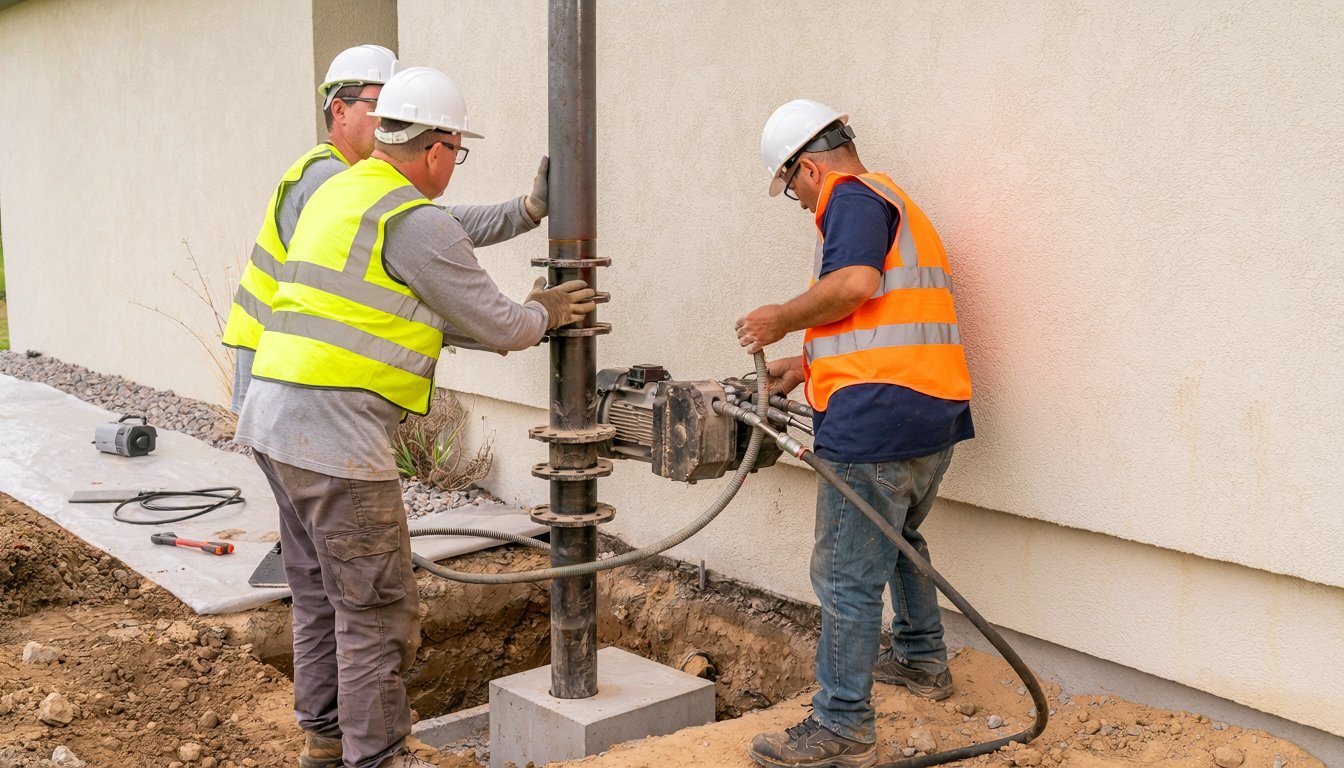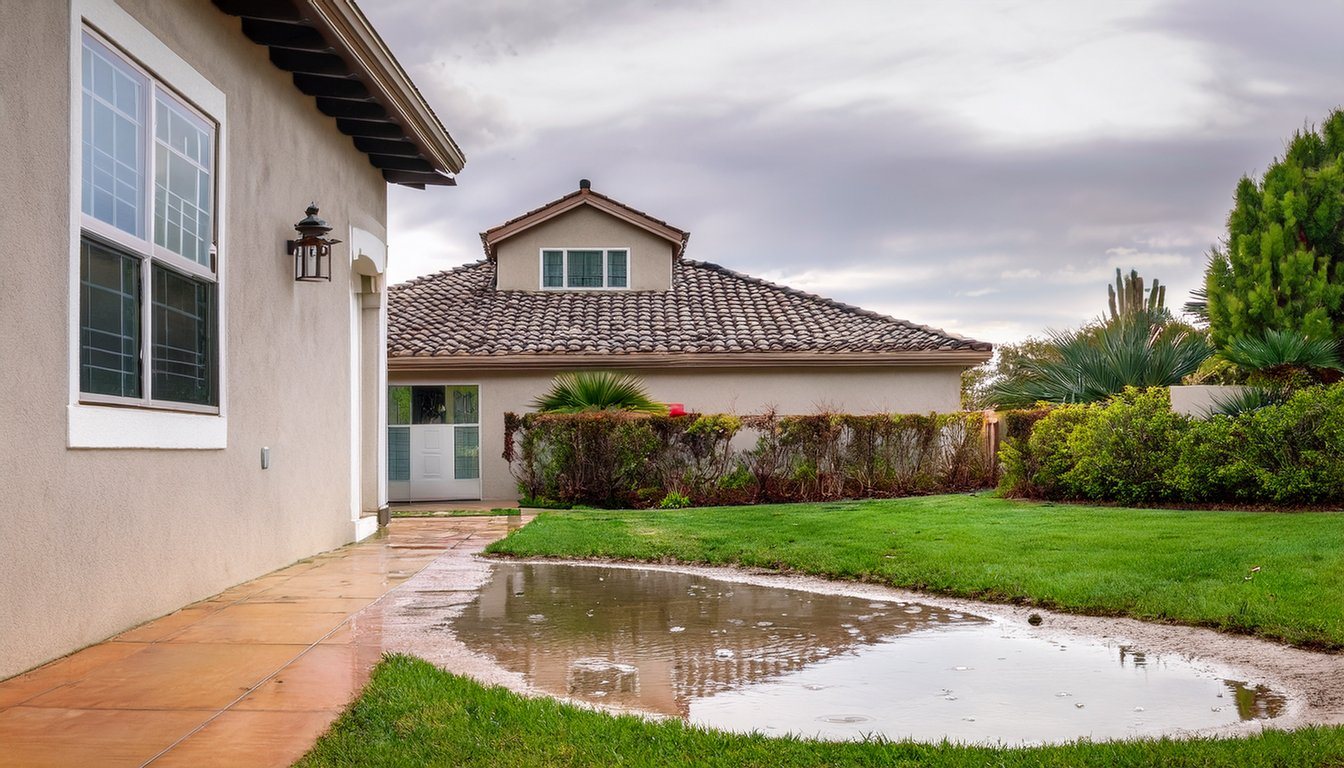
The same corner of the yard floods after every storm, and someone suggests a French drain. Sometimes that's the right call. Often it isn't, because a soggy yard can come from three very different problems that look the same from the patio. The University of California's garden experts point to the most common one: "Most minor garden and lawn drainage issues are caused by clay soil."
This guide shows how to tell the problems apart with two simple tests you can do yourself, and which fix matches each one.
Quick answers
- Common causes: clay or compacted soil, ground that slopes toward the house, and downspouts that dump roof water at the foundation.
- Two tests: check whether the ground falls about 6 inches in the first 10 feet away from the house, and time how fast a hole full of water drains.
- Which fix: regrading or a swale for slope problems, soil improvement for water that won't soak in, downspout work and catch basins for roof water, and a French drain only for water moving underground. If a contractor proposes drain tile instead, our drain tile vs French drain guide sorts out what each term usually means.
- In LA: clay soil is common, and soaking water into the ground near foundations and slopes needs care.
Why LA yards hold water
Clay soil is the first suspect. UC's guide explains that "Clay soil is more dense than sandy or loamy soil, and therefore, is slower to allow rainwater to filter through it," and lists other causes including "low grading compared to surrounding properties" and "extremely compacted soil."
Compaction and slope are the next two. This Old House notes that "Soil gets hard, compacted, and tightens up the more we walk on it," and that a yard should slope away from the home: "if it doesn't, it will cause a funnel-like effect."
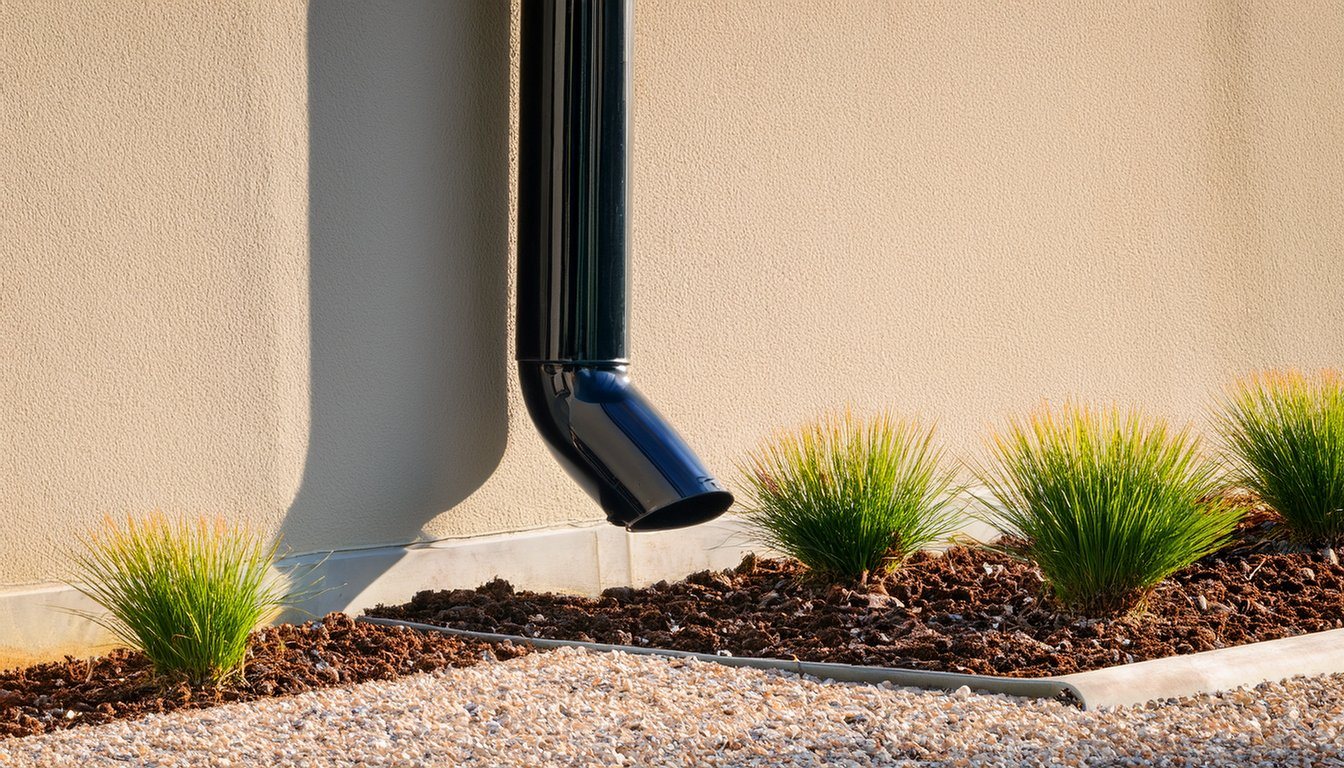
The last is roof water. In our experience, a single downspout can dump the runoff from a large section of roof onto one small patch of ground. The EPA describes downspout disconnection as redirecting that water to a landscaped area instead of pavement that sends it straight to the street. In our experience, hardscape adds to it: patios, driveways and walkways shed water quickly, and it has to land somewhere. If a driveway is being replaced anyway, our permeable pavers cost guide covers what a surface that drains through itself costs.
Test 1: which way does the ground slope?
Building codes set a simple rule for the ground next to a house. The International Residential Code, as adopted in the Seattle Residential Code, says: "Lots shall be graded to drain surface water away from foundation walls. The grade shall fall not fewer than 6 inches (152 mm) within the first 10 feet (3048 mm)." Where walls or lot lines make that impossible, it calls for "drains or swales" instead. Our guide to what grading is in construction explains how that slope gets set.
Los Angeles adds its own grading rules. LAMC Section 91.7013 requires that graded pads with cut or fill slope at least two percent to an approved drainage device or facility or a public street, and that gutters deliver roof water by gravity to a street, watercourse or approved drainage facility.
To check your own yard, in our experience a string, two stakes and a line level are enough. Tie the string at ground level against the house, stretch it 10 feet out, level it, and measure down to the ground at the far stake. If the ground is higher out there than at the house, water is running toward your foundation.
Test 2: does the soil soak water in?
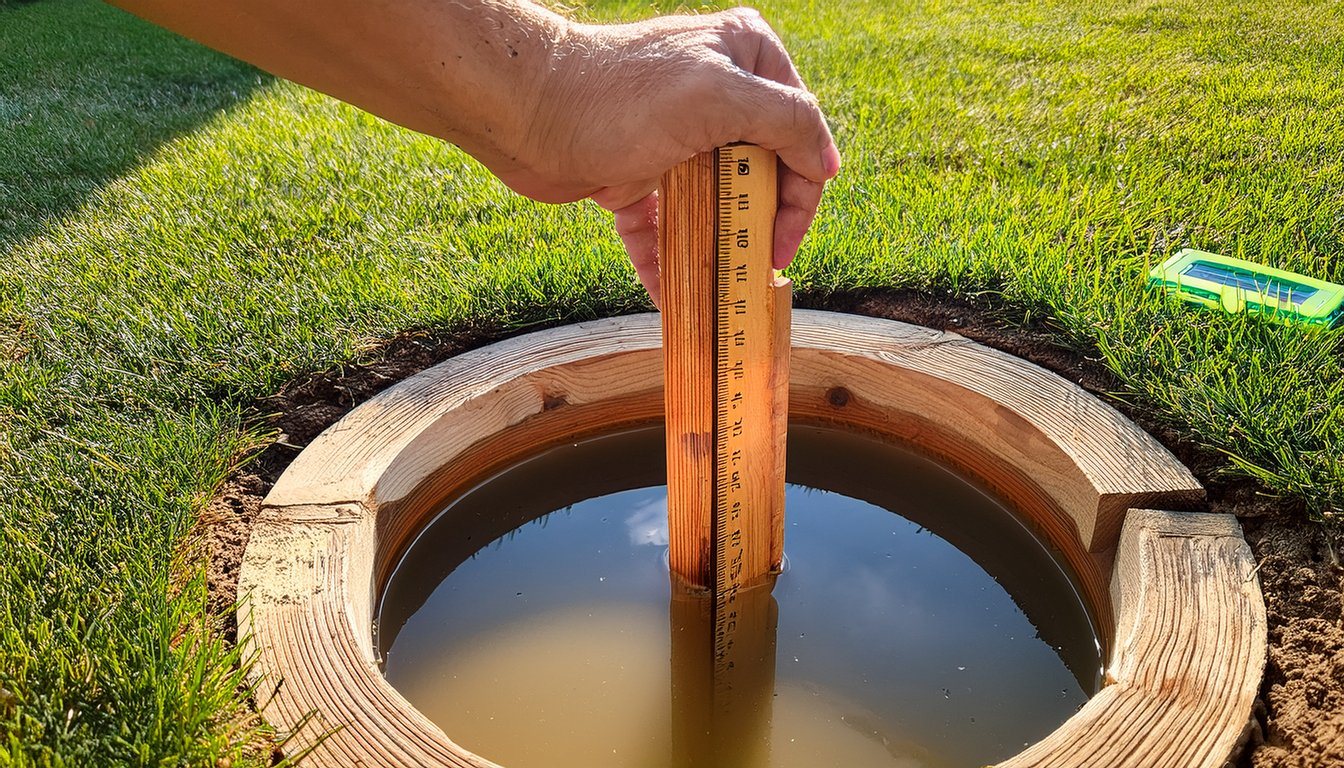
Iowa State University Extension gives a simple home test. "dig a hole at least 12 inches down and 4 to 12 inches wide," fill it and let it drain, then refill it: "Measure the depth of the water with a ruler and after 15 minutes, measure the drop in water in inches. Multiply this number by 4 to calculate how much water drains in an hour." Its rule of thumb: "Soils that drain less than one inch per hour have poor drainage."
UC Master Gardeners use a slightly stricter line: "If less than 2 inches per hour, you have poor drainage." Either way, a hole that still holds water hours later tells you the soil is the problem, not the slope.
Match the fix to the problem
| What you see | Likely cause | Fix that matches |
|---|---|---|
| Water runs toward the house and pools against the wall | Grading slopes the wrong way | Regrade, or add a swale |
| Puddles sit for a day or more on flat lawn | Clay or compacted soil | Aerate and amend the soil; catch basin if it's a low spot |
| Soggy strip below a downspout | Roof water dumped in one place | Extend or redirect the downspout; catch basin and solid pipe |
| Ground stays wet from below, even between storms | Water moving underground | French drain |
| Water from the street or a neighbor's lot | Runoff from outside your property | Swale or catch basin at the edge, plus a conversation |
The table reflects our experience of how these causes usually show up; the fixes are described below. For per-foot rates on each of these systems, see how much yard drainage costs per foot. For how a French drain works and when it fits, see what is a French drain.
Regrading or a swale
UC's guide suggests you "build up the soil where you are having the drainage issue or create a berm to redirect the water flow." A rock-lined version, often called a dry creek bed, is compared in our dry creek bed vs French drain guide. A swale is a shallow, gently sloped channel that carries surface water around the house to a safe outlet. In our experience, this is the fix people skip most often, because it doesn't look like a product. Our step-by-step guide on how to fix grading around a house covers wall clearance and fill soil.
Downspout extensions and rain barrels
This Old House calls downspout extensions "The easiest way to handle this problem." Carry the water well past the 10-foot zone the code wants sloping away from the house. You can also catch it: SoCal Water$mart lists a $35 rebate per rain barrel (50 to 199 gallons, up to two) and larger rebates for cisterns. Check the current amounts before you buy.
Catch basins and solid pipe
This Old House notes that "Installing a catch basin below the downspout can be the answer." A catch basin collects surface water at a low spot or downspout and sends it through solid pipe to an approved outlet. Our storm drain installation cost guide covers what this costs in LA and where the pipe is allowed to end.
A French drain, for water underground
UC describes a French drain as "essentially a ditch that is filled with gravel and then covered over." This Old House adds that installing one involves "digging a trench, installing a series of perforated pipes, pitching them, and then covering them with a material that drains well, like gravel or crushed stone." In our experience, it is the right tool when the ground stays wet from below, and the wrong one for water that is simply running across the surface. Once a French drain is actually the right call, see our French drain cost guide for what it runs and the discharge-point rules that come with it.
Soil improvement
For puddles caused by clay or compaction, UC Master Gardeners suggest you "Add 2-3 inches of finished compost to your beds and incorporate with a garden fork or shovel," and note that cover crops help "by breaking up the soil with their roots." For lawns, This Old House says aeration "can solve this" compaction problem.
Dry wells and rain gardens
Both hold water and let it soak in slowly; our explainer on what a dry well is covers how one works and why they fail. This Old House advises positioning a rain garden "at least 10 feet from your house, ensuring it is also away from any steep slope or septic system," while the USDA's rain garden card rates "More than 20 feet" from the foundation as favorable. Both only work where the soil passes the drain test above.
LA cautions before you soak water into the ground
Letting water soak in sounds like the natural answer, but it isn't always safe here. Los Angeles County's Low Impact Development manual warns that "Infiltration can cause geotechnical issues, including settlement through collapsible soil, expansive soil movement, slope instability, and increased liquefaction hazard," and that these measures "must be set back from building foundations or steep slopes." For dry wells, it requires a geotechnical report. On hillside lots, in our experience, piping water to an approved outlet is usually the safer design. Our retaining wall design guide covers drainage behind walls on sloped lots. If the problem is soil washing off a hillside rather than water pooling, see our guide on how to stop erosion on a slope.
Neighbors matter too. In Keys v. Romley, the California Supreme Court held that "It is therefore incumbent upon every person to take reasonable care in using his property to avoid injury to adjacent property through the flow of surface waters." This is not legal advice, but in our experience redirecting water onto a neighbor's lot is how drainage projects turn into disputes.
Standing water and mosquitoes
Puddles that last are more than a lawn problem. The Greater Los Angeles County Vector Control District notes that "All mosquitoes need stagnant, dirty water to go through their life cycles," and that in warm weather a mosquito "can develop from egg to adult in 7-10 days," or "in about 5 days" during the summer. Water that sits for several days after a storm is worth fixing for that reason alone.
When to call a professional
Simple fixes like downspout extensions, compost and small regrading are reasonable weekend projects. In our experience, it's time to call someone when water is reaching the foundation or crawl space, when the lot slopes steeply, when the fix needs a pipe to the street, or when two fixes have already failed. Water pooling against a house can also show up as cracks or other structural signs; our foundation cracks guide explains which ones matter, and our foundation warning signs guide covers sticking doors, sloping floors and other non-crack signs. Once a system is in, our storm drain cleaning guide covers keeping it clear. If water is already reaching the space under your house, our guide to water under a house foundation helps pin down the source first. If the water is reaching a crawl space, start with our guide to fixing yard drainage to keep water out of a crawl space.
Not sure whether a fix even needs a contractor, a landscaper, or your city's public works department? Our guide to who to call for yard drainage problems walks through that decision by symptom. Check any contractor's license before you sign. Our guide on how to check a California contractor's license walks through it, and our guide to finding a yard drainage specialist covers which license classification actually covers your fix, since "drainage specialist" isn't a license itself. Medici Construction Group is one licensed option for yard drainage work, holding California A, B and C-10 licenses under CSLB #1114433. Whoever you hire, do the two tests first so you're paying for the right fix.
Frequently asked questions
What is the best solution for yard drainage?
It depends on the cause. Regrading or a swale fixes ground that slopes toward the house, soil improvement fixes water that won't soak in, downspout work and catch basins fix roof water, and a French drain fixes water moving underground.
Why does water pool in my yard?
Most often because of clay or compacted soil, low spots, ground that slopes toward the house, or downspouts that dump roof water in one place.
How do I fix standing water in my yard?
First find the cause with a slope check and a drain test. Low spots in good soil can be filled or regraded; poor soil can be aerated and amended; persistent low spots can get a catch basin piped to an approved outlet.
How much slope does a yard need to drain?
The residential building code calls for the ground to fall at least 6 inches within the first 10 feet from the foundation. LA's grading code requires graded pads to slope at least 2 percent to an approved drainage device or the street.
Is a French drain the best fix for a wet yard?
Only when water is moving underground. For water running across the surface, pooling on clay, or coming off the roof, regrading, soil work, downspout changes or a catch basin usually fit better.
How do I test my yard's drainage?
Dig a hole about 12 inches deep, fill it and let it drain, then refill it and measure how far the water drops in 15 minutes. Multiply by 4 for inches per hour; under 1 inch per hour is poor drainage.
Can I drain my yard onto my neighbor's property?
California courts apply a reasonable-use rule: property owners must take reasonable care to avoid injuring neighboring property through surface water flow. Talk to a lawyer about a specific dispute.
Do I need a permit for yard drainage work in Los Angeles?
In our experience, small projects like downspout extensions and soil work usually don't. Grading, dry wells and any connection to a City storm drain can need permits or engineering review; LA County, for example, requires a geotechnical report for dry wells. Confirm before you dig. For dry wells specifically, see how to hire a dry well installer.