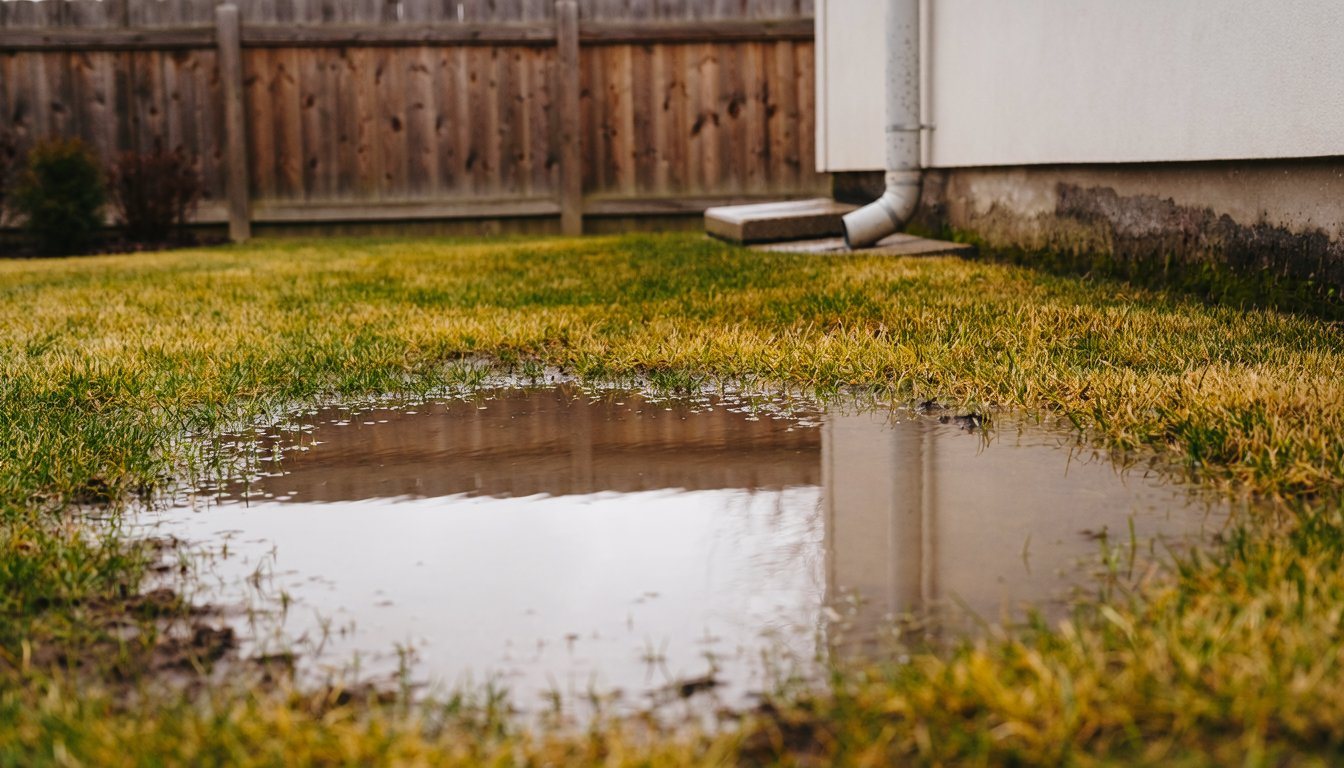
Three days after it rained, there's still a puddle by the fence that hasn't gone anywhere. Searching for who to call mostly turns up "hire a licensed contractor," which doesn't answer the actual question: a licensed contractor in what? The type of pro who actually fixes a wet yard depends on what's making it wet, and that's usually obvious once you know what to look for.
Quick answers
- Soil or grading problem: a landscaper for soil amendment or minor regrading; a general or grading contractor for a larger regrade.
- Roof water dumping in one spot: a gutter or downspout installer for the roof-side fix, a landscaper for the yard-side fix.
- Water needs to move underground to an outlet (a French drain or catch basin): a licensed contractor whose classification covers drainage, not a landscaper.
- Water near the foundation, a steep lot, or a pipe run to the street: skip the sorting and call a licensed contractor directly.
- Water coming from the street or a public storm drain: that's a report to your local public works department, not a contractor's job.
- This covers which type of pro to call. For which license classification legally covers your specific fix, see our guide to yard drainage specialists.
Start with what's actually happening, not who's available
Before you start calling anyone, take two minutes to notice two things: is the water coming from the sky (roof and rain) or from the ground (soil and slope)? And is it pooling in place, or trying to move somewhere and failing to get there? That's not a full diagnosis, just enough to route the call correctly. Our yard drainage guide covers the fuller two-test diagnostic and how to match a fix to the actual cause.
It's worth doing this before you dial anyone, because the wrong first call wastes a trip for both of you. A landscaper who shows up to a job that actually needs a piped connection to a storm drain will tell you so and leave; a licensed contractor called out for a five-minute downspout extension is paying for a service call you didn't need. Two minutes of looking saves both of you the mismatch.
Roof water pooling in one spot
If the wet spot lines up with a downspout, the roof is dumping water in one place faster than the ground can absorb it. That's two calls, not one: a gutter or downspout installer (or a handyman, for a simple extension or splash block) for the roof side, and a landscaper if the yard-side fix is regrading where the water lands so it spreads out instead of pooling.
Wet ground when it hasn't rained
The routing above assumes rain is the cause. If the soggy patch shows up during a dry week, the water is coming from something you own, and the right first call changes. The usual suspects are a sprinkler zone that's stuck on, a cracked irrigation line, or a leak in a pipe run underground. A landscaper or drainage contractor will regrade around a problem like that and the puddle will still come back, because nothing was wrong with the slope.
HomeAdvisor's guide to hiring for yard drainage says a "sprinkler repair pro is the right call" when "pooling stems from a malfunctioning irrigation system", and it adds that sprinkler pros "do not regrade yards or install full drainage systems". So the sprinkler tech handles the irrigation side and stops there. A soggy spot that stays wet with the irrigation turned off points to a plumber instead, since a leaking supply line is a plumbing problem, not a drainage one.
In Los Angeles, the water utility won't fix it for you. LADWP's page on billing adjustments for underground leaks says "LADWP does not repair leaks on private property", so a leak on your side of the meter is yours to have repaired. The same page notes that a repaired underground leak on the property may make you eligible for a billing adjustment, which is worth keeping the repair invoice for.
Ground that won't drain (soil or slope)
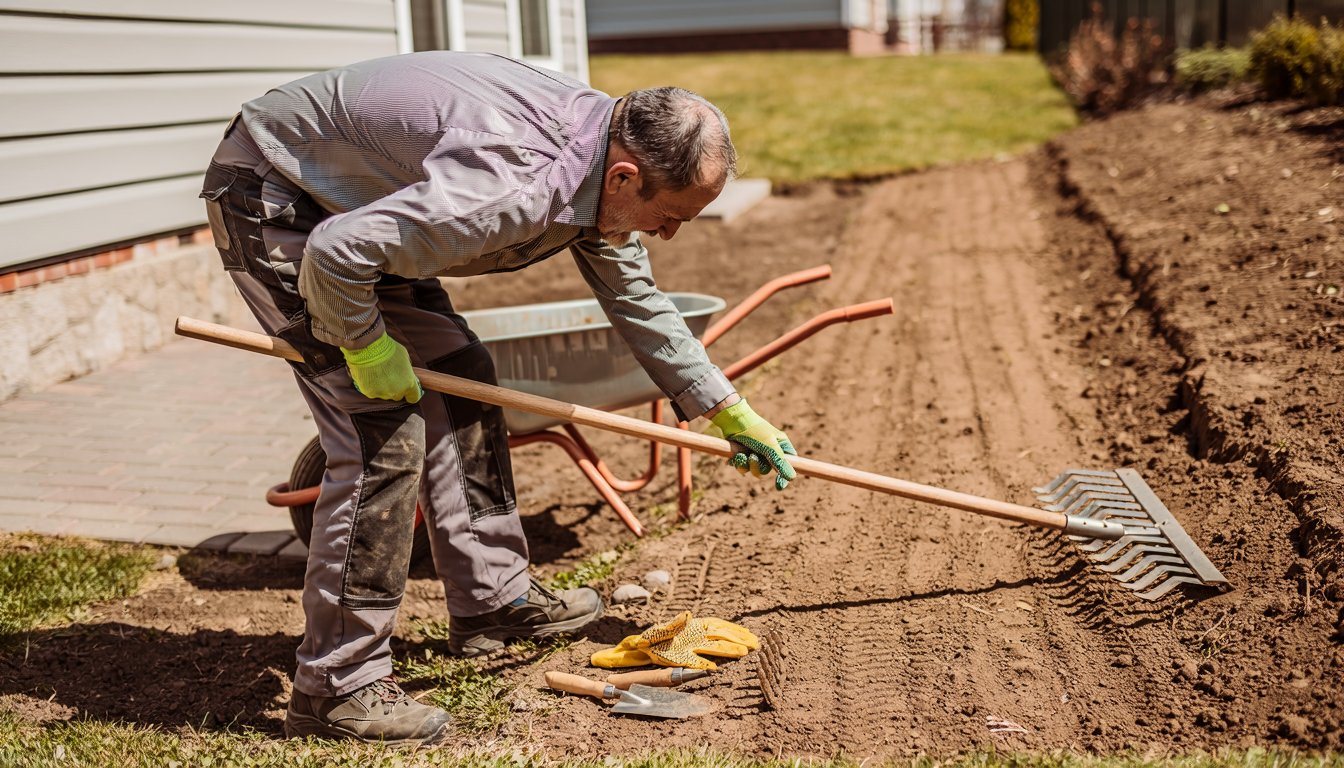
If water sits anywhere the roof isn't involved, the ground itself is the problem: compacted or clay soil that won't absorb water, or a lot that slopes toward the house instead of away from it. A landscaper can handle soil amendment, aeration, or a minor regrade, the kind of work that reshapes a few feet of lawn without changing where water flows across the property as a whole. A larger regrade, or a swale that changes how water moves across the lot, is a bigger job for a general or grading contractor, and can trigger a permit review depending on the scope; our yard drainage specialists guide covers when that applies, not repeated here. The line between the two isn't always obvious from the outside, which is itself a reason to get a second opinion before assuming a small regrade will solve a problem that's actually lot-wide.
Water needs to go somewhere and can't
If the fix is a French drain, a catch basin, or any pipe run to a storm drain or approved outlet, that's drainage construction, not landscaping, and it needs a licensed contractor, not a landscaper. Our guide to yard drainage specialists covers which license classification actually covers that scope and why "drainage specialist" isn't itself a license.
| What's happening | Who to call |
|---|---|
| Water sits right under a downspout | Gutter/downspout installer, or a handyman for a simple extension |
| Ground stays soggy days after rain, no downspout nearby | Landscaper (soil amendment, aeration) |
| Lot slopes toward the house | Landscaper for a minor regrade; general/grading contractor for a larger one |
| Water needs a French drain or catch basin to an outlet | Licensed contractor whose classification covers drainage |
| Water reaches the foundation, crawl space, or a steep lot is involved | Licensed contractor, directly, no sorting |
| Water is coming from the street or a public storm drain | Local public works or street services department |
What to tell the first person you call
Whoever you call, the first conversation goes faster and produces a better answer if you arrive with facts instead of a guess at the fix. In our experience, a homeowner who says "I need a French drain" gets a quote for a French drain whether or not one is needed, while a homeowner who describes the water gets a diagnosis. Have these ready:
- Where the water sits, measured against something fixed like a downspout, the house wall, a fence corner or a slope change.
- When it appears: during rain, hours after, days after, or with no rain at all.
- How long it lasts, ideally with dated photos from a wet day. A photo taken while the water is standing there tells a contractor more than a description does.
- What you've already tried, including any extension, regrade or drain someone else installed, so nobody repeats it or builds on top of it.
- Any change nearby: a neighbor's new patio or wall, a re-roofed house, a new sprinkler zone. Runoff problems often start the week something upstream changes.
It also helps to say plainly whether you want a diagnosis or a quote. Some trades will visit and price a fix in the same trip; others, especially anyone who might need a soil or engineering opinion first, will treat a visit as a separate diagnostic step. Asking up front avoids the awkward moment when the person at the door was expecting to price a job and you were expecting an answer.
Three homeowners, three different calls
Here is how the routing plays out in practice, using the same test each time: where does the water come from, and does it have somewhere to go?
The wet patch under the downspout. Water pools in the same three feet of lawn after every storm, right where the gutter empties. Nothing is wrong with the yard itself. The call is a gutter installer or handyman to carry the discharge farther out, and a landscaper only if the spot stays soft once the water is landing somewhere better.
The low corner that never dries. No downspout nearby, no leak, and the grass at the back fence stays waterlogged for days. The water has nowhere to go, and whether it needs a small regrade or a piped outlet depends on how far it is to somewhere lower. That is a landscaper for a shallow fix, or a licensed contractor if the answer turns out to be a French drain tied to an approved outlet.
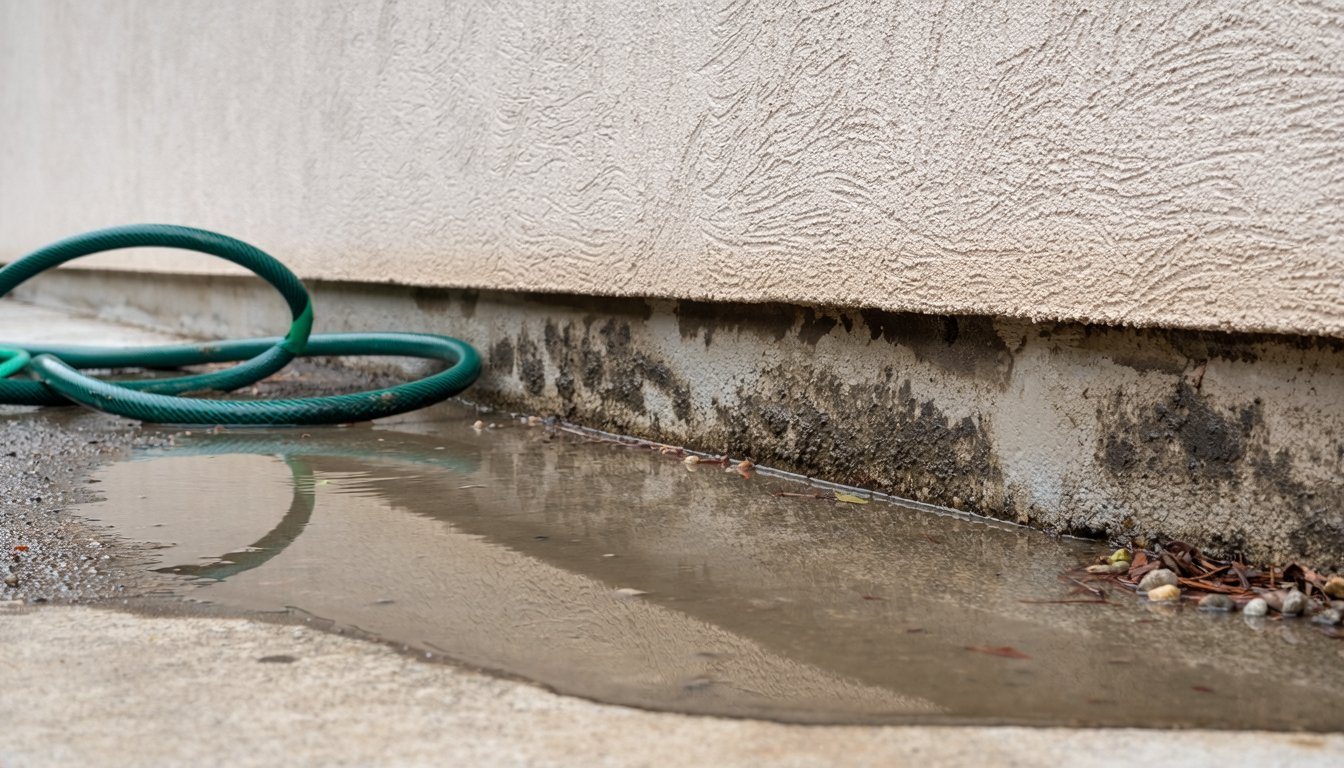
Water at the base of the wall. Damp stucco, a musty crawl space or a slope draining toward the house. This is the earlier "skip the sorting" case: a licensed contractor first, and the diagnosis before anything is built.
When to skip straight to a licensed contractor
Some signs mean stop sorting through trades and just call a licensed contractor: water reaching the foundation or crawl space, a steep lot, any fix that needs a pipe run to the street or a tie-in to a storm drain, or two DIY fixes that have already failed. This is a different, higher-urgency call than the roof-water and soil routing above. Those are ordinary "which trade handles this" questions; these are "get a professional diagnosis now" signals, because guessing wrong here risks water reaching the structure, and the cost of a second failed fix is usually higher than the cost of a proper diagnosis the first time.
When it's not a contractor's problem at all
If the water is coming from a public street, a neighbor's runoff, or a backed-up public storm drain, hiring a contractor for your own yard won't fix it. That's a report to your local public works or street services department, not a job to price out. Which office takes the report depends on where you live, and the Los Angeles area shows how it splits. Inside the City of Los Angeles, LA Sanitation says to "Call our 24-hour Customer Care Center at 1-800-773-2489" or use the MyLA311 app to report a flooded street or alley, and the page says its field teams work to find and clear the water hazard. A clogged catch basin gets the same treatment: the "LA Sanitation and Environment's Customer Care Center" takes those reports at the same number.
Outside the city limits it works differently. Los Angeles County Public Works says that "City residents should report drainage concerns to their city's public works department", while unincorporated areas contact the county directly. It also warns that its drainage program deals with flooding issues tied to future projects "which can take 1 to 5 years", so a chronic street-side problem is a long conversation rather than a quick fix. Two habits help either way. Photograph the flooding while it is happening, and note the date and where the water enters your property. Check any contractor's license before you sign anything, whatever the scope; our guide to checking a California contractor's license walks through it. Medici Construction Group is one licensed option for yard drainage work, holding California A, B and C-10 licenses under CSLB #1114433.
Frequently asked questions
Who do I call for yard drainage problems?
It depends on the cause. Soil or slope problems point to a landscaper or grading contractor, roof water points to a gutter installer, and any fix that pipes water to an outlet needs a licensed contractor whose classification covers drainage.
Is yard drainage a plumbing issue or a landscaping issue?
It can be either. Surface fixes like regrading or soil amendment are landscaping. A French drain, catch basin, or any piped connection to a storm drain is drainage construction, closer to plumbing or general contracting than landscaping.
Do I need a licensed contractor for a French drain?
In most cases, yes. A French drain moves water underground to an outlet, which is drainage construction, not a landscaping task. See our guide to yard drainage specialists for which license classification covers it.
What if the water is coming from the street, not my yard?
Report it to your local public works or street services department. A contractor can't fix a public drainage or street problem, and hiring one for your own yard won't stop water that's coming from outside it.
Can a handyman fix yard drainage problems?
For simple roof-side fixes like a downspout extension or a splash block, yes. Anything involving regrading at scale, a French drain, or a pipe tied into a storm drain needs a landscaper or licensed contractor instead.
Who do I call if the yard is wet but it hasn't rained?
Start with a sprinkler repair pro if an irrigation zone could be the source, and a plumber if the spot stays wet with irrigation off. A landscaper or drainage contractor will regrade around a leak without stopping it, so rule out a supply-side cause first.
How do I know if my yard drainage problem needs a permit?
It depends on the scope of the fix and your local jurisdiction; a larger regrade or any piped connection to a storm drain is more likely to need one than a small soil or downspout fix. Our yard drainage specialists guide covers when a permit applies in more depth.