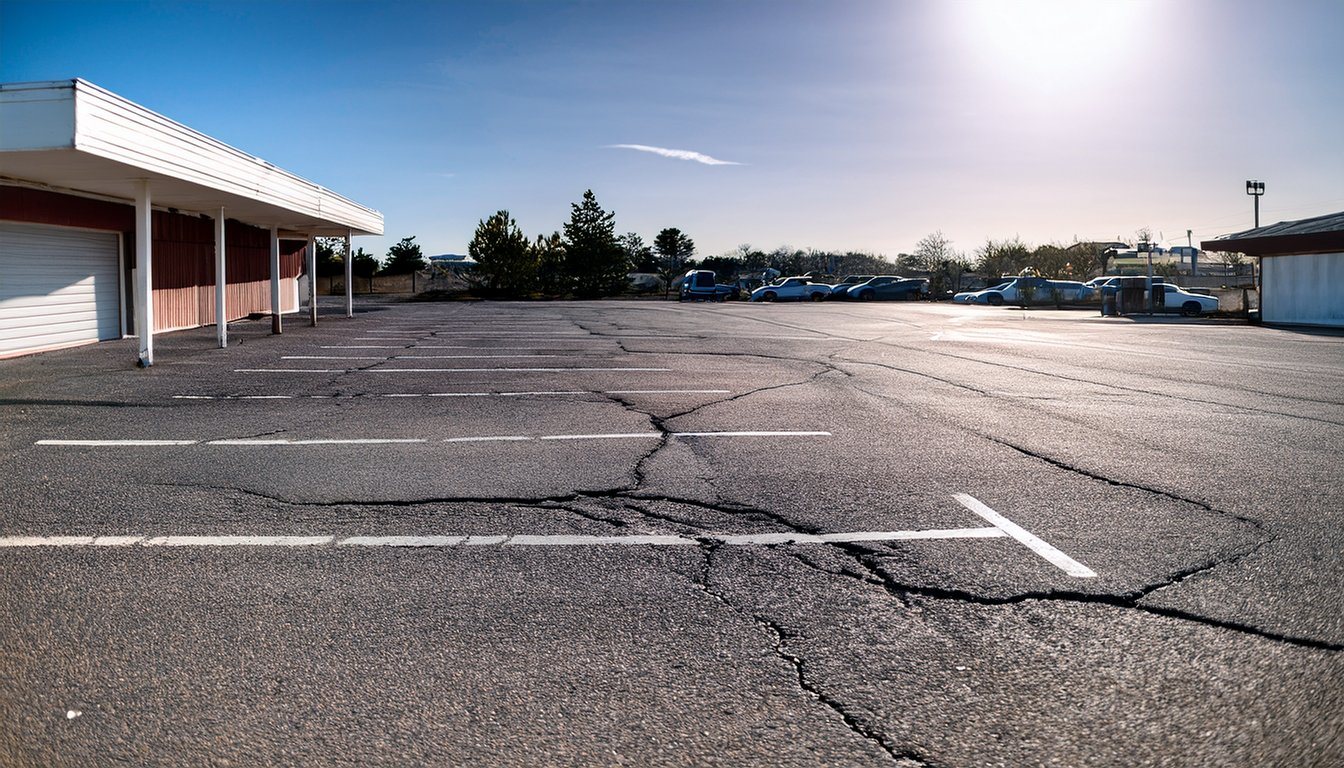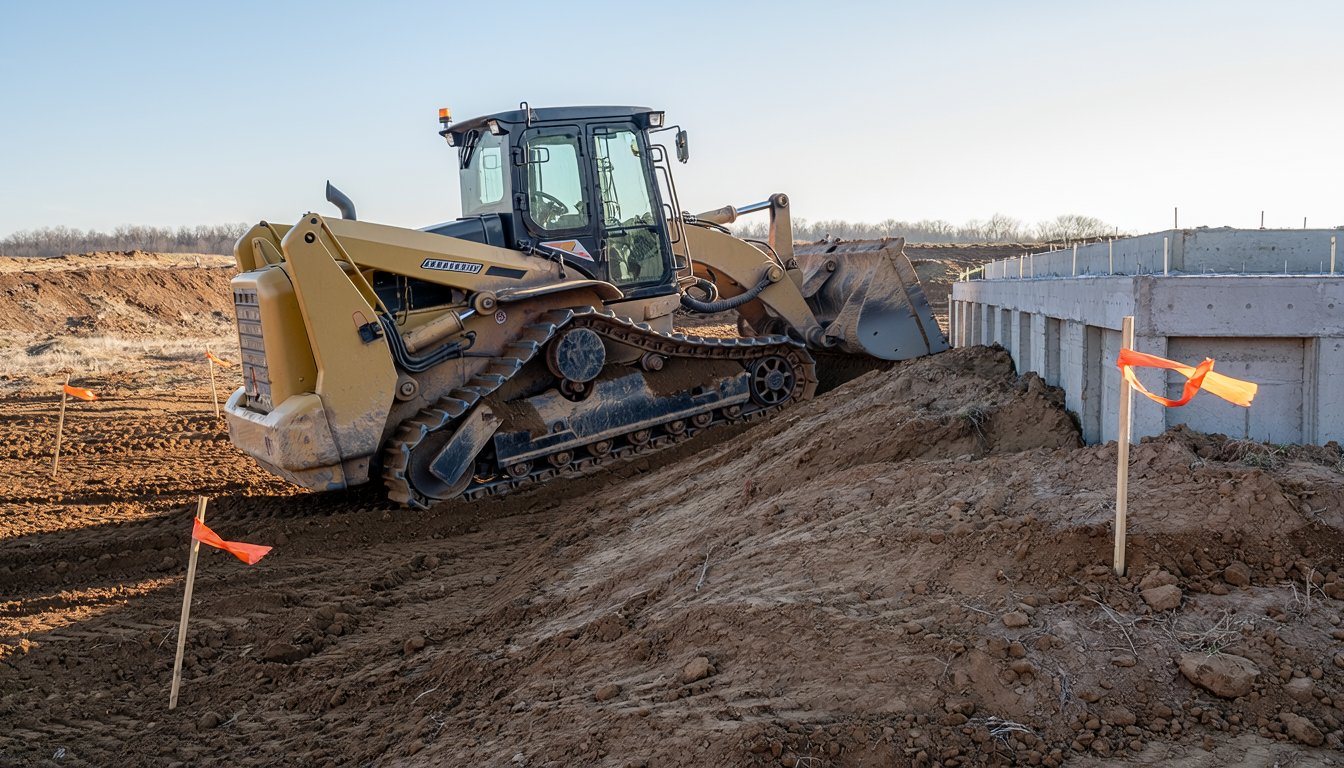
On a construction site, grading means moving earth to set the shape and height of the ground. On a house lot, the point of that shape is simple: deciding where the rain goes. A level pad for the building, a driveway you can park on, and a yard that doesn't puddle all come out of the same work, but getting water away from the house is the part that matters most.
Quick answers
- Definition: the building code defines grading as "[a]n excavation or fill or combination thereof."
- Main purpose on a house lot: shaping the ground so water flows away from the foundation.
- Rough vs. finish: rough grading sets the basic contours; finish grading smooths the surface at the end.
- Permits: whether you need one depends on local thresholds; see our grading plan guide.
What grading means
The California Building Code's grading appendix defines grading as "An excavation or fill or combination thereof." Excavation is "The removal of earth material by artificial means, also referred to as a cut," and fill is "Deposition of earth materials by artificial means." In other words, grading is taking soil off the high spots, putting it on the low spots, or both.
That's also the difference between grading and excavation. In the code, excavation is one half of grading. In everyday use on a jobsite, in our experience, "excavation" usually means digging a hole or trench for something, such as footings, a basement, or a utility line, while "grading" means reshaping the surface of the site.
What grading is really for: water
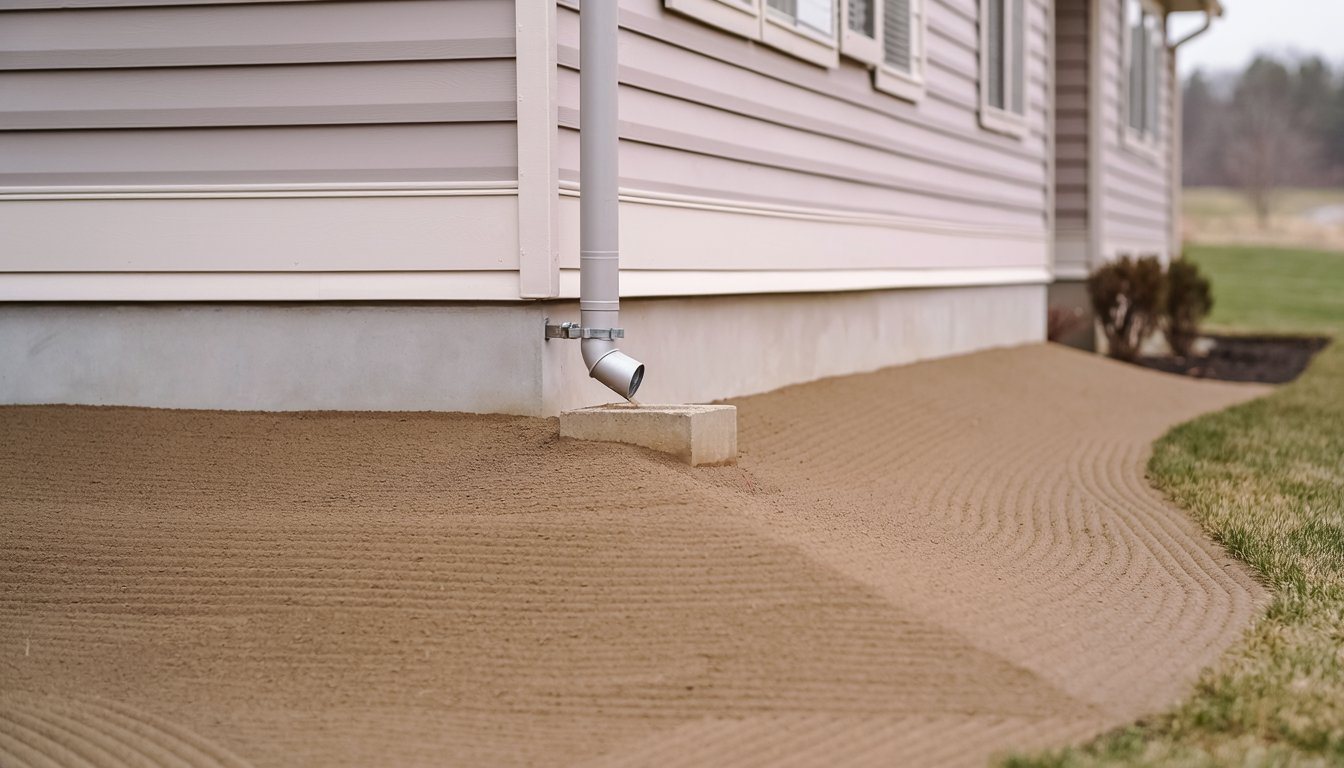
Water that sits against a foundation causes most of the problems grading is meant to prevent. The International Residential Code handles this in Section R401.3. As InterNACHI, the home inspectors' association, summarizes it, the ground should slope away from the building, "dropping at least 6 inches within the first 10 feet." Hard surfaces get their own rule: "[A]ny impervious surfaces, like concrete or asphalt, within 10 feet of the foundation must slope at least 2 percent away from the building." Where the lot is too tight for that, "Drains or swales can be installed to redirect water away from the structure." If your yard already holds water, our yard drainage guide covers the fixes.
The rest of grading's jobs follow from the same shaping. It creates a flat, stable pad for the building to sit on, sets the slope of driveways and walkways, and forms any slopes on the lot. The code limits how steep those can be: cut and fill slopes steeper than "one unit vertical in two units horizontal (50-percent slope)" need engineering justification. Hillside lots bring their own issues, covered in our hillside stabilization guide.
Signs a property has a grading problem
Most grading problems show up as water in the wrong place. InterNACHI, the home inspectors' association, puts it simply: "If your yard doesn't direct water away from your house, that water will find a way to cause problems. It might pool against your foundation", or "seep into your basement, or saturate the soil until your foundation starts shifting and cracking." If you see these signs, our guide on how to fix grading around a house explains the fix.
In our experience, the signs worth watching for are puddles that sit next to the house for a day or more after rain, soil washed away from along the foundation, mud splashed up on the lower walls, and damp crawlspaces. Grading that was right when the house was built doesn't always stay right. InterNACHI notes that "Over time, soil settles, landscaping projects change the natural drainage, and what once worked properly now channels water straight toward your foundation." New planters, raised garden beds, and patios poured against the house are common culprits.
Rough grading and finish grading
Grading usually happens in two passes. One grading contractor describes rough grading as "the initial grading or leveling of the ground to establish the basic contours of the site" and finish grading as "the final stage of grading, which involves smoothing and leveling the soil to a fine, even surface."
In our experience, the sequence on a typical house project runs like this: clear the site, rough grade, build the foundation and run utilities, then finish grade once the heavy work is done, followed by landscaping and hardscape. Finish grading comes late because trucks, trenching, and backfill disturb the ground in between, and the final slopes around the foundation are what have to meet the drainage rule above.
Other types of grading
Rough and finish grading describe stages. Contractors also name grading by its purpose:
- Regrading. "Regrading involves raising or lowering the land's level," according to equipment rental company BigRentz. On an existing home, it's usually about fixing drainage or preparing for an addition.
- Landscape grading. BigRentz says it "reshapes the land to prepare for specific elements like grass, planters or water fixtures."
- Architectural grading. One contractor describes it as changing "the shape of the land for a new building project, whether it be a new home, housing development or commercial property."
Equipment used for grading
The machine depends on the size of the job. BigRentz lists bulldozers, "which can remove or quickly redistribute large amounts of soil"; "Motor graders that level surfaces for roadwork or create drainage ditches"; "Skid steer loaders that help rough and finish grading"; and "Wheel tractor scrapers for leveling surfaces as well as hauling and dumping material." In our experience, house lots are mostly graded with skid steers, compact track loaders, and small excavators, since the big road machines don't fit.
When grading needs a permit
In our experience, small yard touch-ups often don't need a permit while larger jobs do, and the cutoff is set locally, usually by how much soil moves and how deep the cuts or fills go. Our grading plan guide covers what a grading plan is and when one is required. Large sites also fall under federal stormwater rules: the EPA requires permit coverage for construction that disturbs "1 acre or more of land," and counts "clearing, grading, and excavating" as construction activity.
Keeping soil in place while you grade
Freshly graded soil is bare and loose, and rain can carry it into streets, storm drains, and neighboring yards. Utah State University Extension describes the answer as best management practices: "BMPs are a toolbox of techniques to prevent pollution and protect water sources from construction activities."
The most familiar is the silt fence, the short fabric fence you see along the edge of construction sites. The EPA describes it as "a temporary sediment barrier made of porous fabric," used "to retain the soil on disturbed land... until the activities disturbing the land are sufficiently completed to allow revegetation and permanent soil stabilization to begin." It does more than it looks like: the EPA notes that "A single 100-foot run of silt fence may hold 50 tons of sediment in place."
On larger sites, these measures are part of the federal stormwater permit mentioned above. On a small residential job, in our experience, the practical version is timing the work around the weather, keeping soil piles covered, and getting planting or ground cover back on finished slopes quickly.
Grading terms you'll hear
These definitions come from the California Building Code's grading appendix:
- Cut: another word for excavation, the removal of earth.
- Fill: earth placed by artificial means.
- Compaction: "The densification of a fill by mechanical means."
- Bench: "A relatively level step excavated into earth material on which fill is to be placed."
- Key: "A compacted fill placed in a trench excavated in earth material beneath the toe of a slope."
- Finished grade: "The grade of the site at the conclusion of all grading efforts."

Protecting trees during grading
Grading is one of the easiest ways to kill a mature tree without touching its trunk. Oregon State University Extension explains that when soil is added over roots, the "roots smother and die. This effect is compounded when the added soil is compacted for construction purposes."
Arborists use a critical root zone to decide how much room a tree needs. OSU cites a common measure of a "1-foot radius from the base of the tree's trunk for each 1 inch of the tree's diameter at 4.5 feet above grade." A tree 20 inches across would get a 20-foot radius. Removing soil inside that zone does damage too; OSU's guidance is to "remove no more than 6 inches of soil from the existing grade in the CRZ." For utility lines that have to pass near a tree, it recommends to "Tunnel or bore at least 18 inches beneath CRZs to install utility lines."
If a tree matters to you, mark its root zone before any equipment arrives, and ask the grading plan to route cuts, fills, and trenches around it. For valuable trees, an arborist's input before grading is cheap insurance.
Before you grade
Before anyone moves soil, it helps to know where the water is supposed to go once the work is done and whether the job crosses your area's permit threshold. Those two answers shape the rest of the project. Medici Construction Group is one licensed option for grading and site work, holding California A, B and C-10 licenses under CSLB #1114433.
Frequently asked questions
What is grading in construction?
Grading is moving earth to change the shape and height of the ground. The California Building Code defines it as an excavation or fill or a combination of the two. On a house lot, its main purpose is directing water away from the foundation.
What is the difference between grading and excavation?
In the building code, excavation (also called a cut) is the removal of earth, and grading covers both cuts and fills. In everyday jobsite use, excavation usually means digging a hole or trench for footings or utilities, while grading means reshaping the site's surface.
What is the difference between rough grading and finish grading?
Rough grading sets the basic contours of the site early in the project. Finish grading happens near the end and smooths the soil to an even surface, ready for landscaping and hardscape.
Why is grading important for a house?
Grading controls where water goes. The International Residential Code calls for the ground to drop at least 6 inches within the first 10 feet from the foundation, so rain flows away from the house instead of collecting against it.
Do I need a permit to grade my yard?
It depends on local rules, which usually turn on how much soil is moved and how deep the cuts or fills are. In our experience, small touch-ups often don't need one while larger jobs do. Check with your local building department before starting.
What does "finished grade" mean?
The California Building Code defines finished grade as the grade of the site at the conclusion of all grading efforts, in other words, the final ground surface after all grading is done.
What is the difference between grading and leveling?
One contractor puts it this way: "Leveling involves smoothing the land out, while grading involves carving the land into shapes that match the drainage plan or blueprint." Leveling aims for flat; grading aims for a planned slope.
Can I grade my own yard?
For small fixes, sometimes. One contractor says "Some property owners may grade their own yards if the fixes are small. However, if the project is large, the slope is intense or there are many obstacles in the way, it's best to leave grading to the professionals." Check whether the job needs a permit first.
How do I know if my yard has a grading problem?
Water is the usual sign: puddles that stay next to the house after rain, soil washing away along the foundation, damp crawlspaces, or water in a basement. InterNACHI notes that grading which once worked can change over time as soil settles and landscaping changes.
What is a silt fence?
A silt fence is the short fabric fence seen around construction sites. The EPA describes it as a temporary sediment barrier that keeps soil on disturbed land until the site is replanted or otherwise stabilized.