Most excavation cost guides hand you one number: a national average, usually somewhere around $4,000, and a table of unrelated project types. That number doesn't tell you anything about your project, because it blends a $400 pool dig with a $15,000 basement in the same average. The actual way to price a dig is a formula you can run yourself in a few minutes: how much material has to move, what it costs to move it, and what happens to it once it's out.
Quick answers
- The formula: volume in cubic yards × your per-yard rate, plus hauling if dirt leaves the site, plus labor and equipment, plus any site-specific add-ons.
- Cut-and-fill rate: roughly $1 to $12 per cubic yard for moving and placing dirt on site.
- Hauling: roughly $8 to $25 per cubic yard if the dirt has to leave the property.
- Labor and equipment: commonly quoted combined at $120 to $150 an hour, or $100 to $250 an hour for equipment rental alone with an operator.
- National average: commonly cited around $3,975 to $4,000, with a typical range of about $1,650 to $6,700; on its own this tells you almost nothing about your specific project.
What this calculator covers
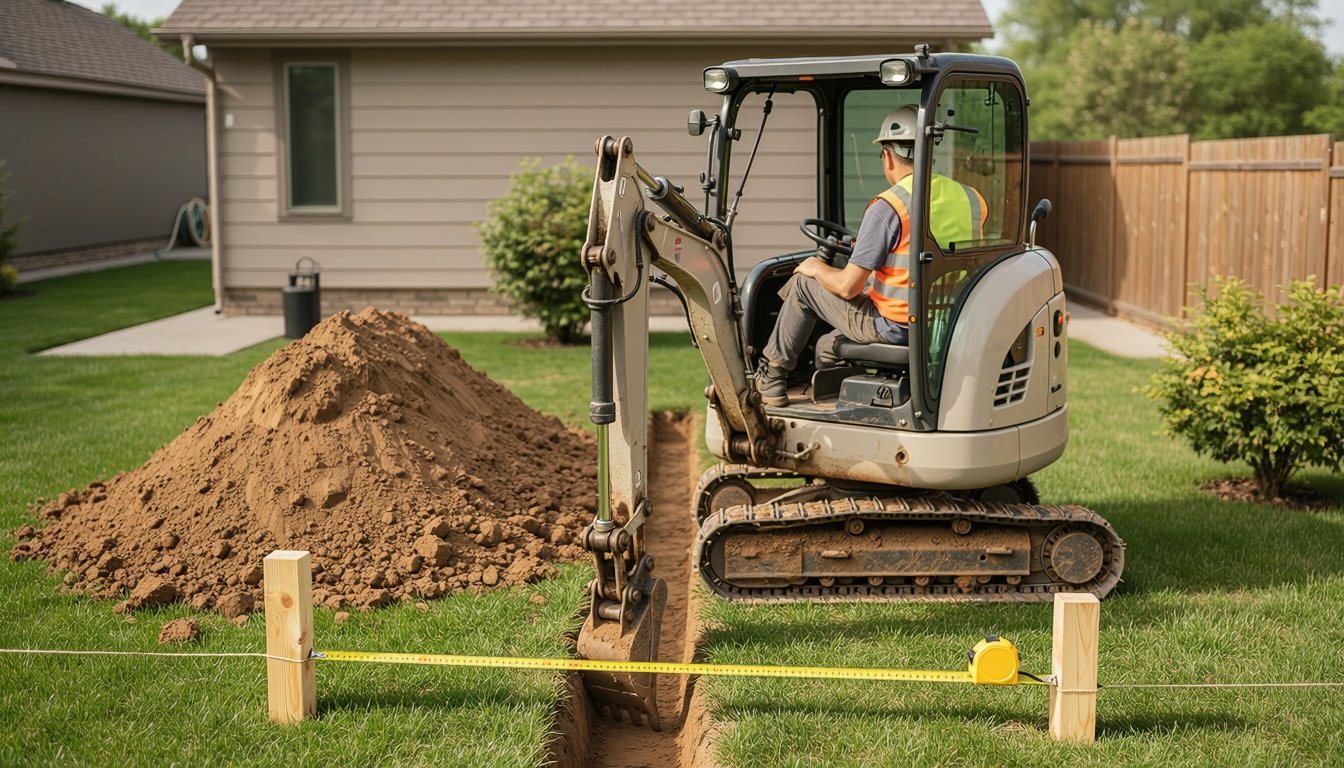
"Excavation" gets used loosely to describe several different scopes of work, and the formula below applies most directly to bulk digging: removing soil to create a hole, trench, or level pad, whether for a foundation, a pool, a utility line, or a basement. It's a reasonable starting point for grading (leveling or reshaping the surface) and for shallow trenching too, since both use the same volume-times-rate logic, but a large grading job with cut-and-fill balancing across a whole lot, or a long utility trench with its own access and safety requirements, can carry cost factors this simple formula doesn't fully capture. Treat this as a general-purpose estimate for a bounded dig, not a substitute for a site-specific quote on a large or complex job. For a narrow utility trench priced by the foot, see our trenching cost calculator instead. For vacuum digging billed by the hour, see our guide to hydro excavation cost. If the dig is for a paved surface, our asphalt paving cost calculator covers the paving side. For linear trenches priced by the foot, see our trenching cost per foot guide. For narrow cuts rather than open holes, see what is trenching.
Why the national average doesn't tell you much
Angi puts the national average excavation cost at "$3,975", with most homeowners paying "$1,658" to "$6,713." That range is wide because it's an average across wildly different jobs. Angi's own project-type breakdown shows why: an in-ground pool dig runs $400 to $1,500, while a basement excavation runs $5,000 to $15,000. Averaging those together produces a number that describes neither project. A national average is useful for context, not for pricing your specific dig.
The actual formula: volume × rate, plus the rest
Every excavation quote is built from the same handful of inputs. Work through them in order:
- Estimate the volume. Multiply length × width × depth, all in feet, to get cubic feet. Divide by 27 to convert to cubic yards, since there are 27 cubic feet in a cubic yard. This is the number every other cost in the formula multiplies against.
- Apply a cut-and-fill rate. For moving and placing dirt on site, HomeAdvisor lists cut-and-fill work at "$1 to $12 per cubic yard."
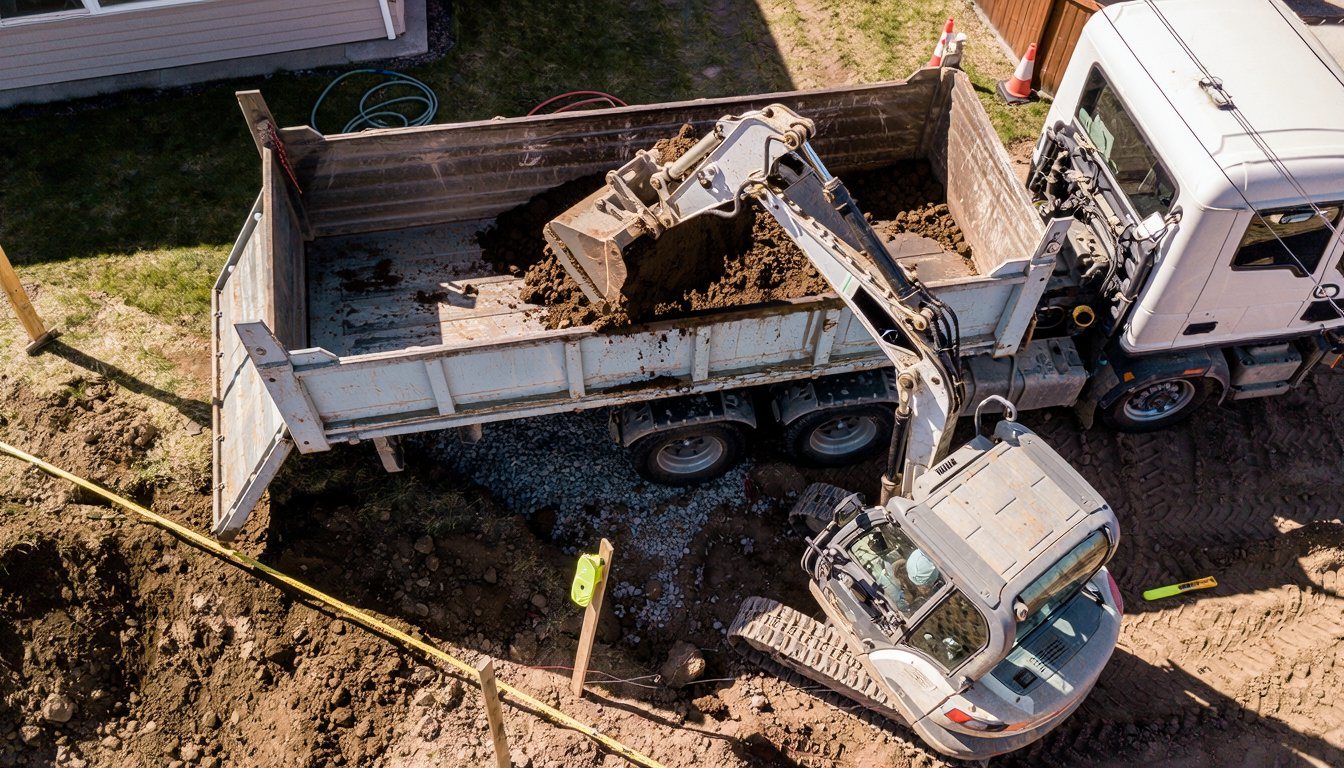
- Add hauling, if the dirt is leaving the site. HomeAdvisor lists dirt hauling at "$8 to $25 per cubic yard." If the excavated material is being reused on site for grading or fill, this cost may not apply.
- Add labor and equipment. Angi lists labor at "$120 to $150 per hour" when quoted combined with equipment, or equipment rental alone at "$100 to $250 per hour," including an operator.
- Add site-specific line items only if they apply. Rock or ledge changes the job entirely: Angi lists blasting at "$40–$100 per cubic yard" and large boulder removal separately. Land surveys, soil testing, and permits are their own line items, and only apply to certain projects and jurisdictions.
Worked example
Say you're planning a 20-foot by 15-foot by 3-foot deep dig, a common scale for a small addition footing or a patio base.
| Step | Calculation | Result |
|---|---|---|
| Volume | 20 ft × 15 ft × 3 ft = 900 cubic feet; 900 ÷ 27 | ≈ 33.3 cubic yards |
| Cut-and-fill | 33.3 cy × $1 to $12/cy | ≈ $33 to $400 |
| Hauling (if dirt leaves site) | 33.3 cy × $8 to $25/cy | ≈ $267 to $833 |
| Labor and equipment (half day, 4 hours) | 4 hrs × $120 to $150/hr | ≈ $480 to $600 |
| Illustrative total | Sum of the above | ≈ $780 to $1,833 |
That range is built entirely from published national figures, not a quote, and it doesn't include rock removal, permits, surveys, or difficult access, none of which apply to every job. It also doesn't include a minimum project fee: HomeGuide lists minimum charges of "$500 to $800" for excavation contractors, which can mean a very small dig prices out closer to that minimum than to the formula's raw output. Real quotes for the same dimensions will vary by soil type, site access, and local conditions. Use this as a way to sanity-check a quote against your own numbers, not to replace getting one.
One thing the formula won't do is get cheaper per yard as the project gets bigger. HomeGuide notes that "excavation rates typically do not decrease for larger projects because more soil must be relocated or hauled away." Unlike some construction costs that benefit from scale, moving more dirt generally costs proportionally more, not less, so a larger project's estimate should scale roughly linearly from the same per-yard and hourly rates rather than assuming a volume discount.
What can push your number up
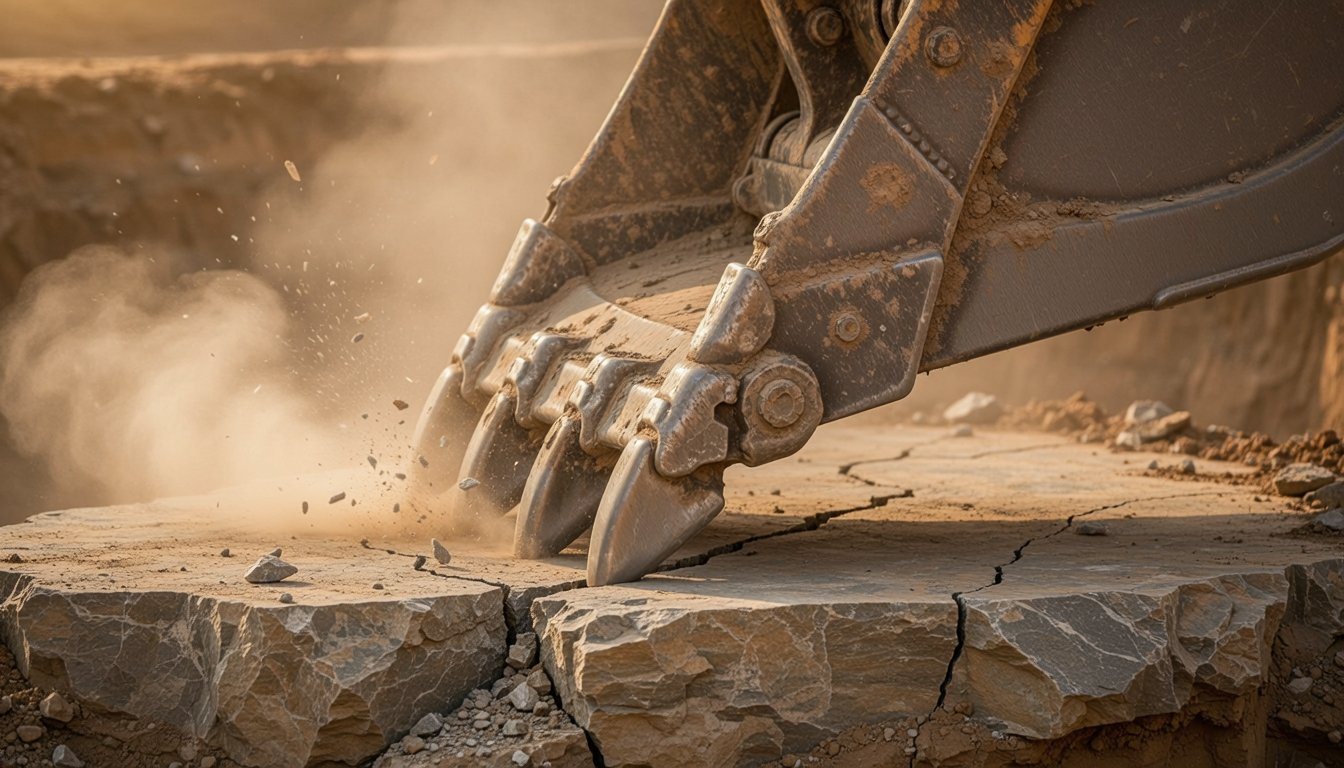
- Rock or ledge. Hitting rock mid-dig changes the equipment and method needed, and blasting or mechanical removal is priced separately from ordinary cut-and-fill work; jackhammered rock alone can run well past ordinary cut-and-fill rates per cubic yard.
- Poor access. A site that can't fit standard equipment may need smaller machines, more trips, or hand work, all of which add time and cost. A backyard reachable only through a narrow side yard, for example, often can't take the same size excavator as a lot with a driveway approach.
- Wet or unstable soil. Ground that needs dewatering or shoring before it can be safely excavated adds its own line items, and can slow the schedule if work has to pause for the ground to dry or stabilize.
- Disposal distance. If the nearest site that accepts excavated material is far away, hauling costs climb with the distance and the number of truck trips required.
- Permits and surveys. Requirements and costs vary by project size and local jurisdiction; some small residential digs need nothing, others require a permit, a survey, or soil testing before work starts.
- A minimum project fee. Very small jobs may not scale down below a contractor's minimum charge, which covers mobilizing equipment and a crew regardless of how little material actually moves.
Should you rent equipment and do it yourself?
The math makes DIY look tempting on paper: skip the $120-$150 combined labor-and-equipment rate and just rent. HomeGuide lists a mini excavator rental at "$200 to $700 per day," which on a single-day job can look cheaper than hiring it out. What that comparison leaves out is everything an operator's rate is actually paying for: reading the soil, knowing when to stop digging near a property line or a utility line, and not tipping a machine on a slope. A rented excavator with an inexperienced operator is also how a dig turns into a damaged gas line or a collapsed trench wall, both of which cost far more than the day's equipment rental saved. For a shallow, small-footprint dig away from utilities, a rental can make sense; for anything near a structure, a slope, or underground lines, the labor rate is buying judgment, not just machine time.
How to use this to check a quote, not just estimate one
Once you have a rough number from the formula, ask a contractor to break their quote out the same way: volume, hauling, labor and equipment, and any site-specific add-ons, listed separately rather than bundled into one total. A quote that lands well outside your estimate isn't automatically wrong, but it's worth asking why. Rock, access, or disposal distance can explain a real difference; a vague total that won't break down usually can't.
Also ask where the excavated material is going. A quote that's silent on hauling may assume the dirt stays on site for grading or fill, which is fine if that's actually the plan, but worth confirming rather than assuming. And ask whether the quoted price already reflects a minimum project charge, since a very small job priced at the minimum won't track the per-yard formula closely, and that's expected, not a sign of overcharging.
Medici Construction Group is one licensed option for excavation and sitework, holding California A, B and C-10 licenses under CSLB #1114433. Whoever you hire, get the volume, the rate, and what's included in writing before work starts.
Frequently asked questions
How do I calculate excavation cost for my project?
Estimate the volume in cubic yards (length × width × depth in feet, divided by 27), then apply a per-yard rate for cut-and-fill work, add hauling if the dirt is leaving the site, and add labor and equipment, usually billed by the hour.
How much does excavation cost per cubic yard?
HomeAdvisor lists cut-and-fill work at "$1 to $12 per cubic yard" for moving dirt on site, and hauling it away separately at $8 to $25 per cubic yard.
Does excavation cost include hauling away the dirt?
Not automatically. Hauling is usually its own line item, priced per cubic yard, and only applies if the excavated material is leaving the site rather than being reused for fill or grading.
What makes excavation more expensive than the average?
Rock or ledge, difficult site access, wet or unstable soil, and long hauling distances to a disposal site all add cost beyond a standard cut-and-fill job.
Is renting equipment cheaper than hiring an excavation contractor?
Angi lists equipment rental alone at "$100 to $250 per hour," including an operator, which is close to the $120 to $150 an hour combined labor-and-equipment rate contractors typically quote. Renting without an experienced operator adds risk on a job where hitting a utility line or misjudging soil stability is expensive to fix.
How accurate is a DIY excavation cost estimate compared to a professional quote?
The formula gives a reasonable range for sizing a project and sanity-checking a quote, but it can't account for what's actually in the ground, your soil type, or site-specific access issues. A professional estimate, informed by seeing the site, will always be more precise.
Do I need a permit for excavation work?
It depends on the project's size and your local jurisdiction; some small residential digs need no permit, while larger or deeper excavations often do. Check with your local building department before starting.