Sewage bubbling up out of the capped pipe in your yard is an unpleasant sight, but it isn't random. An overflowing cleanout is telling you something specific about where your sewer line is blocked, and it gives you a short list of things to do, and not do, in the next hour.
Quick answers
- It means a blockage downstream of that cleanout, between it and the public sewer (or septic system).
- Stop using water inside now: no flushing, showers, dishwasher, or laundry until the line is cleared.
- Don't open a cap that's closed and under pressure, and don't pour chemical drain cleaners in.
- Call a plumber first. They can clear the line, and a camera inspection shows whether the problem is in your pipe or the public main.
- For indoor backup steps, see our emergency sewer backup guide.
What an overflowing cleanout is telling you
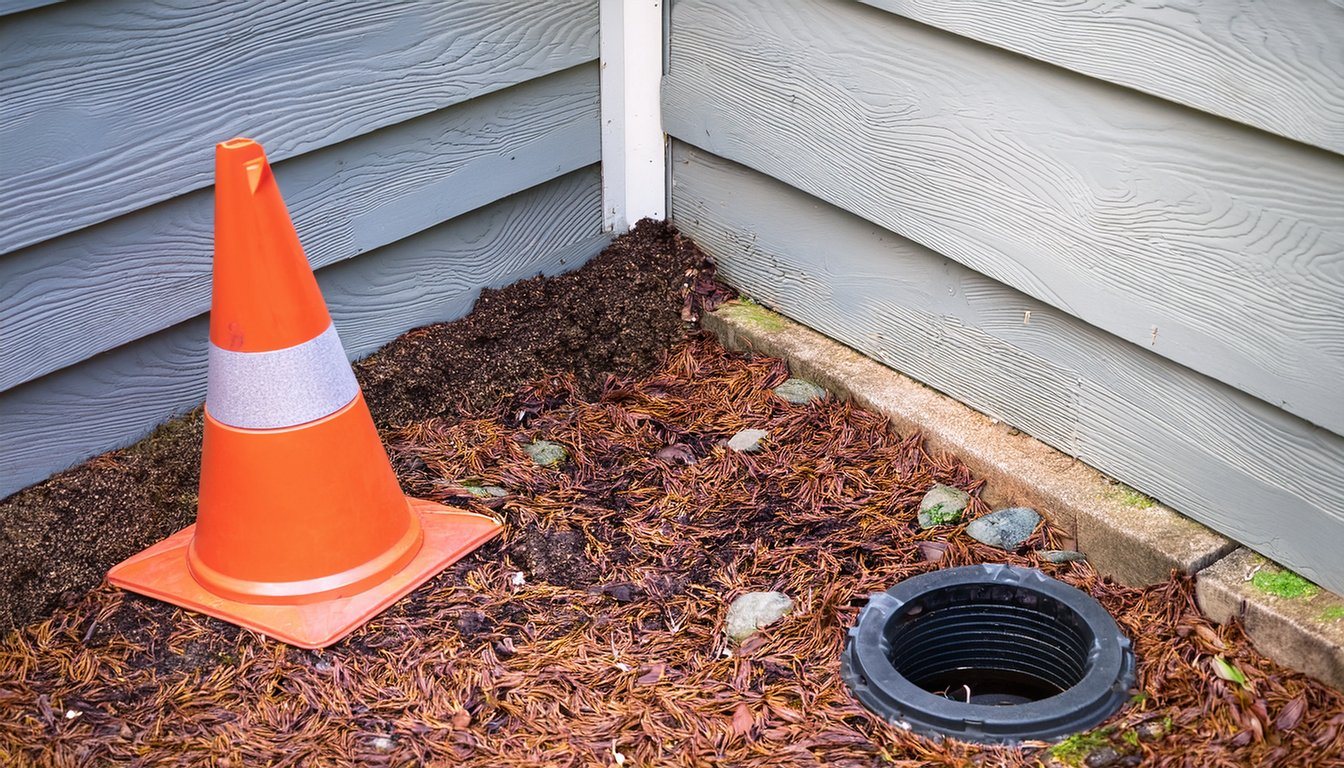
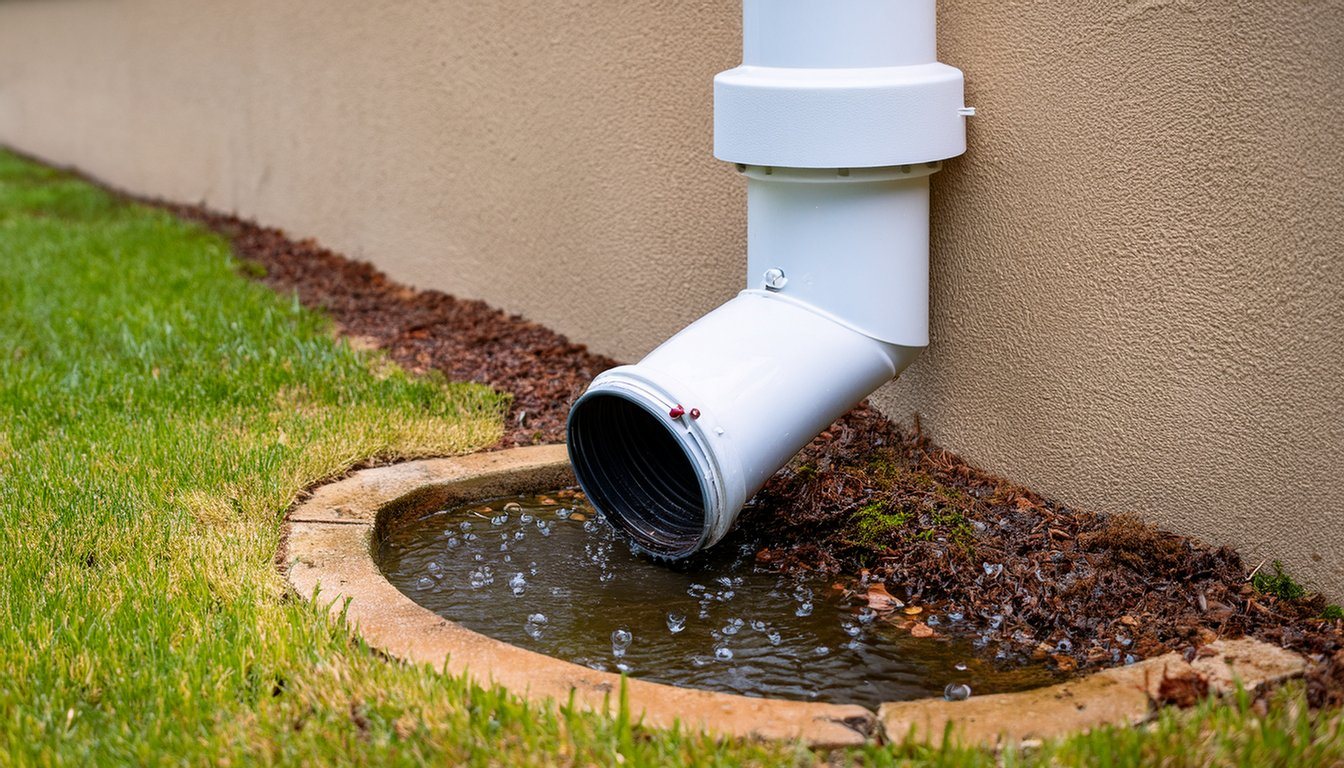
A cleanout is the capped access pipe on your sewer line where a plumber can get a cable or camera in; our sewer cleanout guide covers what it is and where they're usually installed. When sewage rises out of it, the basic meaning is simple. As one plumbing contractor puts it, "wastewater has hit a blockage or restriction downstream and cannot move toward the municipal sewer or septic system." The water has nowhere to go but back up, and the cleanout is where it's surfacing.
If your property has more than one cleanout, which one is overflowing can help narrow things down. In our experience, a cleanout near the house can overflow even when the blockage is well out toward the street, while one near the property line overflowing points to a problem closer to the connection with the public sewer. It's a clue for the plumber, not a diagnosis; the camera settles it. Our sewer backup guide walks through the broader signs for telling whose pipe is blocked.
One small piece of relative good news: in our experience, when an outdoor cleanout sits lower than the lowest drain inside the house, sewage tends to come out there first rather than through a floor drain or tub. That's no reason to wait, since the next thing to fill may be inside.
Why it surfaces at the cleanout
A cleanout is an open branch in the pipe with a cap on it, so in our experience it is often the easiest place for backed-up wastewater to reach the surface. The water rises in the pipe until it finds an opening, and the cap, or the small gap around it, is one. That is why the first sign of a blocked line can be a wet patch in the yard instead of a slow drain indoors. Which opening lets go first depends on how the pipe and the house are laid out; if your lowest indoor drain sits below street level, our backwater valve guide covers that separate risk.
How much water you are holding back
The EPA's WaterSense program says "The average American family uses more than 300 gallons of water per day at home" and that "Roughly 70 percent of this use occurs indoors". Take those as a rough working figure: 300 gallons × 0.70 = 210 gallons a day inside the house. Spread evenly over 24 hours, that is 8.75 gallons an hour (210 ÷ 24). If a plumber can't arrive for 6 hours and the household keeps using water at that average pace, about 52.5 gallons (8.75 × 6) would head toward a line that can't carry it away.
Real use is lumpy, with mornings and evenings much heavier, and not every indoor gallon reaches the sewer, so treat the number as a sense of scale, not a measurement. In our experience, a couple of showers and a load of laundry are enough to turn a damp cleanout into a flooded side yard or a wet bathroom floor, which is why "no water" is the first rule.
Do this now
- Stop using water inside. The contractor above advises: "Do not flush toilets, run the dishwasher, take showers, or start laundry." Every gallon you send down the drain ends up at the cleanout or inside the house.
- Keep people and pets away. Don't touch sewage or the wet ground around the cleanout without gloves and boots.
- Leave a pressurized cap alone. The same source warns: "Do not remove a cleanout cap if it is closed and under pressure. The cap may be containing a backup that can release suddenly."
- Skip the chemical drain cleaner. The same source notes these products "rarely solve a main sewer obstruction and may create a safety hazard for anyone servicing the line."
- Take photos of the overflow and any affected area before cleanup, which our emergency guide explains in more detail.
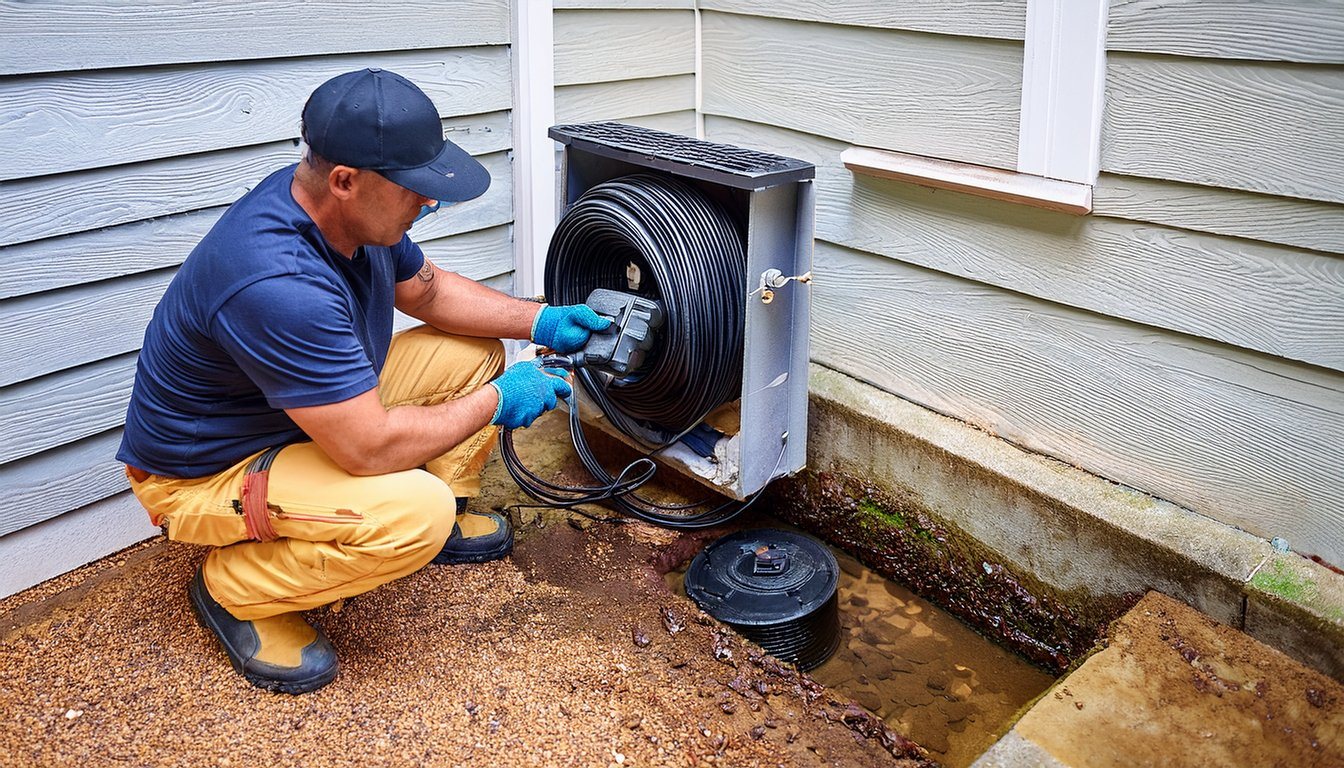
Is it your line or the public main?
The blockage could be in your private sewer line (the lateral) or in the public main it connects to. The usual order is plumber first. San Diego County's sewer guidance, for example, tells homeowners to "call a licensed plumber to help inspect, clear, and assess the situation," notes that "the homeowner is responsible to clear and repair the private sewer lateral up to its point of connection with the public main," and asks to be contacted if the plumber finds the problem may be in the district's main. Rules and contacts vary by city and district, so check with yours; our sewer backup guide covers how responsibility is usually split.
The outdoor side of the mess
Sewage on the ground is a health issue before it is a cleanup issue. The EPA says "Because SSOs contain raw sewage they carry bacteria, viruses, protozoa (parasitic organisms), helminths (intestinal worms), and inhaled molds and fungi", and it lists direct contact on lawns among the ways people get exposed. El Dorado County's environmental management office, in a page on sewage spills, advises to "Keep children and pets out of the area until cleanup has been completed" and to "Immediately stop sewage from surfacing by eliminating water flow to the system". The second point is the same rule as the "no water" step above, from a different agency.
Where the sewage goes matters too. Orange County's H2OC stormwater program notes that "Sewage spills can cause pollutants to get into the storm drain system and go untreated into our waterways, damaging water quality and marine life". Cleanouts often sit in side yards close to driveways and gutters, so in our experience the useful thing to do before the plumber arrives is to note whether the flow is running toward a curb or a drain and say so on the phone. Disinfection and disposal are covered in our emergency guide.
Who to tell besides the plumber
H2OC's page tells residents to "Contact the relevant sewer agency for sewer spills from a cleanout or manhole". A private lateral overflow is usually the owner's to fix, but the agency has a reason to hear about it if sewage reaches a storm drain or the public main may be involved. At the state level, California's State Water Board defines a private lateral sewage discharge as "Discharges of untreated or partially treated wastewater resulting from blockages or other problems within a privately owned sewer lateral" and says those an enrolled agency learns about "may be voluntarily reported to the SSO Database". That describes state database reporting for agencies, not a duty on homeowners, and local rules differ, so check with your city or district. Our sewer backup guide has the Los Angeles contacts.
Questions to ask when the plumber is done
Getting the water moving again is the first job. The second is finding out what you are dealing with, and in our experience a short list of questions gets most of the way there:
- What came out? Roots, grease, wipes, or debris point to different causes and different follow-ups.
- Did the line run fully clear afterward? A line that drains slowly after clearing may still be partly blocked or damaged.
- Can you camera the line and give me the footage? The video is your record if the problem turns out to be in the public main or if a repair is quoted.
- If it was roots, what is the plan? One plumbing company, Mother, says "Snaking cuts roots but leaves root hairs and the entry point open" and that "Roots regrow within 6-12 months". That is one contractor's estimate, but it is a fair reason to ask about a camera and a follow-up plan.
Keep a simple log of the date, weather, and what was done. In our experience, one overflow after a long stretch of no trouble is often a one-off blockage, while overflows that repeat, especially after storms or every few months, point to a defect in the pipe that clearing alone won't fix. Our root intrusion guide covers what comes next when roots are the cause.
What usually causes it
The same handful of causes show up behind most overflows: tree roots in a cracked or loose joint, a buildup of grease, wipes, and debris, a broken, collapsed, or sagging section of pipe, and, less often, a problem in the public main. Our sewer backup guide covers each cause, and our clogged sewer line guide explains why a blockage that keeps coming back usually needs a camera, not another snaking.
After the line is cleared
Clearing the blockage stops the overflow, but it doesn't tell you why it happened. A camera inspection right after clearing, while the line is open and clean, is the best time to find roots, breaks, or sags. If sewage spread across the yard or got inside, cleanup is its own job; our sewer backup cleanup cost guide explains what a professional cleanup includes. If a cleanout keeps showing water even when nothing is overflowing, that's a related question we'll cover in a separate guide. And if your lowest drains sit below street level, a backwater valve may be worth considering. Medici Construction Group is one licensed option for sewer line diagnosis and repair, holding California A, B and C-10 licenses under CSLB #1114433.
Frequently asked questions
Why is my sewer cleanout overflowing?
Because wastewater is hitting a blockage downstream of the cleanout and can't reach the public sewer or septic system, so it backs up and surfaces at the cleanout. Roots, grease and debris, a broken or sagging pipe, or a problem in the public main are the usual causes.
What should I do if my sewer cleanout is overflowing?
Stop using water inside, keep people and pets away from the sewage, don't open a cap that's closed and under pressure, skip chemical drain cleaners, and call a plumber to clear and inspect the line.
Why is water coming out of my sewer cleanout when it rains?
The EPA notes that stormwater and groundwater entering through cracks and leaky joints can overload a sanitary sewer, and in our experience that can push an existing partial blockage into an overflow. If it happens with every storm, have the line inspected. Our sewer backup guide covers rain-related backups.
Can I snake the sewer line through the cleanout myself?
It's possible, but not advisable while it's overflowing. As noted above, a closed cap holding back a backup can release suddenly, which makes opening the line and running a cable risky and messy. A plumber can clear it safely and follow up with a camera to find the cause.
Is an overflowing cleanout the city's responsibility?
Usually only if the blockage turns out to be in the public main. In San Diego County, for example, "the homeowner is responsible to clear and repair the private sewer lateral up to its point of connection with the public main," and rules vary by city. A plumber's inspection is how you find out which it is.
Is the water from an overflowing cleanout dangerous?
Treat it as raw sewage. The EPA says "Because SSOs contain raw sewage they carry bacteria, viruses, protozoa (parasitic organisms), helminths (intestinal worms), and inhaled molds and fungi". Keep children and pets away, avoid touching it, and wear gloves and boots if you must be near it.
Do I have to report an overflowing cleanout?
Calling a plumber comes first. Orange County's stormwater program advises to "Contact the relevant sewer agency for sewer spills from a cleanout or manhole", and it makes sense to do that if sewage reaches a storm drain or the public main may be blocked. Reporting rules vary by city and district, so check with yours.