A homeowner researching backyard units keeps running into both terms treated as the same thing at different sizes. They aren't. A JADU and an ADU are two different legal categories with different rules, and one of the rules that separates them just changed. As of January 2026, a JADU no longer automatically requires the owner to live on-site. Only one that shares a bathroom with the main house does.
This guide covers the legal and practical differences: size, kitchen and bathroom requirements, occupancy rules, parking, and whether you can build both on the same lot. For what either one actually costs to build in Los Angeles, see our ADU construction cost guide, which covers price by type and size, permit and school fees, and solar.
The short version
- A JADU is capped at 500 square feet and must be built entirely inside the existing walls of a single-family home; an ADU can be a new, larger, detached structure.
- A JADU only needs an efficiency kitchen and can share a bathroom with the main house; an ADU needs its own full kitchen and bathroom.
- As of a 2026 law change, owner-occupancy is required for a JADU only if it shares a bathroom with the main house, not automatically.
- State and City of LA rules allow one ADU and one JADU on the same single-family lot at the same time.
- This guide covers the legal differences. For construction cost by type and size, see our ADU construction cost guide.
JADU and ADU are different legal categories, not different sizes
A junior accessory dwelling unit is defined in Government Code 66313(d) as a unit no more than 500 square feet of interior livable space, contained entirely within a single-family residence. The ordinance requirements in Government Code 66333 add that a JADU must be built within the walls of the proposed or existing single-family residence, with a separate entrance and a limit of one per lot. For layouts at the same size as a separate unit, see our 500 sq ft ADU floor plans guide. For how ADUs and JADUs count under SB 9, see our guide to SB 9 lot splits and ADUs. For the detached version specifically, see what a detached ADU is.
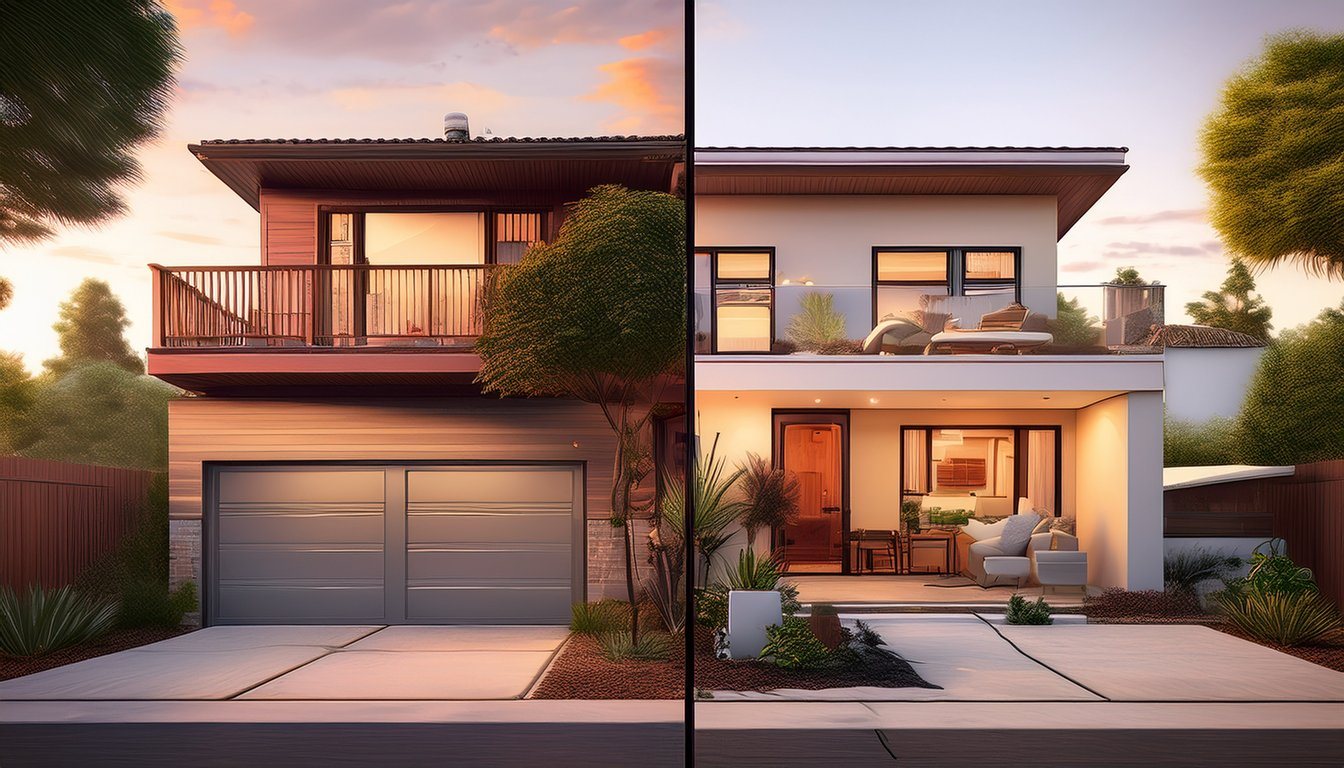
An accessory dwelling unit is a broader category. It can be a garage conversion, an addition, or an entirely new detached structure, and it isn't limited to living inside the main house's walls. The City of LA's own ADU program page puts a practical floor on ADU size at 800 square feet, with the actual maximum driven by your lot size and floor-area rules rather than a single fixed number. The real distinction between the two categories is where and how the unit is built, not just how big it is.
Kitchen, bathroom, and entrance requirements compared
A JADU only needs an efficiency kitchen: a cooking facility with appliances, plus a food preparation counter and storage cabinets of reasonable size, and per the City of LA's ADU program, it may share a bathroom with the single-family home. An ADU needs its own full kitchen and full bathroom, independent of the main house. Both need a separate entrance from the main entrance to the property.
That difference shows up directly in the build itself. A JADU's kitchen can often fit into a converted closet or a corner of an existing room, since the law only requires the basics: a cooktop, a sink, and storage. An ADU's kitchen and bathroom have to be sized and plumbed as a complete, independent set of rooms, which is a bigger scope of work even before the structure around them is considered. Our guide to junior ADU requirements walks through a JADU build in order.
The 2026 change: owner-occupancy is no longer automatic for a JADU
Before this year, a city could require the property owner to live on-site for any JADU, no matter how it was set up. That rule tripped up a lot of homeowners who wanted to add a JADU purely as a rental, without giving up the flexibility to move out later. Under Government Code 66333 as amended by AB 1154 (Chapter 507, Statutes of 2025, operative January 1, 2026), owner-occupancy can now only be required when the JADU shares sanitation facilities with the main house. A JADU with its own separate bathroom no longer triggers that requirement.
The same bill also added a floor on how a JADU can be rented: any rental must run longer than 30 days, so short-term or vacation-rental use isn't an option, regardless of the occupancy question. An ADU has never had a blanket owner-occupancy requirement under current state law, so this change narrows one of the few remaining differences between the two categories on that front. A full explainer on the owner-occupancy rules, including how individual cities have implemented the change, is coming in a future guide; the point to take from this one is that the rule now depends on the bathroom setup, not a blanket requirement tied to the unit type itself. If the plan is to rent a converted garage, our guide to garage conversion to apartment covers the rental rules that follow the unit.
Parking
Our ADU construction cost guide already covers when an ADU triggers a parking requirement and when state law exempts it. For a JADU, the rule is simpler: parking is not required for a JADU under California law.
Can you build a JADU and a full ADU on the same lot?
Yes, with one precondition: a JADU can only exist where the lot already has, or is being built with, a single-family residence, since it has to sit inside that structure. Given that, state law and the City of LA's own ADU program allow one ADU and one JADU on the same single-family lot at the same time. If your lot has an HOA, Civil Code 4751 voids any covenant or restriction that effectively prohibits or unreasonably restricts building an ADU or JADU on a lot zoned for single-family residential use, though the HOA can still apply reasonable restrictions that don't unreasonably raise cost or eliminate the ability to build. That statute applies specifically to lots zoned for single-family residential use; it doesn't extend the same protection to condos or other attached developments. A property in the Coastal Zone can also carry additional permitting steps on top of the base state and city rules.
Which one actually fits your situation
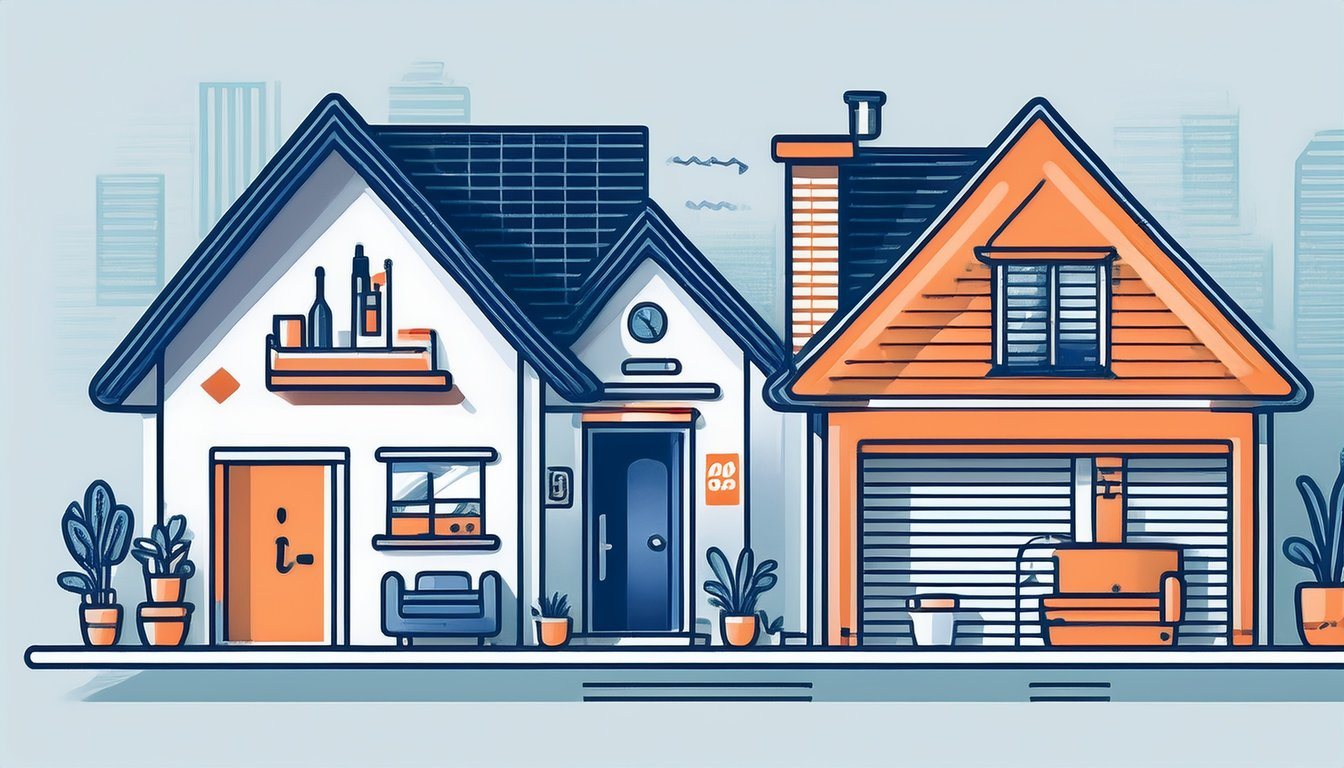
A JADU tends to make sense when you already have usable space, a garage or a spare room, inside the existing house, and lower cost and a simpler permit path matter more than full independence. It's a common fit for housing a family member close by while keeping shared systems simple, or for a homeowner who wants rental income without adding a whole new structure to the lot. Because it has to fit inside the existing walls, the design conversation is mostly about what you already have, not what you could build from scratch. For what a JADU itself costs, see our JADU cost guide.
A full ADU tends to make sense when the goal is a fully independent rental unit or long-term flexibility, and the lot has room for a new or converted detached structure. It costs more to build and goes through a fuller plan-check process, but it stands entirely on its own, with its own utilities, its own address in most cases, and no shared systems tying it to the main house. That independence is also what makes it the stronger option if you plan to eventually sell it separately or rent it out long after you've moved elsewhere. Our ADU construction cost guide breaks down what each path actually costs to build, by type and size.
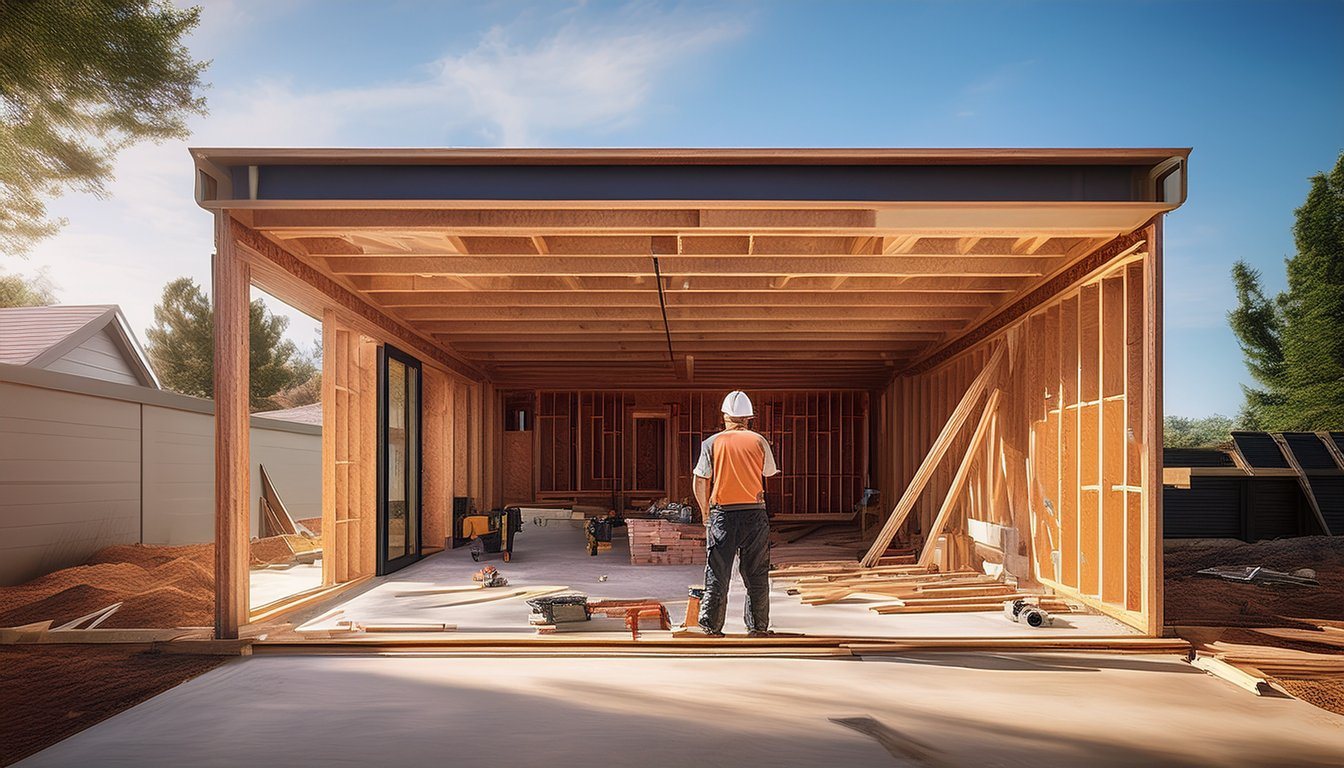
Some homeowners don't have to choose. If your lot already has a garage that could become a JADU and enough remaining yard space for a small detached unit, adding both at once can be more efficient than doing them as two separate projects years apart, since the plan check, utility work, and site logistics overlap.
What to ask before you commit to either
- Does your lot already have a structure a JADU could use? A garage or an underused room inside the house is what makes a JADU possible in the first place.
- Do you plan to live on-site, or rent out the whole property? That decision, combined with whether the unit shares a bathroom, determines whether owner-occupancy applies.
- How much permitting complexity are you willing to take on? A JADU is generally a shorter permit path than a full ADU.
- Does your intended use fit the 30-day minimum rental rule for a JADU? If short-term rental income is the goal, a JADU isn't the right structure for it.
Medici Construction Group is one licensed option for ADU and JADU construction, holding California A, B and C-10 licenses under CSLB #1114433. Whichever path fits, get the size, occupancy, and parking rules confirmed for your specific lot before you commit to plans.
Frequently asked questions
What is the difference between a JADU and an ADU?
A JADU is capped at 500 square feet and must be built entirely inside the walls of an existing or proposed single-family home, per Government Code 66313(d), with only an efficiency kitchen and the option to share a bathroom with the main house. An ADU can be a larger, detached structure with its own full kitchen and bathroom.
Do I have to live on my property if I build a JADU?
Not automatically anymore. Since AB 1154 took effect on January 1, 2026, owner-occupancy is only required when the JADU shares a bathroom with the main house. If it has its own separate bathroom, occupancy isn't required by state law.
Do I need an existing house to build a JADU?
Yes. A JADU has to be built entirely within the walls of a proposed or existing single-family residence, so a vacant lot or a lot without a single-family home doesn't qualify for one.
Can I build both a JADU and an ADU on the same lot?
Generally yes. State law and the City of LA's own ADU program allow one ADU and one JADU on the same single-family lot, though an HOA can still apply reasonable design review and a Coastal Zone property can carry extra permitting steps.
Does a JADU require additional parking?
No. State law does not allow a local agency to impose a parking requirement on a JADU.
Can I rent my JADU on Airbnb or as a short-term rental?
No. As of the 2026 law change, a JADU rental has to run longer than 30 days, which rules out short-term or vacation-rental use.
Which is cheaper to build, a JADU or an ADU?
A JADU is generally the less expensive path since it reuses existing walls and structure rather than adding a new one, but the real numbers depend on your specific project. Our ADU construction cost guide breaks down actual cost by type and size.