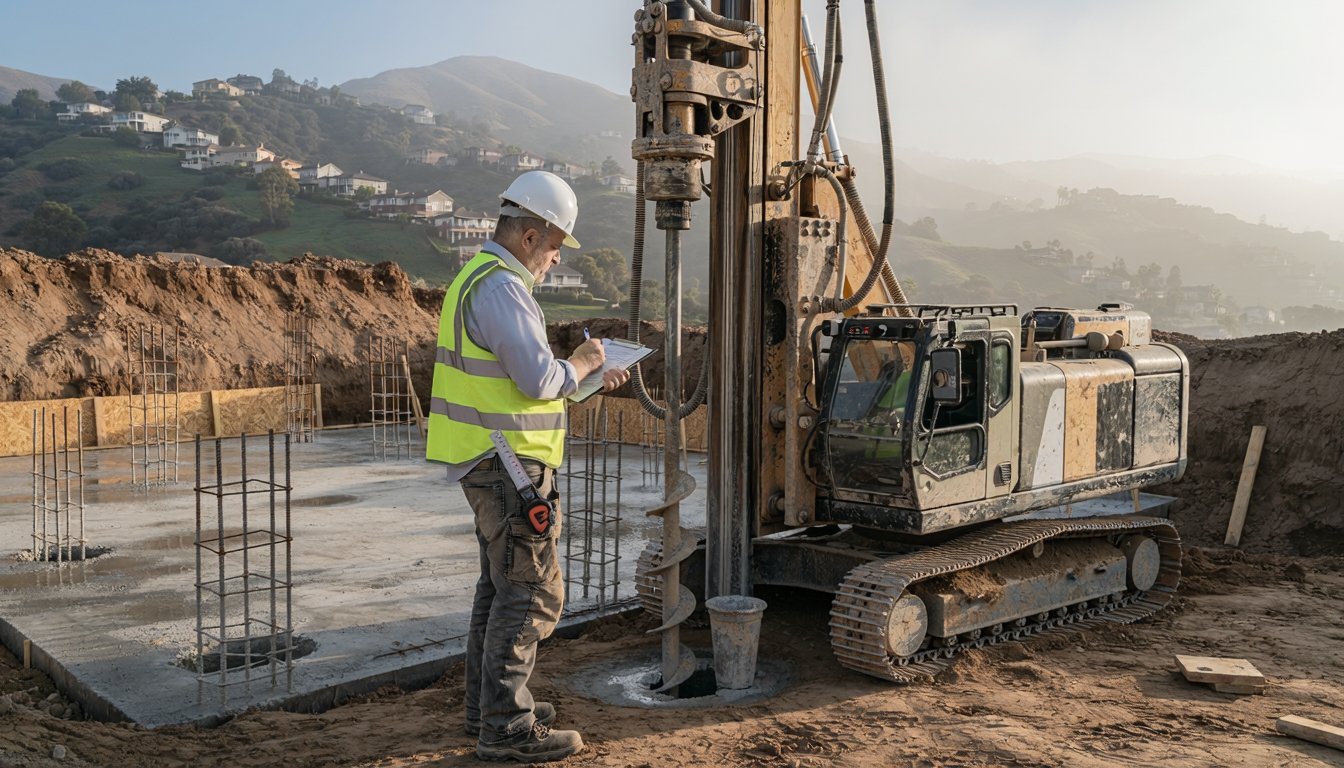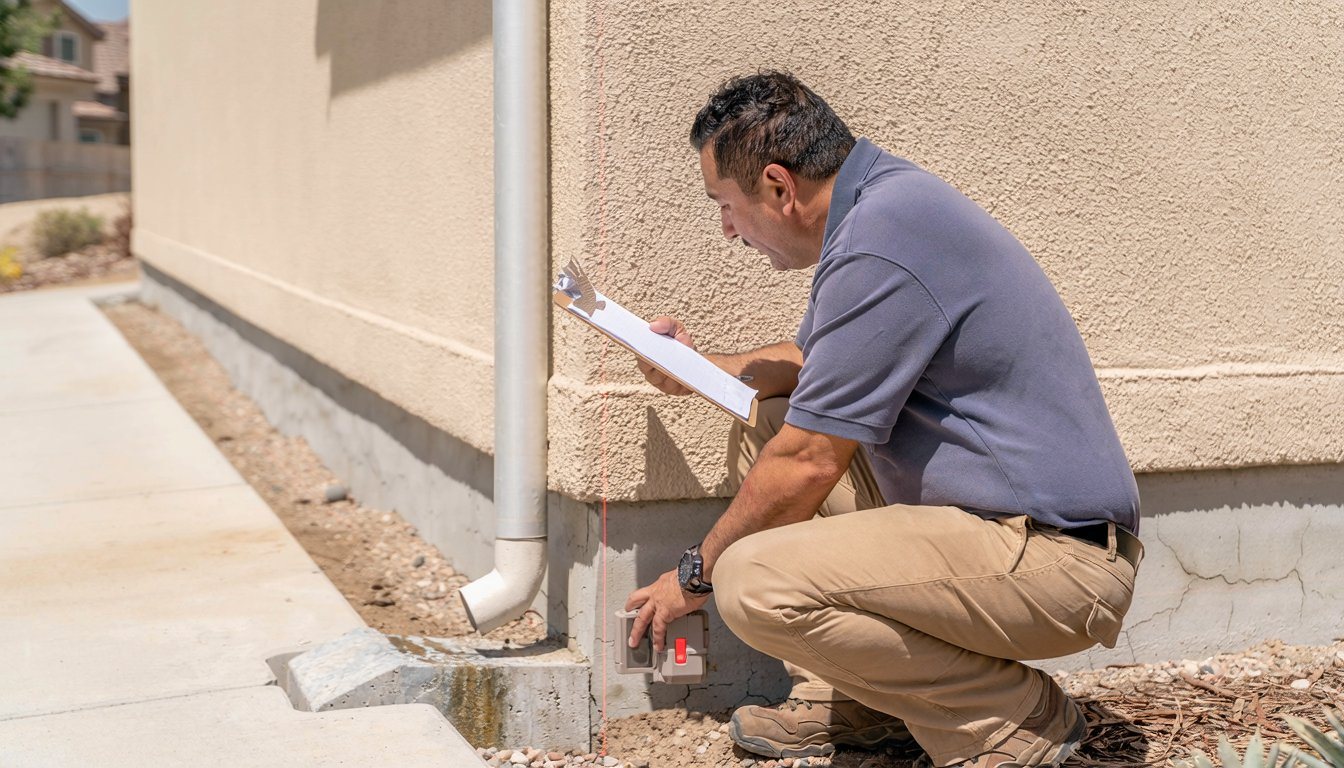
A homeowner gets a knock on the door offering a free foundation inspection. The inspector finds "movement" and recommends 8 to 12 helical piers, priced at $9,000 to $14,000. An independent structural engineer, hired separately for a second opinion, finds the actual cause: a downspout dumping water against the foundation, fixable for under $1,000. That gap between the two numbers is the whole subject of this guide: who is actually qualified to tell you what's wrong, and whether the person telling you has a financial reason to find a problem.
This guide covers what a foundation inspection is and isn't, who is legally qualified to certify a structural issue in California, what the free-inspection offers are really selling, what an inspection costs, when you need one, and how LA's permit rules fit in.
Quick answers
- What it is: a visual evaluation of a foundation's condition, ideally documented in a written report.
- Who's qualified: only a California-licensed Professional Engineer can issue a stamped structural opinion. A general contractor can perform and permit repair work but can't certify structural adequacy. A home inspector notes visible issues but explicitly does not evaluate structural adequacy.
- Cost: roughly $300 to $3,000 for an independent structural engineer's inspection, averaging around $600.
- The free-inspection catch: a "free" inspection from a repair company is a sales visit, not an independent assessment. See the case study below.
- When you need one: before buying, after visible warning signs, before or after a remodel permit, after an earthquake, or before major landscaping or drainage work near the foundation.
- Verifying who you hire: engineers are licensed through the state Board for Professional Engineers, Land Surveyors, and Geologists, a separate system from the CSLB contractor license lookup.
What a foundation inspection actually is (and isn't)
A structural engineer foundation inspection is, at its core, "a visual evaluation to confirm the foundation is safe and intact." That sounds simple, but there's an important distinction most homeowners miss: it is not the same thing as the foundation walkthrough that happens during a standard home inspection.
InterNACHI's Standards of Practice, which most home inspectors follow, require an inspector to examine "the foundation," "the basement," "the crawl space," and "structural components." But the same standard is explicit that the inspector is not required to "provide any engineering or architectural service" or to "report on the adequacy of any structural system or component." A home inspector can flag that something looks off. They are not certifying that it is, or isn't, a structural problem.
Who's actually qualified to tell you what's wrong
California law draws a sharp line here. Under Business and Professions Code Section 6735, "all final civil engineering calculations and reports shall bear the signature and seal or stamp of the licensee, and the date of signing and sealing or stamping." Plans released for construction carry the same requirement: "all civil engineering plans and specifications that are permitted or that are to be released for construction shall bear the signature and seal or stamp of the licensee."
In practice, that means a stamped, legally defensible opinion on a structural problem has to come from a state-licensed Professional Engineer, not a contractor. Engineers are licensed through the Board for Professional Engineers, Land Surveyors, and Geologists, a completely separate system from the CSLB, which licenses contractors. A general contractor can perform and permit repair work once a problem is identified, but issuing the stamped engineering opinion that the problem exists, and what caused it, is outside a contractor's license.
The "free foundation inspection" catch
This is where the door-to-door offer from the intro comes back in. An independent structural engineering firm, ISTA Engineers, put the incentive problem plainly: for a company that also sells the repair, "the inspection itself is the marketing expense, not the service being sold." There is, as they put it, "no professional or financial upside to telling you the foundation is fine."
Their real-world example is the one that opened this guide: a foundation repair company recommended 8 to 12 helical piers, quoted at $9,000 to $14,000. An independent engineer later traced the actual cause to a downspout dumping water against the foundation, a fix that cost under $1,000. The inspection wasn't wrong that something was happening near the foundation. It was wrong about the cause, and the recommended fix would have cost the homeowner tens of thousands of dollars for a problem a gutter extension could have solved.
That's not a reason to avoid free inspections outright. It's a reason to treat one as a sales estimate, not a diagnosis, and to get an independent, paid opinion before signing a contract for major structural work.

What a real inspection covers, at a high level
A proper inspection moves from the outside in. Exterior work typically covers the grading around the house, whether gutters and downspouts are directing water away from the foundation, and the visible condition of the exterior walls. Interior work covers moisture in a basement or crawl space, the condition of floors and walls, and whether doors and windows operate normally. As one engineering firm puts it, "engineers perform a detailed inspection of the foundation and the surrounding soil conditions." For how the inspection fits into the whole job, from repair plan to sign-off, see our guide to the foundation repair process.
If you already have a specific crack and want to know how it's evaluated and categorized, our foundation crack inspection guide covers that process in detail, along with what a written report should include. If you're not sure whether a crack you're looking at is worth a call, our foundation cracks guide walks through what to check first.
What it costs, and when you actually need one
HomeGuide puts the cost of a structural engineer foundation inspection at $300 to $750, depending on home size and type. Angi's range is wider: "professional foundation inspection costs range from $230 to $3,800," with most consumers paying "anywhere from $300 to $3,000, though the average price is $600." Inspection labor generally runs $100 to $200 per hour. If a geotechnical or soils report is also needed, HomeGuide puts that at $1,000 to $5,000 on average. Our soils report cost guide breaks down what that fee covers.
In our experience, the calls we get for a foundation look tend to cluster around a few situations: before buying an older home, after visible warning signs like a new crack or a door that suddenly won't close (our guide to common foundation warning signs covers what to watch for before a crack ever shows up), before or after pulling a remodel or addition permit, after an earthquake, and before major landscaping or drainage work close to the foundation. Older slab homes, hillside lots, and neighborhoods with expansive clay soil come up more often than newer, flatter tracts, though that's a pattern we see, not a rule. If a problem does turn up, our foundation repair cost guide covers what the fix itself typically runs, and our foundation crack repair guide covers repair methods.
LA permits: when a stamped report is required
Los Angeles doesn't have a bulletin that names foundation repair or underpinning permits specifically, but the City's general policy on stamped plans applies to qualifying structural work. LADBS requires that "all plans and written records of computations submitted for a permit are required to be signed by either a California Professional Engineer or California Licensed Architect," with certain exemptions, and adds a catch-all for "any project deemed by the Building Official to require a design by a California Professional Engineer or California Licensed Architect." Foundation work that requires a permit will generally fall under this policy, which is one more reason the stamped engineer's report matters well before you get to the permit counter.
How to verify who you're hiring
Because engineers and contractors are licensed by different boards, checking one doesn't confirm the other. Verify a structural engineer's license through the state Board for Professional Engineers, Land Surveyors, and Geologists' license search. Verify a contractor's license through the CSLB license lookup; our guide to checking a California contractor's license walks through it step by step. Our guide to choosing a foundation repair company covers what to compare once you have a diagnosis.
Medici Construction Group is one licensed option for foundation repair, holding California A, B and C-10 licenses under CSLB #1114433. If a "free inspection" turns into a repair quote, get a second, independent opinion before you sign, the same way the homeowner in this guide's opening avoided a $9,000 pier job for a $1,000 downspout fix.

Frequently asked questions
What is a foundation inspection?
A visual evaluation of a foundation's condition, ideally documented in a written report, used to identify whether there's a structural problem and what may have caused it.
Who is qualified to inspect a foundation in California?
A California-licensed Professional Engineer is the only one who can issue a stamped, legally defensible structural opinion. A general contractor can perform and permit repair work, and a home inspector can flag visible issues, but neither can certify structural adequacy.
Is a "free foundation inspection" worth it?
Treat it as a sales estimate, not an independent diagnosis. Companies offering free inspections generally also sell the repair, which creates an incentive to find one. Get a second, paid opinion from an independent structural engineer before agreeing to major work.
How much does a foundation inspection cost?
Roughly $300 to $3,000 for an independent structural engineer, averaging around $600. A geotechnical or soils report, if needed, typically runs $1,000 to $5,000.
Does a home inspector check the foundation?
Yes, but only at a basic level. Standard home inspection practice requires examining the foundation for visible issues, but explicitly does not require certifying structural adequacy or providing an engineering opinion.
Do I need a structural engineer's report to get a permit in LA?
Generally yes for qualifying structural work. LADBS's stamped-plans policy requires structural plans and calculations to be signed by a licensed engineer or architect, with limited exemptions.
When should I get a foundation inspected?
Common triggers include buying an older home, noticing new cracks or doors and windows that stop closing properly, pulling a remodel or addition permit, after an earthquake, or before major landscaping or drainage work near the foundation.
How do I verify a structural engineer's license in California?
Use the state Board for Professional Engineers, Land Surveyors, and Geologists' license search. This is separate from the CSLB, which only licenses contractors.
Can I inspect my own foundation?
You can do a basic visual check, looking at grading, drainage, and obvious cracks or shifts, but you can't issue a certified structural opinion. If you see something concerning, that's the point to bring in a licensed engineer.
Who pays for a foundation inspection when selling a house?
It varies by negotiation. A buyer typically orders and pays for their own inspection as part of due diligence, though a seller sometimes gets one done in advance to address issues before listing.