Twenty months after the Palisades Fire, permits are moving faster than homes are being finished. In July 2026, FOX 11 reported: "According to the Los Angeles Department of Building and Safety, rebuilding permits have been issued for 1,419 properties." The same report added: "However, only 28 addresses have received certificates of occupancy, allowing residents to move back in."
That gap says a lot about where rebuild time goes. In the City of Los Angeles, plan review has been streamlined for fire rebuilds. What sets your timeline now are the decisions you make before you submit, and the build itself. This guide walks through the City's fire rebuild process step by step, with the choices that keep a project moving. For what a rebuild costs and how it lines up with your insurance, see our guide to the cost to rebuild a house after a fire in Los Angeles. This isn't legal advice; the City's rules can change, so confirm current requirements with the City.
Quick answers
- Who handles it: Pacific Palisades is in the City of Los Angeles, so LADBS and the City's One-Stop Rebuilding Center handle permits. Altadena is unincorporated LA County and has a separate process.
- Like-for-like: in substantially the same location and no more than 110% of the previous footprint and height.
- Review speed: the City committed to reviewing complete applications within 30 days.
- Deadlines: like-for-like eligibility runs seven years from the January 2025 order, and work must be finished within three years of getting permits.
- Codes: like-for-like relaxes zoning, not building and fire codes; the new house has to meet current code.
- Coastal Zone: the City says eligible like-for-like projects are waived from CEQA, Specific Plan and Coastal Act requirements.
City of LA or County? Start with who issues your permit
The fires crossed jurisdictions, and the rebuild process follows them. Pacific Palisades is in the City of Los Angeles, so this guide covers the City's rules: LADBS, City Planning and the City's wildfire recovery portal. Altadena and other Eaton Fire areas are mostly unincorporated LA County, which runs its own permit process, covered in our Altadena rebuild permit guide. Nearby Bel Air is also within the City of Los Angeles, so this same process would apply there too, though Bel Air itself came through the January 2025 fires without confirmed structure losses; our Bel Air fire guide covers what actually happened there.
Step 1: Confirm the lot is ready and gather your records
Debris removal. The City says "Nearly all properties in the City of L.A. that were damaged or destroyed by the Palisades Fire have been cleared of debris". If a property wasn't cleared through the government program or privately, the City says it "may be subject to remedial action with full cost recovery".
Your pre-fire records. Like-for-like rebuilding depends on knowing what was there. LADBS lists the City's One-Stop Rebuilding Center at 1828 Sawtelle Blvd. as a place to get rebuild help in person. In our experience, it pays to pull the old permits, any surveys and even real-estate listing photos early, because they document the size and layout you're entitled to rebuild.
Step 2: Choose your lane, like-for-like or a new design
This is the decision that shapes everything after it. The City defines the fast lane this way: "Like-for-like +10% Eligible Projects are those where new structures and facilities are in substantially the same location as and do not exceed 110% of their previous footprint and height." For how new construction is treated differently from a remodel, see what ground up construction means.
Under the Mayor's January 2025 order, City departments were "directed to process all applications and plans for such rebuilding projects using the streamlined ministerial review process". The order also sets deadlines: eligibility runs "seven years from issuance of this Order; and the work is completed within three years of obtaining building permits".
The main practical benefit of like-for-like is zoning relief. In our experience, a house that didn't meet today's setbacks or other zoning rules can usually be rebuilt in its old form under this lane. A bigger or different design is possible, but it has to meet current zoning, which can mean a smaller or differently shaped house than the one you had in mind.
Coastal Zone. Much of the Palisades sits in the Coastal Zone. The City says like-for-like eligible projects "both within and outside of the Coastal Zone" are "waived from CEQA, Specific Plan and Coastal Act requirements."
| Lane | Size and use | Zoning | What to watch |
|---|---|---|---|
| Like-for-like +10% | Substantially the same location, up to 110% of prior footprint and height | Relief for pre-fire nonconformities | Seven-year eligibility; three years to finish after permits |
| New or larger design | Beyond like-for-like limits | Must meet current zoning | Design time; confirm which reviews apply to your lot |
Step 3: Find out what your lot needs
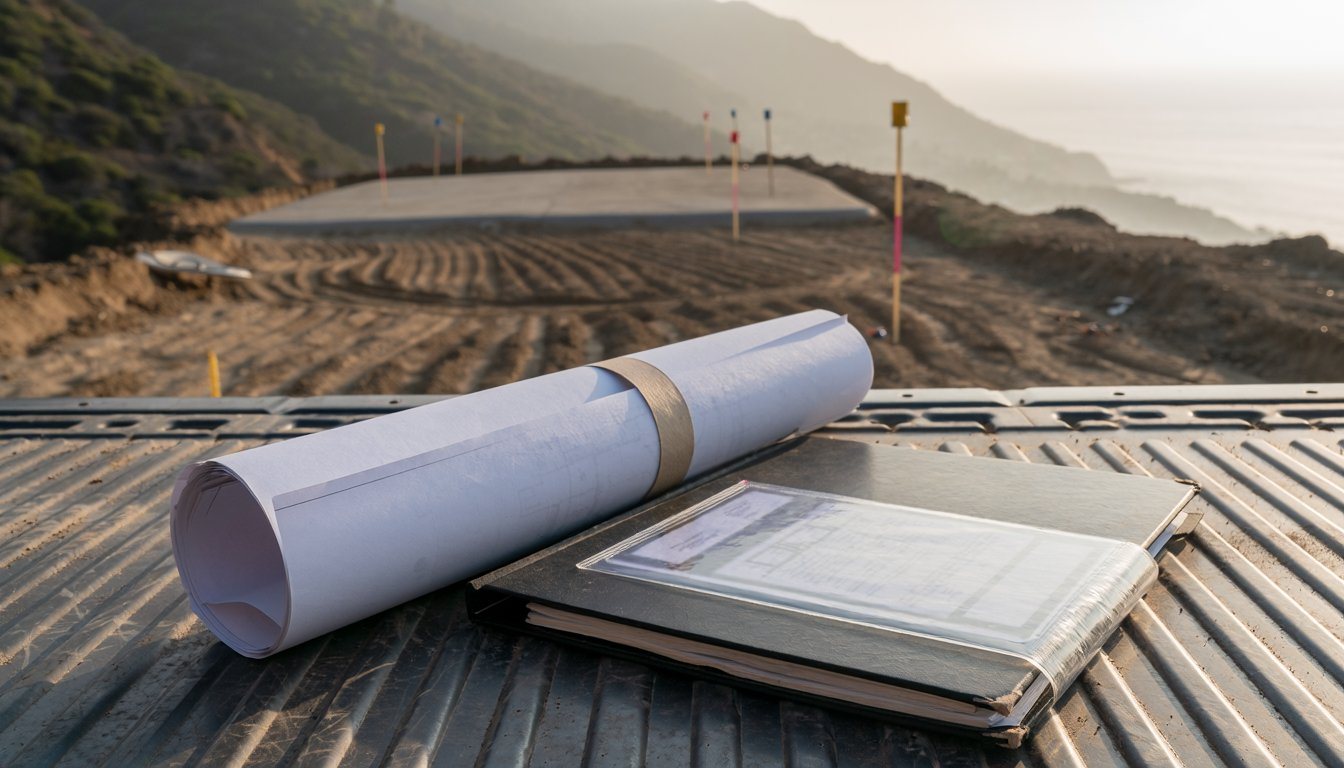
Many Palisades lots are on hillsides, and that adds reports before plans can be finished. LADBS's rebuilding bulletin says that in geologically sensitive areas, "Combined Geology and Soils reports are required". Elsewhere, "a soils report will be required for excavations deeper than 5 feet and/or where lateral support from an adjacent property, structure or public way is removed". Outside the sensitive zones, "soil compaction may be self-certified by the consulting licensed civil or geotechnical engineer".
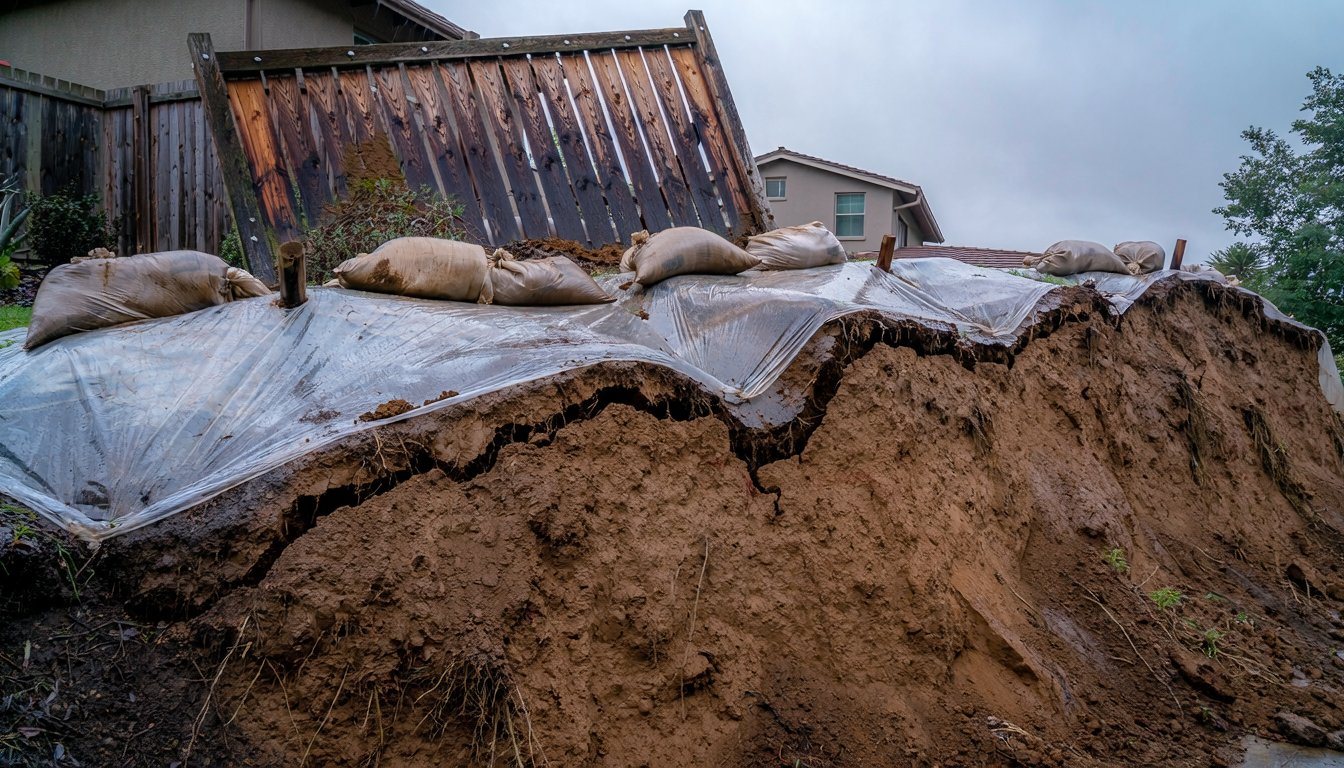
In our experience, the geology and soils work is where hillside rebuilds lose the most time, so order it as soon as you know your lane. Hillside lots also need a drainage design and often retaining walls; our guides to drainage plans in Los Angeles and retaining wall design cover those pieces, and our slope erosion guide covers protecting a burned slope in the meantime.
Step 4: Design to current code, not the old house
Like-for-like is a zoning break, not a code break. LADBS's bulletin says "the proposed residential building will have to conform to current Code standards." LA County's rebuild guidance puts it the same way: "Although like-for-like replacement structures do not need to comply with current Zoning Code requirements, they will need to comply with current Building Code, Fire Code, and Health and Safety Code requirements."
For fire-prone areas, that includes the state's wildfire construction standards. The County's guidance notes that "Chapter 7A applies to any Fire Hazard Severity Zone or Wildland-Urban Interface Fire Area of the State Responsibility Area or Local Responsibility Area." In our experience, that means ember-resistant vents, fire-rated roofing and ignition-resistant siding, windows and decks, which a pre-fire house often didn't have.
Zone 0. The state is also finalizing rules for an ember-resistant zone right around the house. As of our research in September 2026, the Board of Forestry said "The Board and Board staff continue to work with the Office of Administrative Law on a final review of the Zone 0 Regulations Rule Package." In our experience, it's worth designing the first five feet around the house for it now, with noncombustible surfaces and no combustible fencing or plantings against the walls, rather than tearing things out later.
Step 5: Pick your plan check path
Standard review. The City's rebuilding page says the order directs "City Departments to review complete applications within 30 days and issue permit clearances within 5 days." The key word is complete; in our experience, missing reports or inconsistent sheets are what push a project past that window.
Pre-check. The City's recovery FAQ describes pre-review help for Palisades residents before formal submittal, including a free automated plan check tool (the Archistar AI E-Check).
Self-certification. A later executive order told LADBS to "establish a plan check Self-Certification Pilot Program" for fire rebuilds. Under LADBS's implementation guidelines, the program lets "California-licensed architects and civil engineers" take responsibility for verifying that their plans meet code. If your designer is enrolled, ask how it would change your timeline and what it means for inspections.
Step 6: Permit, inspections, utilities and occupancy
Once you have a permit, the January 2025 order also committed the City to inspections "within two business days of a submitted request". From there, the three-year completion clock for like-for-like projects is running.
Utilities. Power in the Palisades is being rebuilt too; the City's FAQ says LADWP is "building a new 34.5kv circuit on Sunset Blvd." as part of undergrounding. If an LADWP pole is now positioned differently than it was before the fire, the FAQ describes an encroachment permit process (the "Relocate LADWP Equipment" option) to move it. In our experience, utility coordination should start during design, not after framing.
Certificate of occupancy. The final inspection leads to the certificate of occupancy that lets you move back in. The City announced in November 2025 that the first ground-up Palisades rebuild "has officially been issued its Certificate of Occupancy".
How long does a Palisades fire rebuild take?
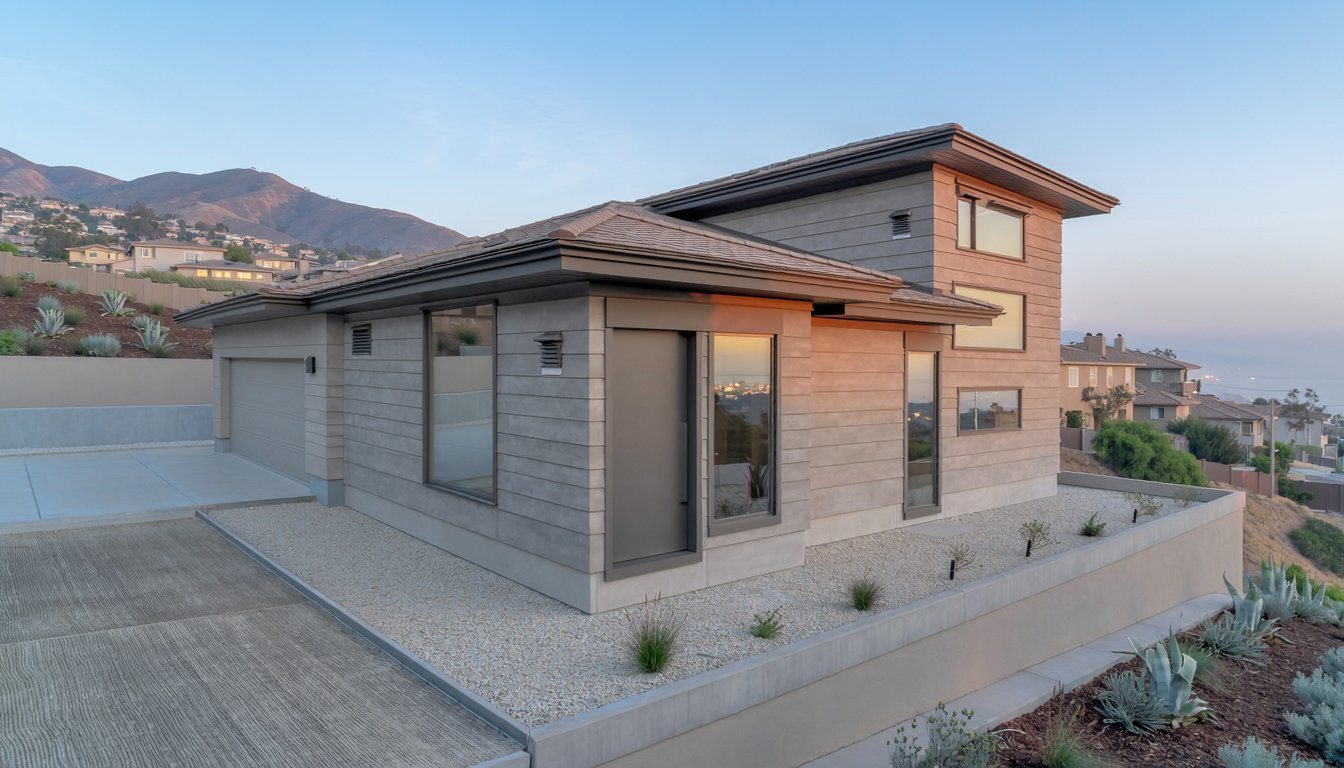
Permitting has been fast by LA standards. The City reported that "The first permits were issued 57 days after the Palisades Fire began." In January 2026, CalMatters reported that "more than 2,600 residential permits have been issued between the Palisades and Altadena" and "Another 3,340 are under review.", with permits for homes and ADUs moving "three times faster" than before the fires.
But the FOX 11 figures at the top of this guide show where the time goes: many permits, few finished homes. In our experience, the elapsed time sits in three places: the design and reports before submittal, financing and contractor scheduling, and construction itself. In our experience, a rebuild that goes smoothly still takes many months of building after the permit is issued, and hillside sites and custom designs take longer.
If you're choosing a builder, check the license first; our guide to checking a California contractor license walks through it. Medici Construction Group is one licensed option for fire rebuilds, holding California A, B and C-10 licenses under CSLB #1114433. Whoever you hire, ask how they'll keep your project inside the like-for-like limits and deadlines if that's your lane.
Frequently asked questions
How do I start a fire rebuild in the Palisades?
Confirm debris removal is complete, gather your pre-fire permits and plans, and decide whether you're rebuilding like-for-like or with a new design. The City's One-Stop Rebuilding Center at 1828 Sawtelle Blvd. offers in-person rebuild help.
What counts as a like-for-like rebuild in Los Angeles?
A project in substantially the same location that doesn't exceed 110% of the previous footprint and height.
Can I rebuild bigger after the Palisades fire?
Yes, but a design beyond the like-for-like limits has to meet current zoning, which can limit size and placement. Up to 110% of the prior footprint and height stays in the like-for-like lane.
How long does it take to rebuild after a fire in LA?
Permits can come quickly, but construction takes many months. As of July 2026, FOX 11 reported permits for 1,419 Palisades properties and certificates of occupancy for 28 addresses.
Do I need a Coastal Development Permit to rebuild in the Palisades?
The City says like-for-like eligible projects inside and outside the Coastal Zone are waived from CEQA, Specific Plan and Coastal Act requirements. Confirm your project's status with the City.
Do like-for-like rebuilds have to meet current fire codes?
Yes. Like-for-like relaxes zoning, but LADBS says the new home must conform to current code standards, including wildfire construction rules in fire hazard zones.
How long do I have to finish a like-for-like rebuild?
Under the January 2025 order, eligibility runs seven years from the order, and the work must be completed within three years of getting building permits.
What is the self-certification program for Palisades rebuilds?
A pilot program that lets qualified California-licensed architects and civil engineers certify that fire rebuild plans meet code, instead of waiting for standard plan check.
How many Palisades homes have been rebuilt so far?
FOX 11 reported in July 2026 that rebuilding permits had been issued for 1,419 properties, but only 28 addresses had received certificates of occupancy. Check recovery.lacity.gov for current figures.