The fastest way to lose an Earthquake Brace + Bolt grant is to be eager. If you pull a permit or start work before the program accepts you, your house is out. The program's own rules say "You must not obtain a permit or begin retrofit construction work before being accepted into one of the programs."
Being accepted is not automatic either. Registration only puts your name in. Registered homeowners are randomly selected and notified by email. Once the program clears you to start, the clock starts. For many older Los Angeles homes on raised foundations, the grant can cover a large share of the work. Here is how the program works, from checking eligibility to the final inspection, and how it fits LA's permit rules.
What Earthquake Brace + Bolt is
Earthquake Brace + Bolt (EBB) was created by the California Residential Mitigation Program (CRMP). It is funded by the California Earthquake Authority's Loss Mitigation Fund and FEMA's Hazard Mitigation Grant Program. CRMP says EBB offers "up to $3,000" toward a seismic retrofit.
The retrofit targets the weak spot under older raised-foundation houses. It braces the crawl space (the short "cripple walls" between the foundation and the first floor) and bolts the foundation to the frame of the house. EBB also requires that the water heater be properly strapped and braced.
Does your Los Angeles house qualify?
CRMP's EBB page says a qualifying house must meet all of these:
- Location: in a program-eligible ZIP code. Confirm yours during registration with the official lookup. The California Earthquake Authority added ZIP codes in and around Los Angeles when the program expanded.
- Age: built before 1980.
- Foundation: a wood-framed house on a raised foundation.
- Crawl space: wood-framed cripple walls or a stem wall in the crawl space under the first floor.
Height of the cripple walls matters. The standard retrofit covers short walls, 4 feet or less. CRMP's contractor guide says that for cripple walls "greater than 4-feet but not taller than 7-feet in height, an engineered solution is required, or contractors may use FEMA P-1100, if allowed by the local building department." On LA's hillside streets, taller walls are worth checking before you plan a budget.
Two more rules trip people up. First, a house that already has a completed brace-and-bolt retrofit is not eligible. Second, EBB does not cover any work on chimneys. On the other hand, owner-occupancy is no longer required. In 2025, CRMP expanded EBB eligibility to include non-owner-occupied homes, so landlords can apply for rental houses.
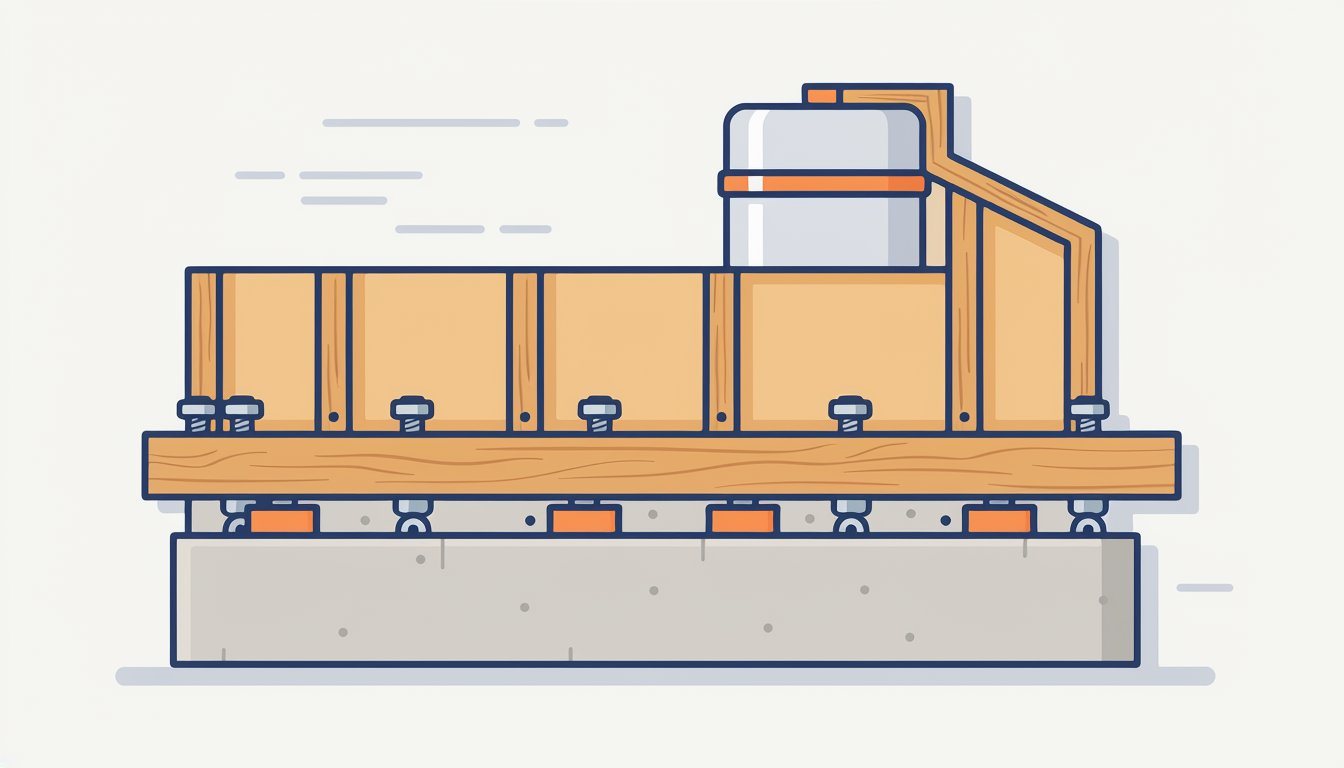
How the process works, step by step
- Watch for the registration window. CRMP says registration is "typically offered annually or as funding is available." For example, the second 2025 period ran from August 20 through October 1 with more than $20 million in grant funding available. CRMP later extended it to October 17, 2025. Dates change each cycle, so sign up for notices.
- Register. Registering is free and does not commit you to anything. Do not pull a permit or start work at this stage.
- Wait for selection. After registration closes, homeowners are randomly selected and accepted by email, and more are accepted off a waitlist in the following months.
- Choose who does the work. Only contractors listed on the EBB Contractor Directory can complete an EBB retrofit. CRMP describes licensed contractors trained through FEMA's seismic retrofit training as the backbone of the program. EBB also allows do-it-yourself retrofits, in which case you act as owner-builder and pull your own permits. We cover how to vet a retrofit contractor in a separate guide.
- Pull the permit and do the work. Do this only after you are cleared to begin. In the City of Los Angeles, that usually means an LADBS permit under the city's standard plan (next section).
- Finish within the deadline. According to CRMP's contractor guide, the program gets FEMA approval for your project after you are accepted, which can take several weeks. Once you are told the retrofit may begin, you have six months to complete it under that guide. Newer program rules can change the window, so confirm it in your acceptance email.
- Pass inspection and submit documents. Complete the final city inspection and the program paperwork CRMP asks for. The grant is applied toward your retrofit cost.
CRMP also answers a common question up front: EBB grants are not taxable at the state level in California, or at the federal level.
The LA permit path: LADBS Standard Plan No. 1
In the City of Los Angeles, most EBB-type retrofits follow LADBS Standard Plan No. 1. It applies to one-, two- and three-story residential buildings with raised wood floors, up to four dwelling units. The plan must be followed exactly as prescribed, and any deviation needs LADBS approval before the permit is issued. We explain the standard plan in detail in a separate guide.
What it costs, and how much the grant covers
CRMP says a typical retrofit completed by a licensed contractor may cost between $3,000 and $7,000. Where your job lands depends on the house's size and construction, and on material and labor costs. So the $3,000 grant can cover a simple bolt-only job almost entirely, or roughly half of a larger brace-and-bolt job.
Lower-income households can get more. CRMP's supplemental grant is for households with income at or below the program's limit, currently listed as $94,480, and that limit changes by cycle. In Southern California, the supplement is up to $1,125 for a bolt-only retrofit and $2,650 for brace-and-bolt. CRMP says the combined grants may cover up to 100% of retrofit costs, depending on location and retrofit type. Income-approved applicants can also get help up front: up to $250 toward one contractor's bid and the full cost of the building permit.
For a full price breakdown across house types, including soft-story buildings, see our seismic retrofit cost guide for Los Angeles.
Getting ready before registration opens
Because selection is random and the build window is only six months, the owners who get the grant paid are usually the ones who did their homework early. None of these steps counts as starting work, so they are safe to do before you are accepted:
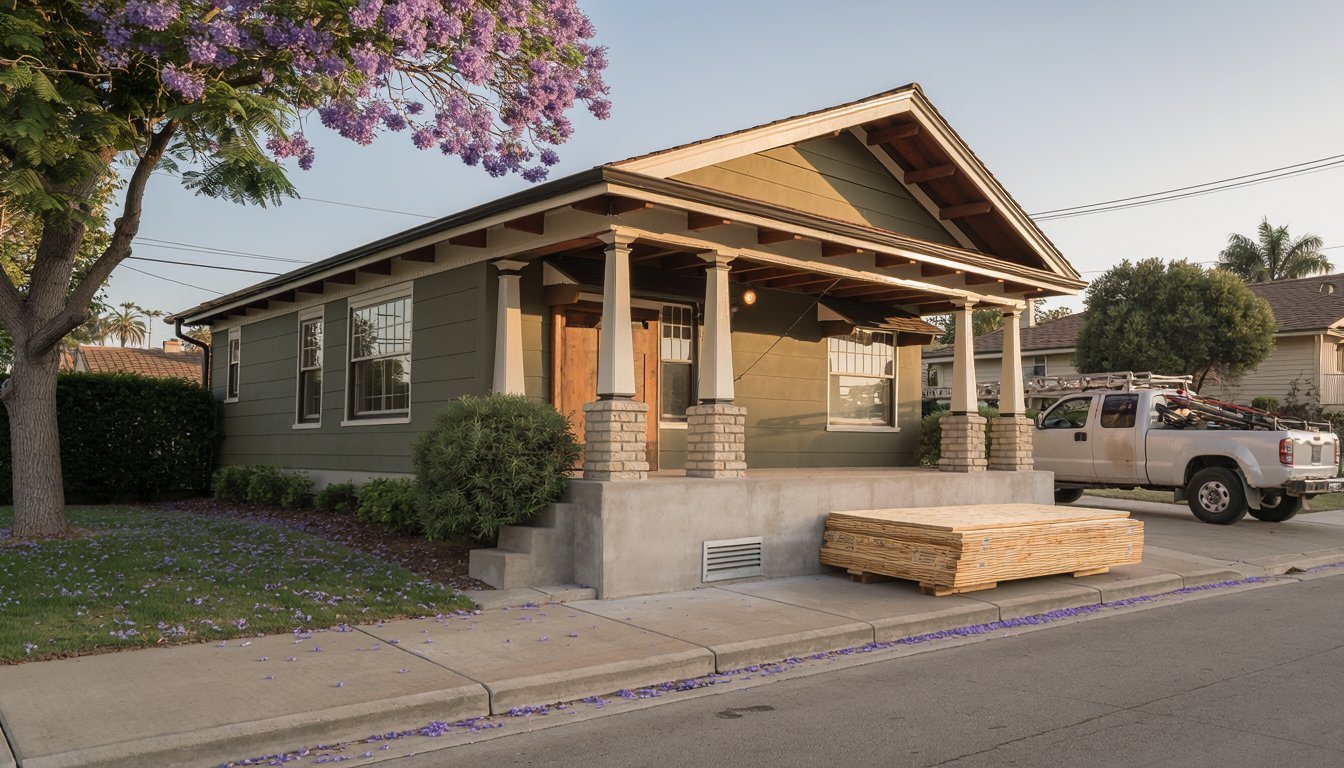
- Find the crawlspace access. Many LA bungalows have a small hatch in a closet floor or a vent opening in the stem wall. A contractor or inspector will need to get in.
- Measure the cripple walls. Note whether they are 4 feet or less, which is the standard retrofit, or taller, which needs an engineered solution.
- Take photos. Photograph the foundation, the mudsill and any visible bolts, and look for signs of wood rot or termite damage. Damaged framing has to be addressed and adds cost.
- Check the water heater. It must be strapped for EBB and for the insurance discount.
- Gather income records if you might qualify for the supplement. The supplemental grant depends on household income, so have documentation ready.
- Line up contractors from the directory. If you do not plan to DIY, identify two or three directory-listed contractors in advance so you can get bids quickly once accepted.
What a brace-and-bolt retrofit does not do
It helps to be clear about the limits. LADBS describes its standard plan as "minimum prescriptive standards" that reduce the likelihood that houses fall off their foundations in an earthquake. It also notes that they "will not necessarily prevent their damage". The retrofit strengthens the connection between the house and its foundation and the short walls under the floor. It does not address chimneys, which EBB excludes. It does not cover living space over a garage, which is the Earthquake Soft-Story program's job. And it does not change how the rest of the house is framed.
What stacks on top of the grant
Earthquake insurance discount
The California Earthquake Authority offers up to a 25% discount on CEA earthquake insurance premiums for qualifying retrofitted homes. The house must be built before 1980, wood framed, with cripple walls braced to code and the water heater secured. Raised-foundation homes built from 1940 to 1979 get 20%, and those built in 1939 or earlier get 25%.
Property tax protection
California doesn't let seismic work raise your property taxes. The State Board of Equalization's claim form explains that Section 74.5 of the Revenue and Taxation Code "excludes from assessment that portion of an existing structure that consists of the construction and reconstruction of seismic components." The deadlines are tight. The claim must be filed with the Assessor before, or within 30 days of, completion. Supporting documents are due within six months. The exclusion expires when the property changes ownership. LA County homeowners file with the LA County Assessor.

If you are not selected
Not being picked the first time is common. Homeowners who are not selected right away can still be accepted from the waitlist in the months after registration closes, and registration typically opens again in a later cycle. The one thing not to do while you wait is start the work. A permit or construction before acceptance takes the house out of the program. Whether to retrofit now without the grant or wait for the next round is a separate question. We weigh it in our guide on whether a seismic retrofit is worth it for a Los Angeles home.
Medici Construction Group is one licensed option for seismic retrofit work, holding California A, B and C-10 licenses under CSLB #1114433. Only contractors listed on the EBB Contractor Directory can do EBB work, so confirm that for any contractor you consider, and check the license on the CSLB license lookup.
Frequently asked questions
Who qualifies for Earthquake Brace + Bolt?
Houses in eligible ZIP codes built before 1980, on a raised foundation on level ground or a low slope, with wood cripple walls or a stem wall in the crawl space. Houses with a completed brace-and-bolt retrofit are not eligible. Since 2025, rental houses qualify too.
How much is the Earthquake Brace + Bolt grant?
Up to $3,000. Income-eligible households in Southern California can add up to $1,125 for bolt-only or $2,650 for brace-and-bolt. CRMP puts the typical EBB retrofit at $3,000 to $7,000.
When is Earthquake Brace + Bolt registration?
CRMP says registration is typically offered annually or as funding is available. In 2025 the second window ran from August 20 into October. Check CRMP for current dates and sign up for notices.
Can I do an Earthquake Brace + Bolt retrofit myself?
Yes. EBB allows do-it-yourself retrofits, with the homeowner acting as owner-builder and pulling permits. The Earthquake Soft-Story program does not allow DIY.
Is the Earthquake Brace + Bolt grant taxable?
No. CRMP says EBB grants, EBB supplemental grants and ESS grants are not taxable at the California state level or the federal level.
Can landlords apply for Earthquake Brace + Bolt?
Yes. In 2025, CRMP expanded EBB eligibility to include non-owner-occupied homes, so landlords can apply for eligible rental houses. The income-based supplement has its own rules, including owner-occupancy, so check before counting on it.
What is the difference between EBB and Earthquake Soft-Story (ESS)?
EBB is for raised-foundation houses with cripple walls or stem walls. ESS is a CRMP pilot program for pre-2000 houses with living space above the garage. It covers up to 75% of the retrofit cost, up to $13,000, and requires a contractor from CRMP's directory rather than DIY.