Every storm, water collects in the same low corner of the yard, runs off the patio toward the house, or pours out of a downspout onto a flower bed. The fix looks simple: a catch basin, some pipe, and a way out. Pricing the catch basin is the easy part. The question that sets the price of a storm drain in Los Angeles is where the pipe is allowed to end.
City code is specific about that. The Los Angeles grading code (LAMC Section 91.7013) addresses roof water and drainage devices, and the City's Bureau of Engineering tells applicants that "Plans should reflect proposed solution for draining roof water to the street". If your lot can send water downhill to the curb, the job is usually modest. If it can't, the job changes.
Quick answers
- Typical LA budget: Angi puts yard drainage in Los Angeles at $3,556 on average, with most jobs between $1,986 and $5,518.
- What moves the price most: whether water can flow by gravity to the street, needs a pump, or has to tie into a City catch basin.
- Permits: Work at the curb falls under the City's Bureau of Engineering, and connecting to a City catch basin or storm drain pipe needs a separate Storm Drain Connection Permit.
What a residential storm drain system includes
A private storm drain system collects surface water and carries it somewhere it can leave the property. Our storm drain vs catch basin guide explains how the inlets and the pipe fit together. The usual parts are:
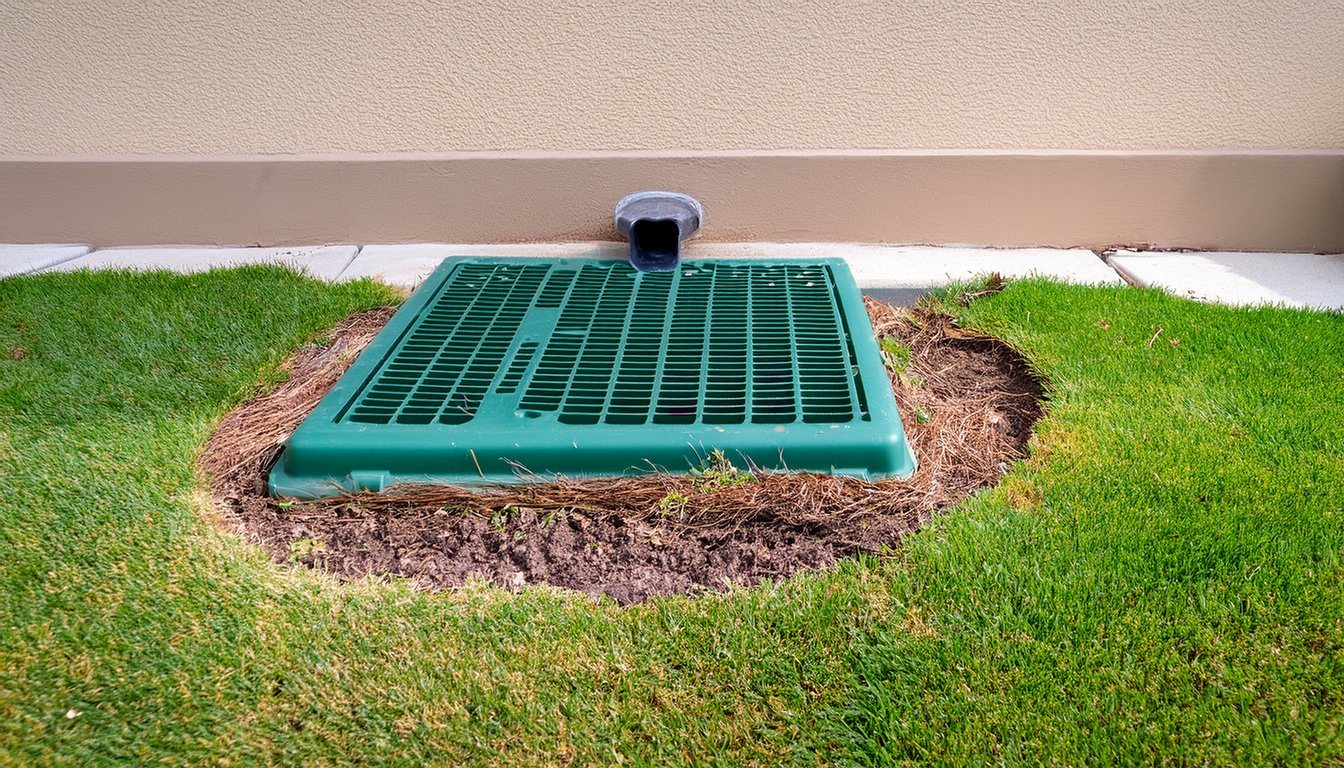
- Catch basins at low spots and under downspouts. NDS, a drainage manufacturer, explains that "Catch basins are used to collect debris from run-off water that may clog drain lines. The debris is collected in the sump area of a catch basin and should be cleaned out periodically."
- Area drains in lawns, planters and patios.
- Channel or trench drains, the long grated drains across a driveway or patio edge.
- Downspout connections that take roof water underground instead of onto the soil.
- Solid pipe to carry it all. NDS notes that perforated pipe is for subsurface drainage and "solid pipe is used to conduct water from surface and/or subsurface drainage systems to a discharge point."
- An outlet: the curb, an approved drainage facility, or a pump that lifts water to one of them.
French drains, which use perforated pipe in gravel to collect groundwater, are a different job with different pricing; see our French drain cost guide for that breakdown. Not sure which fix your yard needs? Our yard drainage solutions guide walks through two simple tests.
Storm drain installation cost in Los Angeles, item by item
Here is how published figures break down. Los Angeles figures come from Angi's LA page; the rest are national averages.
| Item | Typical cost | Source |
|---|---|---|
| Yard drainage job, Los Angeles average | $3,556 ($1,986 to $5,518) | Angi, Los Angeles |
| Adding a catch basin, Los Angeles | $685 to $2,280 | Angi, Los Angeles |
| Trench (channel) drain, Los Angeles | $35 to $80 per linear foot | Angi, Los Angeles |
| Catch basin, plastic vs concrete (installed) | $200 to $500 plastic; $2,000 to $5,000 concrete | HomeAdvisor |
| Underground downspout drain | $150 to $350 per downspout | HomeGuide |
| PVC pipe, materials only | $2 to $20 per linear foot | HomeGuide |
| Trenching | $5 to $12 per linear foot | HomeGuide |
| Concrete cutting | $5 to $15 per linear foot | HomeGuide |
| Sump pump installation | $600 to $2,500 | HomeGuide |
Angi's LA page also points to the local 9.75% sales tax on materials. In our experience, pipe size is a quiet cost driver: most residential lines are 3 or 4 inches, while a large paved area or a long driveway drain may need 6-inch pipe, which costs more per foot and needs a wider trench. Length matters too. Every foot of pipe also means a foot of digging, and concrete in the path adds cutting and patching.
The outlet decides the price: three paths
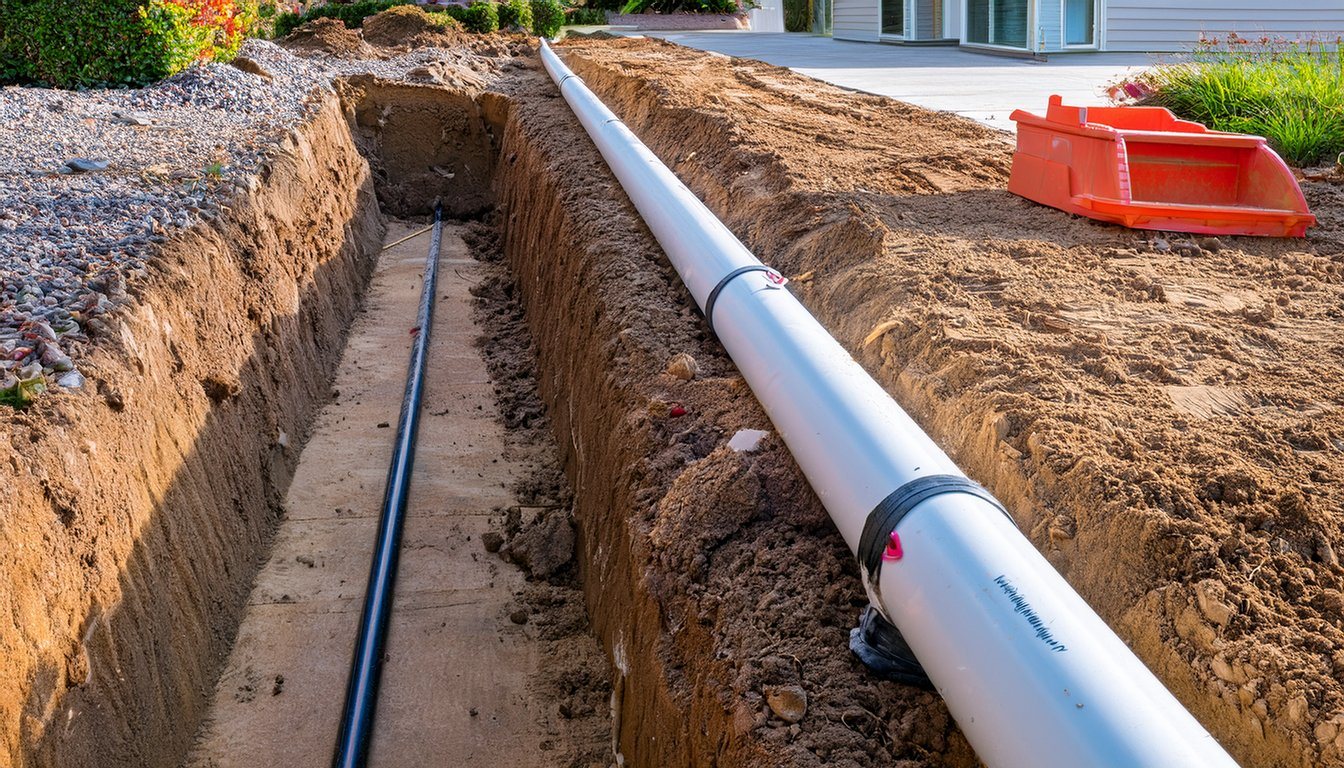
1. Gravity to the curb (the simpler job)
In our experience, most LA lots that slope toward the street can drain by gravity. The grading code (LAMC Section 91.7013) also sets a minimum slope for building pads toward an approved drainage device or the street, so ask the plan checker what applies to your lot. For the pipe itself, NDS calls for "a continuous 1/8" per foot or 1% minimum slope for smooth interior pipe." If your project has to build a catch basin in the street itself, see how to build a catch basin storm drain in a street.
Where the pipe meets the street, the City's Bureau of Engineering has standard plans for a curb drain (APWA 150-3) and a parkway drain (APWA 151-2). Curb drain work falls under BOE's construction procedures, which note that "A drainpipe shall have a minimum of 2-inch clearance from the top of the curb." In our experience, cutting through the curb and sidewalk is a small but real line item, and it is the part homeowners most often forget to budget.
2. Tying into a City catch basin or storm drain pipe
Some properties connect to a City storm drain instead of discharging over the curb. That takes its own permit. BOE explains: "Per LAMC 64.12, in order for a property owner to connect to the City of Los Angeles storm drain system, property owners shall obtain and pay for an Storm Drain Connection Permit." It applies "if connections are made from the property line to a catch basin or a storm drain pipe in the public right-of-way." In our experience, this path adds engineering, permit time and street work, and costs more than a simple curb outlet.
3. Pumping water up to the street
If the low spot sits below the curb, gravity won't work, and the water has to be pumped. LADBS sets rules for this in its sump pump information bulletin. The system must be "designed based upon a rainfall of 2 inches per hour (Plumbing Code requirement)," and "At each sump pump location, a two-pump system shall be installed." The owner records an agreement "to maintain the sump pump system in proper working condition at all times," and the project needs "approval from the Department of Public Works, Bureau of Engineering for the discharge of water from the sump pump to the street prior to permit issuance."
BOE also limits the speed of pumped water leaving a single-family lot. Its roof and site drainage procedure says the water "must be at 7 fps max prior to getting into public right-of-way via a curb drain." With HomeGuide pricing a single sump pump installation at $600 to $2,500, a two-pump system with alarms, an energy-dissipating outlet and the permit steps puts a pumped job in a different bracket than a gravity one. That is why the first question to ask is whether your low spot is higher than the curb.
What you can't connect a storm drain to
Rainwater has to go to the storm drain system, and only rainwater. The City prohibits connecting the wrong things: LAMC Section 64.70.03, as published in a City Clerk ordinance document, states, "It is prohibited to establish, use, maintain, or continue illicit drainage connections to the City storm drain system". In our experience, the most common mistakes are tying a yard drain into the sewer cleanout, or sending pool, wash or other non-rain water into the storm line. In our experience, both tend to get flagged at inspection or when the house is sold.
A typical single-family drainage retrofit is well below the size that triggers the City's larger stormwater rules. The Low Impact Development requirements in LAMC Section 64.72, as amended by City Ordinance 188125, focus on larger projects, such as new development of "1 acre or greater of disturbed area and adding more than 10,000 square feet of impervious surface area". If you are building a new home or a large addition, ask whether LID review applies.
Channel drains across driveways
A channel drain across the bottom of a sloped driveway catches water before it reaches the garage or the house. Our trench drain vs French drain guide covers when a channel drain is the right tool and when the water is in the soil instead. In our experience, it is also the most expensive piece per foot, mainly because of the concrete work. HomeGuide puts concrete cutting at $5 to $15 per linear foot and removal at $3 to $8 per square foot, and notes that most cutting contractors charge a minimum service fee of $125 to $400. In our experience, a driveway drain also needs a grate rated for vehicle loads and a solid connection to the outlet. If you are repaving at the same time, see our asphalt driveway cost guide.
Sizing: how much water the system has to carry
Storm drains are sized for heavy downpours, not average rain. Los Angeles County's building code manual says roof drains are designed "based upon a rainfall rate of 3 inches per hour" under the Plumbing Code tables. More roof and paved area, or a higher design rate, means more water per minute, and that means larger catch basins, bigger pipe and a higher bill. In our experience, a good drainage designer counts the square footage draining to each basin before picking sizes.
Timing matters too. LA County Public Works notes that the "Water year begins October 1 and runs through September 30." Installing before the first fall storms lets you see the system work in the rain it was built for.
Keeping a new storm drain working
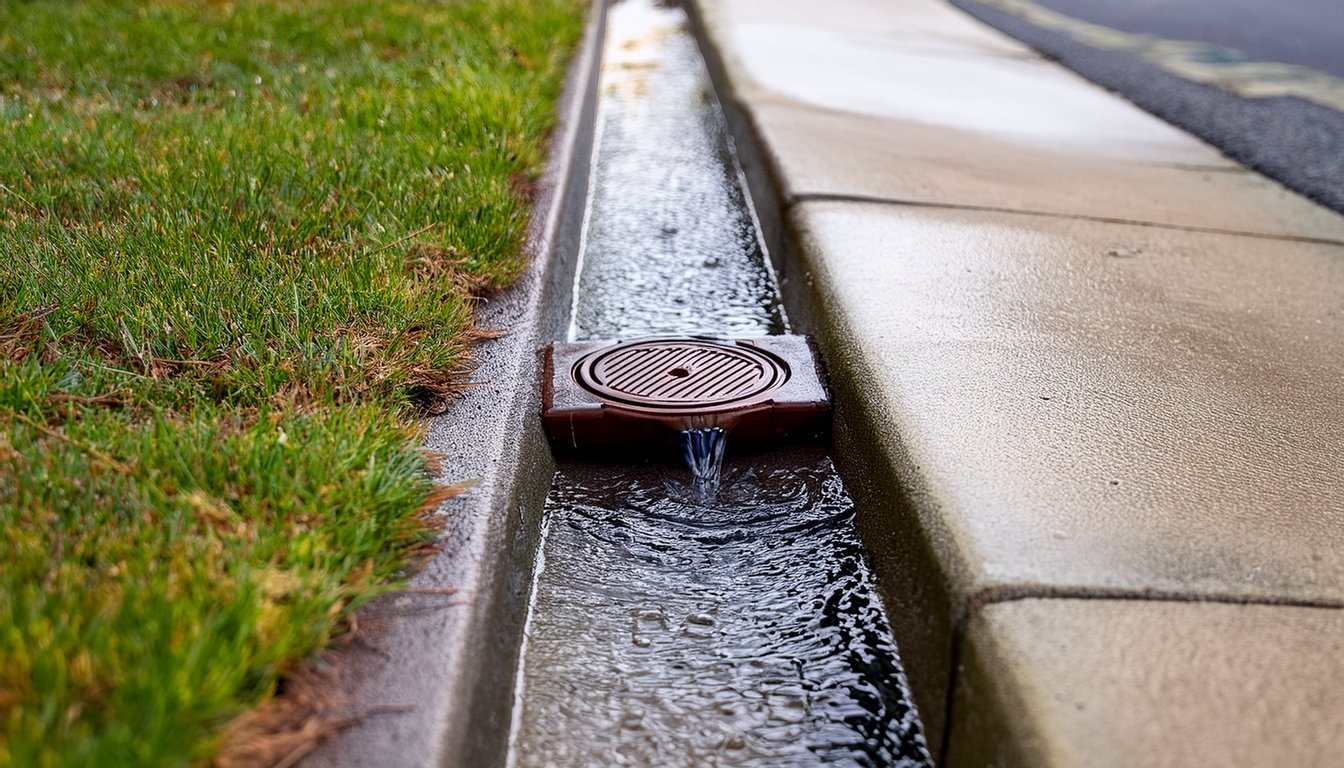
A catch basin only works if its sump is emptied. NDS notes the debris collected in the sump "should be cleaned out periodically." In our experience, a quick check before the rainy season and after the first big storm catches most problems. Our storm drain cleaning guide covers what that involves and what it costs. If a line is cracked or crushed, our storm drain repair guide covers finding and fixing the break. In our experience, water left pooling against a house is also a common factor in foundation problems; see our foundation repair cost guide for what that can lead to.
Getting an accurate quote
Ask every contractor the same questions so the quotes compare:
- Where will the water discharge, and can it get there by gravity?
- What pipe size and slope, and how many catch basins?
- Is any concrete cutting, curb work or patching included?
- Which permits are needed (LADBS, BOE curb drain, Storm Drain Connection Permit), and who pulls them?
- If a pump is needed, does the price include two pumps, the alarm and the recorded maintenance agreement?
Check any contractor's license before you sign. Our guide on how to check a California contractor's license walks through it. Medici Construction Group is one licensed option for storm drain installation, holding California A, B and C-10 licenses under CSLB #1114433. Whoever you hire, start with where the water will go.
Frequently asked questions
How much does it cost to install a storm drain in a yard?
Angi puts yard drainage in Los Angeles at $3,556 on average, with most jobs between $1,986 and $5,518. Long pipe runs, concrete cutting and pumped systems cost more.
How much does a catch basin cost to install?
Angi's Los Angeles figures put adding a catch basin at $685 to $2,280. HomeAdvisor lists plastic catch basins at $200 to $500 installed and concrete ones at $2,000 to $5,000.
How much does a channel drain cost per foot?
Angi lists trench drains in Los Angeles at $35 to $80 per linear foot. Driveway installs add concrete cutting, which HomeGuide puts at $5 to $15 per linear foot.
Do I need a permit to drain water to the street in Los Angeles?
Curb and parkway drains follow Bureau of Engineering standard plans and procedures, and connecting to a City catch basin or storm drain pipe requires a Storm Drain Connection Permit under LAMC 64.12. Confirm the permit path with your contractor before work starts.
Can I connect my yard drain to the sewer?
No. Rainwater belongs in the storm drain system, and LAMC 64.70.03 prohibits illicit drainage connections to the City storm drain system. In our experience, a yard drain tied into a sewer cleanout is a common violation.
What if my yard is lower than the street?
Then the water has to be pumped. LADBS requires a two-pump system designed for 2 inches of rain per hour, a recorded maintenance agreement, and Bureau of Engineering approval of the discharge to the street.
What slope does a storm drain pipe need?
NDS recommends a continuous minimum slope of 1/8 inch per foot, or 1%, for smooth interior pipe.