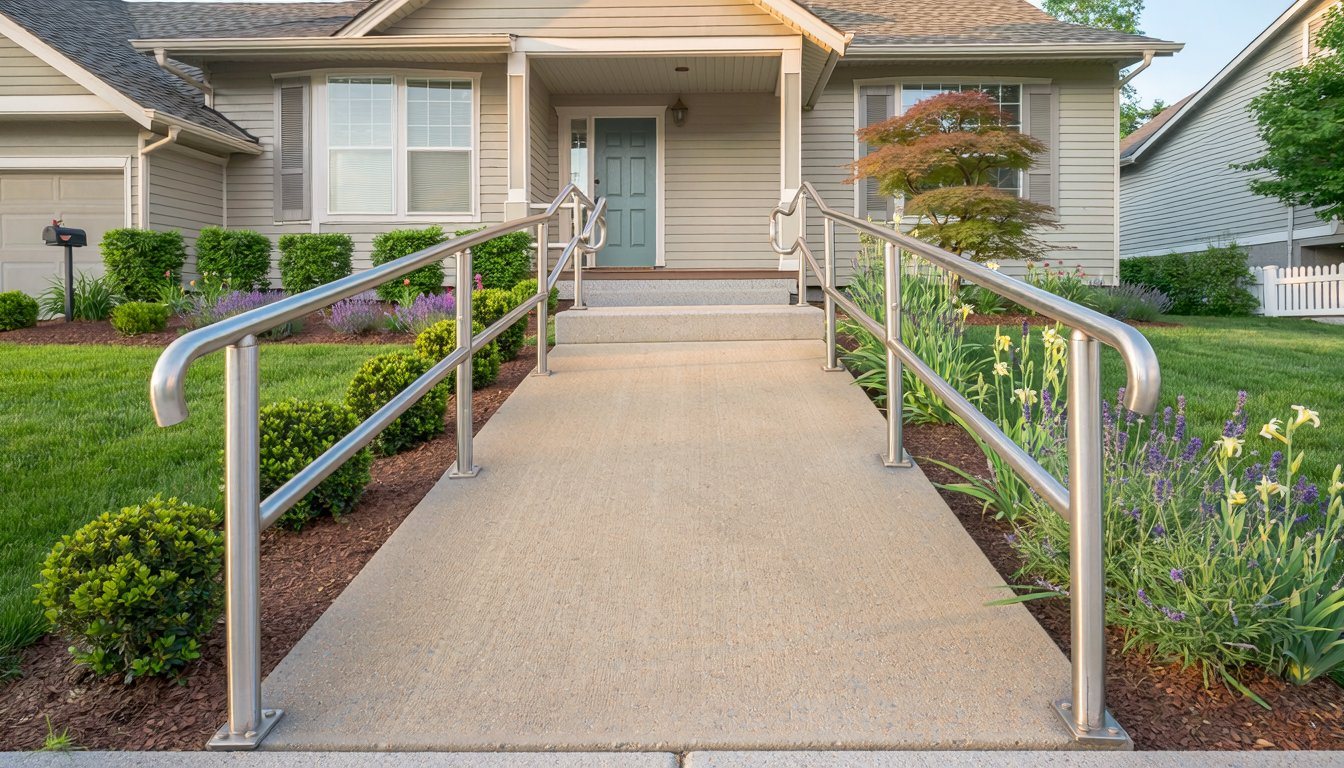
Picture two ramps built from the same material. One climbs a 6-inch step, the other a 30-inch porch. The first can be a small threshold ramp you set in place in a few minutes. The second is about 30 feet of ramp with handrails, and it costs many times more. The material, the design and the contractor all matter, but the biggest factor is decided before anyone picks them: how high the ramp has to climb. That height sets how long the ramp must be, and ramps are priced by length. This guide shows how to turn a rise into a length and a budget, what ramps cost by material, what the add-ons cost, and the tax breaks and grants that can cover part of the bill.
Quick answers
- Typical cost: Angi puts wheelchair ramp installation at $2,294 on average, with most between $1,123 and $3,591.
- By the foot: HomeGuide lists installed ramps at $100 to $250 per linear foot.
- Length follows rise: at the ADA's maximum slope of 1:12, every inch of rise needs a foot of ramp.
- Help paying: small businesses may qualify for a tax credit and a deduction; homeowners may be able to count a ramp as a medical expense, and veterans may qualify for VA grants.
Start with the rise
The ADA Standards for Accessible Design set the slope that makes a ramp usable. Section 405.2 of the 2010 ADA Standards says "Ramp runs shall have a running slope not steeper than 1:12," and section 405.6 says "The rise for any ramp run shall be 30 inches (760 mm) maximum." In plain terms: every inch the ramp climbs needs at least 12 inches of ramp, and a ramp that climbs more than 30 inches has to be broken into more than one run, with a landing between them. For small changes in level on a walkway, such as a lifted sidewalk panel, see our cracked sidewalk repair guide.
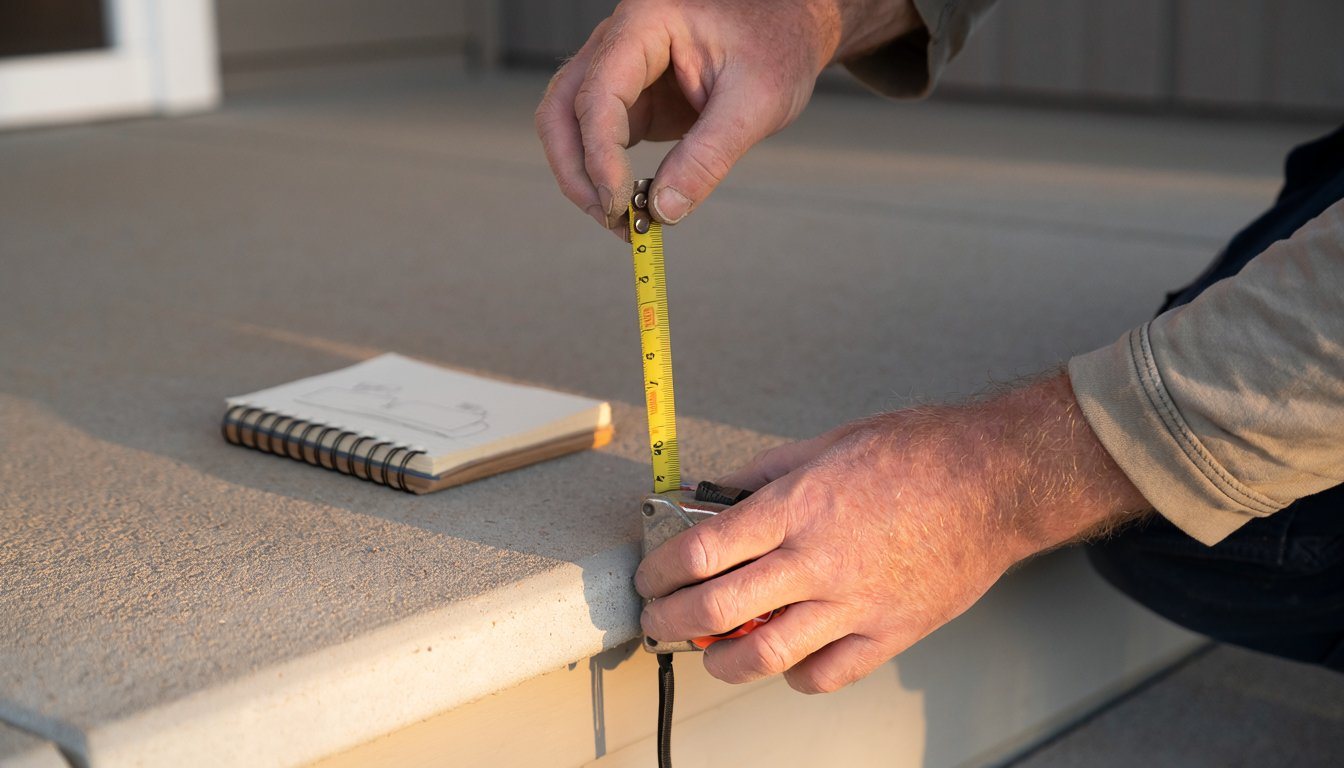
So the first step in any ramp budget is measuring the rise: the vertical distance from the ground where the ramp starts to the top surface where it ends. Here's how that turns into length at the 1:12 maximum:
| Rise | Minimum ramp length at 1:12 | Number of runs |
|---|---|---|
| 6 inches | 6 feet | 1 |
| 12 inches | 12 feet | 1 |
| 24 inches | 24 feet | 1 |
| 30 inches | 30 feet | 1 |
| 36 inches | 36 feet | 2, with a landing between |
Those lengths are for the sloped part only. Landings at the top, bottom and any turn add more, and a ramp that has to turn because of limited space costs more than a straight one. The exact landing and width rules are a topic of their own; for budgeting, count on the length of ramp plus extra for every landing.
What ramps cost
Angi's wheelchair ramp cost guide says installation "costs $2,294 on average, with a typical range from $1,123 to $3,591." Because length drives the price, per-foot numbers are more useful. HomeGuide's wheelchair ramp cost guide says prices "range from $100 to $250 per linear foot installed," and breaks that down by material:
| Material | Per linear foot, installed (HomeGuide) | What it's like |
|---|---|---|
| Wood | $100 to $250 | Built on site to fit; needs upkeep over time |
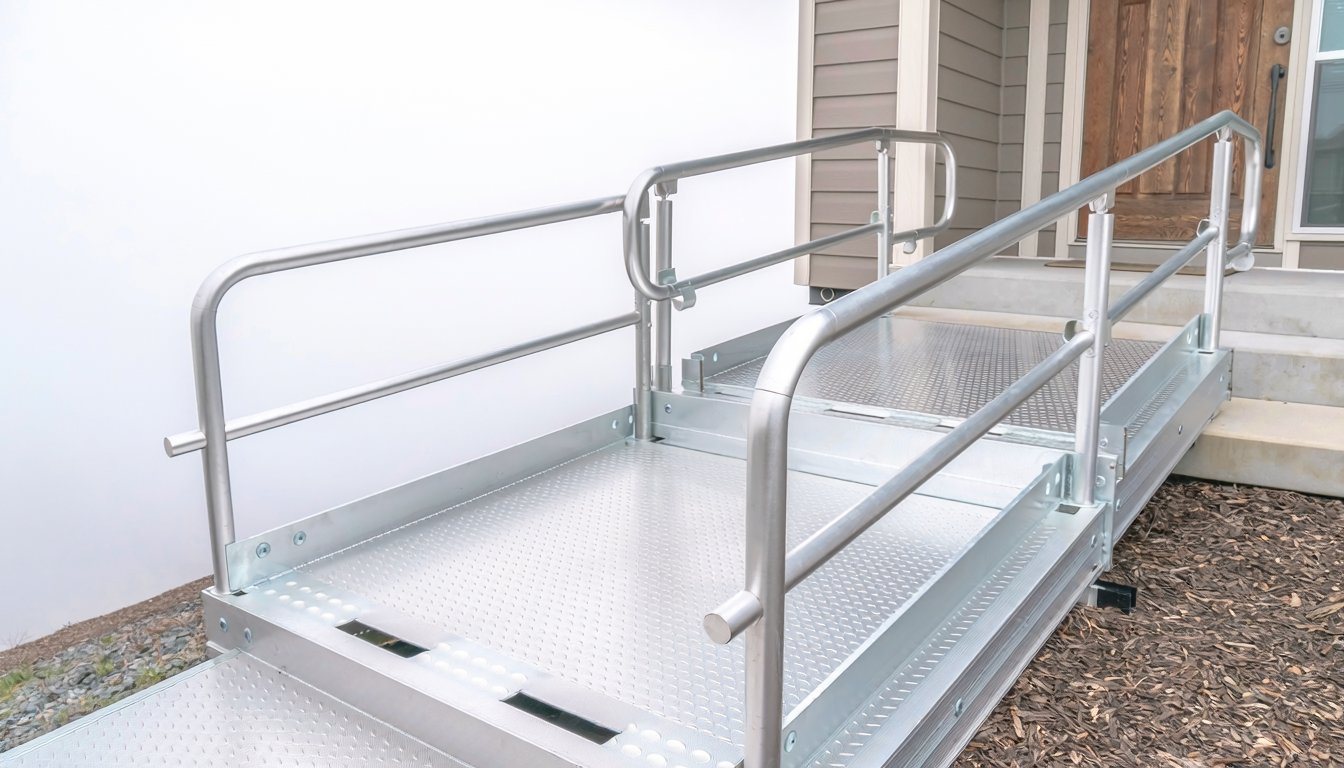
| Aluminum | $130 to $225 | Often modular; can be removed or reconfigured later |
| Concrete | $200 to $250 | Permanent; poured on site |
| Steel | $200 to $250 | Strong and durable; common for heavier use |
Material choice often comes down to how long you need the ramp. A modular aluminum system suits a need that may change or end, while concrete suits a ramp that will be part of the house or business for good. For a line-by-line look at a poured ramp, see concrete ADA ramp cost.
Add-ons that change the total
- Handrails. Angi says handrails "add $20 to $50 per linear foot."
- Landings, turns and switchbacks. Angi notes these "add to both material and labor expenses." A switchback that doubles back on itself fits a tight site but needs extra landings.
- Permits. Angi puts permit fees at $50 to $300 depending on location, where a permit is required.
- Site work. Uneven ground, a new footing or a path to the ramp can add labor that a simple price per foot won't show.
A worked example
Say the front door is 24 inches above the walkway, with room for a straight ramp. Using the numbers above:
| Item | Basis | Range |
|---|---|---|
| Ramp | 24 ft × $100 to $250 per foot (HomeGuide) | $2,400 to $6,000 |
| Handrail, one side | 24 ft × $20 to $50 per foot (Angi) | $480 to $1,200 |
| Total before landings and permit | $2,880 to $7,200 |
This is an illustration of the math, not a quote. The same rise with a turn, rails on both sides or a larger top landing will cost more. What the example shows is why measuring the rise first gives you a realistic starting point.
Threshold, rental or permanent
Not every access problem needs a built ramp. For a single step or a raised doorway, HomeGuide lists threshold ramps at "$50 to $450 each." For a temporary need, such as recovery from surgery, renting can make sense: HomeGuide puts rental ramps at $80 to $200 or more per month. In our experience, for a long-term need a permanent ramp costs less over time than months of rent, and it's the kind of improvement some grant programs will pay for.
Homes and businesses
The ADA's ramp standards apply to places open to the public. United Spinal Association's ADA expert column notes that "Very few homes are constructed to include a business so they are not considered places of public accommodation." A home ramp still works best when it follows the same gentle slope, which is why ADA ramp and wheelchair ramp are often used interchangeably. A business that serves the public has its own obligations, which is also where the tax incentives below come in; for other accessibility work on a commercial property, see our parking lot repair cost guide. For the rules a ramp at a house does have to meet, see our guide to the residential wheelchair ramp code.
Help paying for a ramp
Small businesses. The Justice Department's summary of ADA tax incentives says "Eligible small businesses may take a credit of up to $5,000 (half of eligible expenses up to $10,250, with no credit for the first $250)." It describes eligible businesses as those "with 30 or fewer employees or total revenues of $1 million or less." The credit is claimed on IRS Form 8826. Separately, "Businesses can take a business expense deduction of up to $15,000 per year for costs of removing barriers in facilities or vehicles." The two can work together, but not on the same dollars: the same page explains that when expenses exceed $10,250, "the deduction equals the difference between the total spent and the amount of the credit claimed."
Homeowners. IRS Publication 502 says improvements made to accommodate a home to a disabled condition "don't usually increase the value of the home and the cost can be included in full as medical expenses," and its examples include "Constructing entrance or exit ramps for your home." It adds that "Only reasonable costs to accommodate a home to your disabled condition are considered medical care." Medical expenses are only deductible if you itemize and meet the IRS limits, so the benefit depends on your situation.
Veterans. The VA's disability housing grants (Specially Adapted Housing and Special Home Adaptation) can pay for ramps for eligible veterans; the maximum amounts are set each fiscal year, so check the VA page for current figures. The VA's HISA program offers lifetime benefits of $6,800 or $2,000 depending on eligibility, and covers "construction of permanent ramping," but not "removable equipment or appliances such as portable ramps."
Tax rules have conditions this summary can't cover, so this is general information, not tax advice. Talk with your tax preparer before counting on a credit or deduction.
Getting a quote
Measure the rise and sketch where the ramp can go before calling anyone; our guide to how to build a wheelchair ramp covers that first step. Then ask each installer to price the straight runs by the foot and to list landings, turns and handrails as separate lines, because that's where quotes for the same door tend to differ most. Ask whether the price includes the permit and any footing or site work. Medici Construction Group is one licensed option for building ramps and accessibility improvements, holding California A, B and C-10 licenses under CSLB #1114433.
Frequently asked questions
How much does an ADA ramp cost?
Angi puts wheelchair ramp installation at $2,294 on average, with most projects between $1,123 and $3,591. Longer ramps, landings, turns and handrails push the total higher.
How much does a wheelchair ramp cost per foot?
HomeGuide lists installed ramps at $100 to $250 per linear foot: about $100 to $250 for wood, $130 to $225 for aluminum, and $200 to $250 for concrete or steel.
How long does a wheelchair ramp need to be?
At the ADA's maximum slope of 1:12, one foot of ramp for every inch of rise. A 24-inch rise needs about 24 feet of ramp, and any run can climb no more than 30 inches before a landing.
Is a wheelchair ramp tax deductible?
For homeowners, IRS Publication 502 lists entrance or exit ramps among home improvements that can count as medical expenses, if you itemize and meet the limits. Businesses may qualify for a credit and a deduction.
Can a business get a tax credit for a ramp?
Eligible small businesses may take a credit of up to $5,000 on Form 8826, and businesses can deduct up to $15,000 a year for removing barriers. The same dollars can't be counted for both; ask a tax preparer.
Does the VA pay for wheelchair ramps?
For eligible veterans, VA housing grants and the HISA program can pay for permanent ramps. HISA does not cover portable ramps.
Does Medicare pay for wheelchair ramps?
Generally no. The Medicare Rights Center's Medicare Interactive says "Medicare never covers home modifications, such as ramps or widened doors for improving wheelchair access." Medicaid programs vary by state, so ask yours.
Is it cheaper to rent a wheelchair ramp?
For a short need, yes. HomeGuide puts rentals at $80 to $200 or more per month. For a long-term need, in our experience buying or building costs less over time.