"The house is just settling" is one of the most common things homeowners hear about a new crack or a door that started sticking. For a house built two years ago, it's often true. For a house built sixty years ago, it's a reason to look closer, because most settling should have finished decades earlier. The word covers three different things: the whole house sinking evenly, one part sinking more than another, and an old house starting to move again because something changed underneath it. Only the second and third cause damage. This guide explains the difference, why older houses start moving, and how to answer the question that actually matters: is your foundation still moving, and is one part moving more than the rest?
Quick answers
- Even settling is usually harmless: when the whole foundation settles at the same rate, there's usually little or no cracking.
- Uneven settling is the damaging kind: when one part sinks more than another, walls, floors and doors show it.
- Timing matters: most settlement happens in the first few years; new movement in an older house usually means something changed, such as drainage, water or weather.
- Measure, don't guess: repeated floor elevation readings at the same points tell you whether the house is still moving.
Three things people mean by "settling"
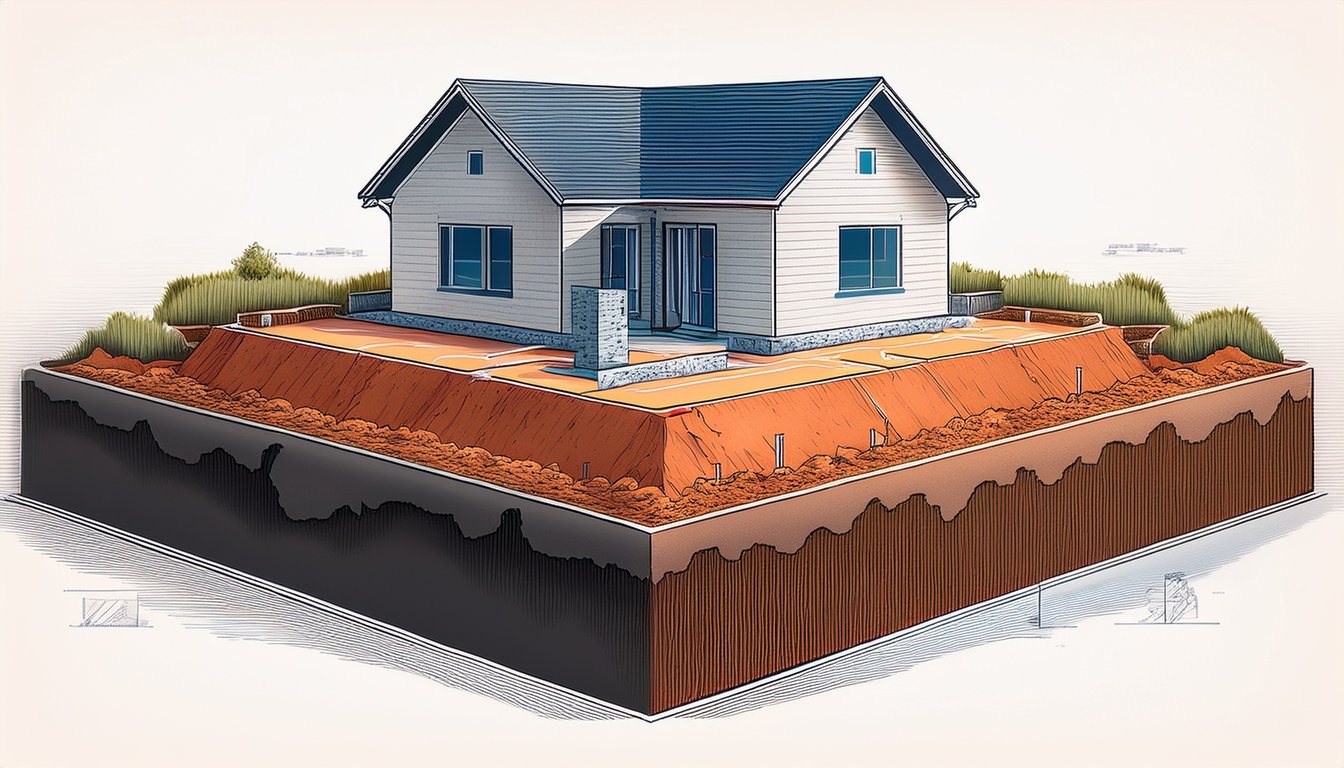
Engineers call this foundation settlement: the foundation moving downward as the soil under it compresses or shifts. Foundation settlement comes in two forms, uniform and differential, and only one of them usually causes damage. The third case below is the one that sends most owners looking for answers.
1. The whole house settling evenly
Every house presses down on the soil under it, and the soil compresses a little. Vertex, a forensic engineering firm, explains in its guide to differential settlement in buildings: "During uniform settlement, the entire foundation settles at a constant rate. Usually, there is no, or very minor, cracking during uniform settlement." If the whole house drops the same small amount, nothing gets stretched or twisted.
2. One part settling more than another
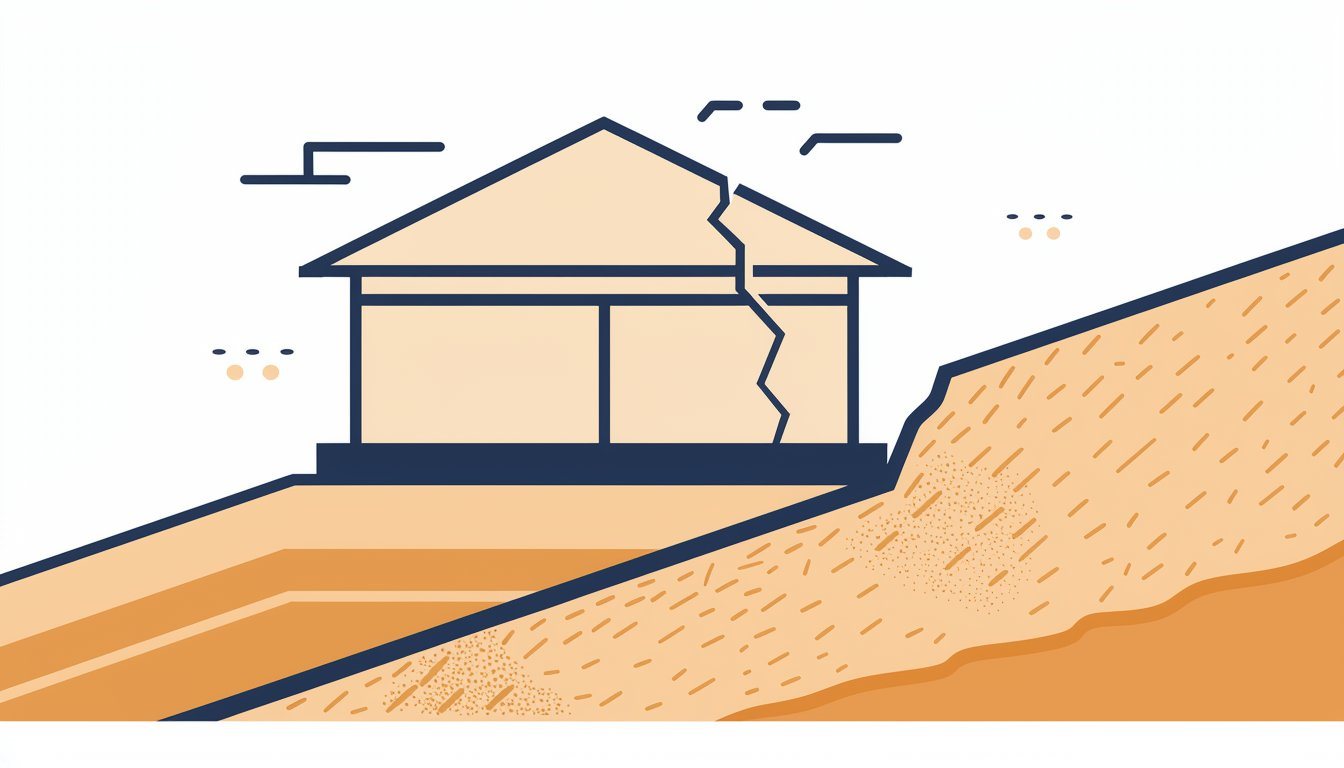
Damage comes from uneven movement. The International Association of Certified Home Inspectors gives a classic example in its article on soils and settlement: "A common scenario is when a structure is built partially on undisturbed soil and partially on compacted fill. Soil in these two areas will consolidate at different rates... This is called 'differential settlement.'" When one corner drops and the rest doesn't, the frame has to absorb the difference, which is where cracks, sloping floors and sticking doors come from. Our guide to common house foundation problems walks through those signs.
3. An old house moving again
Vertex also notes that "Most building settlement occurs during the first few years after construction, unless there are changes in the drainage patterns around the building, severe changes in weather, or other external factors." That's the key to reading an older house. If a house stood still for decades and is now showing fresh cracks, the explanation is rarely that it's still settling from construction. Something around or under it changed.
Why an old house starts moving again
These are the common reasons, with a note on why each one tends to produce uneven movement rather than the whole house settling together.
- Water where it didn't used to be. A new downspout outlet, a regraded yard, a leaking pipe or irrigation can soften the soil under one side of the house. InterNACHI explains that excess moisture can leave soil "less dense, which reduces its ability to support a load." Because water rarely reaches every footing equally, the result is usually uneven. Our guide to water under a house and leak detection guide cover finding the source.
- Clay that shrinks and swells. Clay soils change volume with moisture. Geology.com notes that with expansive soils, "the situation where greatest damage occurs is when there are significant and repeated moisture content changes." Wet winters and dry summers, or a drought followed by heavy rain, work the soil differently around the edges of a house than under its middle.
- Fill on hillside lots. Many California hillside lots were made flat by cutting one side and filling the other. Fill that wasn't well compacted can keep compressing, while the cut side sits on firmer ground. The geology and soils section of the LA River Master Plan's environmental review, published by Los Angeles County Public Works, puts it plainly: "Buildings, structures, and other improvements may be subject to excessive settlement-related distress when compressible or collapsible soils are present." This is the textbook setup for one side sinking.
- Earthquakes. On loose, saturated ground, shaking can cause sudden settlement. The U.S. Geological Survey's page on the effects of earthquakes notes that "Liquefaction enhances ground settlement and sometimes generates sand boils." Our foundation cracks guide covers how earthquakes show up in cracks.
- Trees and roots. In our experience, large trees close to a house can dry the soil under the nearest footings in summer, which tends to affect one side more than the others. Roots lifting a sidewalk are a separate problem, covered in our cracked sidewalk repair guide.
How to tell if your foundation is still moving
Cracks, sticking doors and sloping floors tell you movement happened at some point. They don't tell you whether it's happening now. A crack that's been the same width for twenty years and a crack that's growing every season look similar on any given day. Our foundation cracks guide explains how to log a crack over time; the other half of the picture is floor elevations.
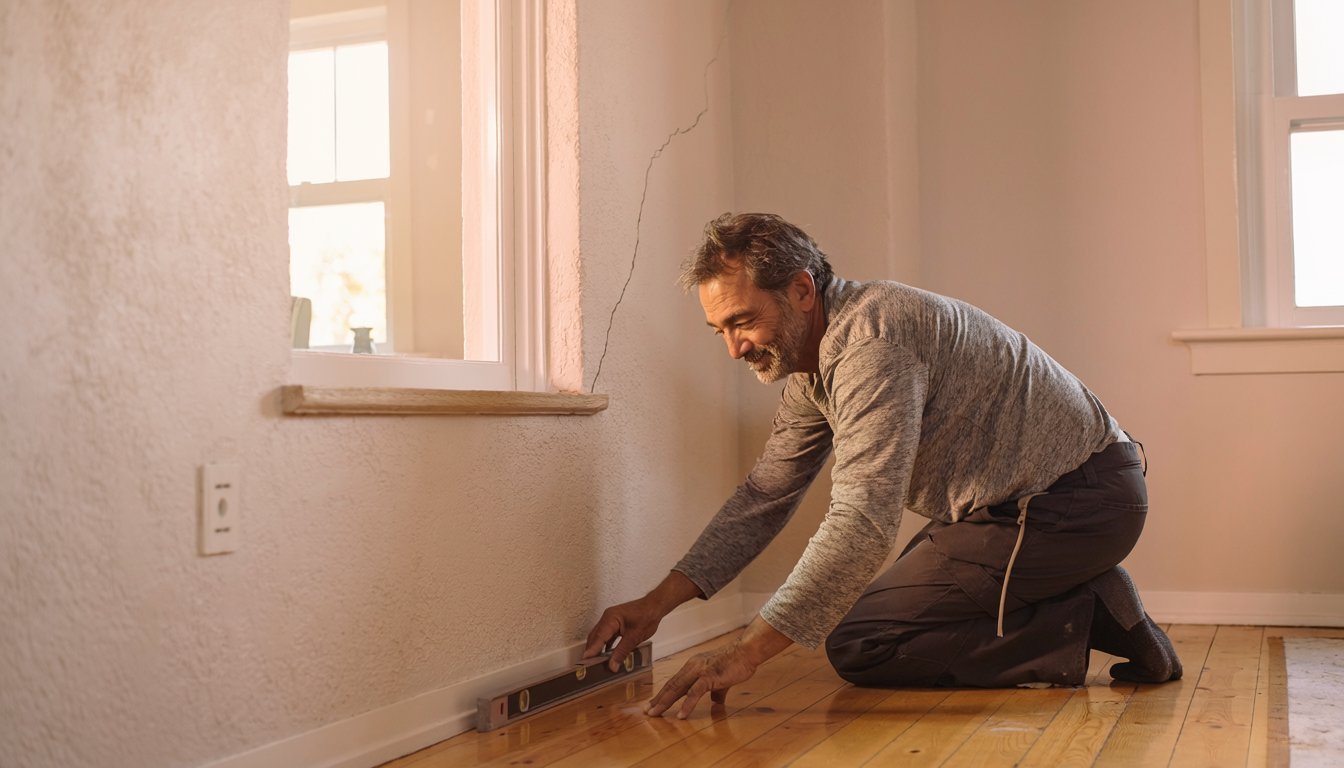
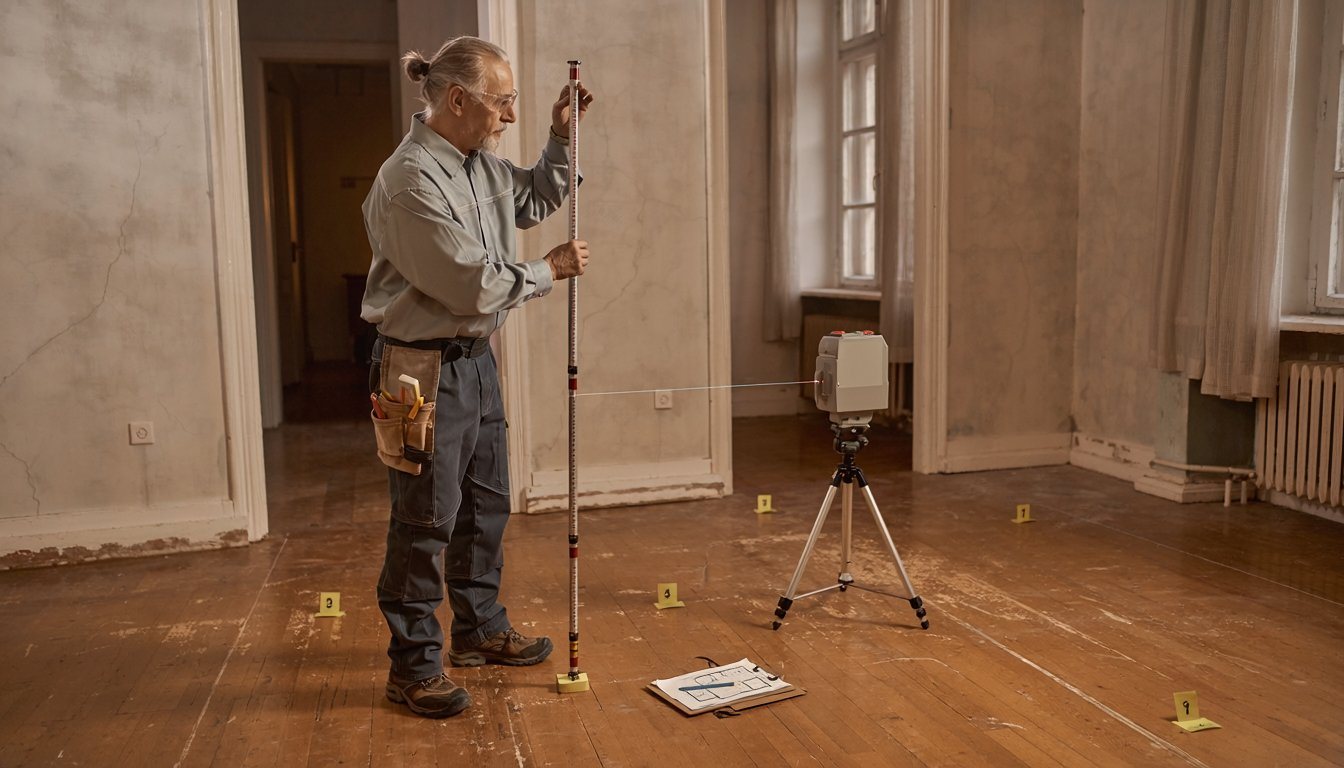
Engineers answer the "still moving?" question by measuring floor elevations at fixed points and repeating the measurements later. The Foundation Performance Association, a Houston-based nonprofit of foundation engineers, describes the method in its guidelines for evaluating foundation movement:
- "Floor Elevations should be measured using a level measuring device with an accuracy of ±1/8" or better."
- The survey compares readings over time: "Time-change Elevation is the change in Elevation of a Monitor Point over a Monitor Period."
- Where you measure matters: "Monitor Points should not be located on a wearing surface, such as a high-traffic carpeted area in a doorway."
The idea is simple. One survey shows the shape of the floor today, which in an old house is rarely perfectly flat. Two surveys, months apart and at the same points, show whether anything changed. In our experience, taking readings in different seasons is especially useful on clay, where movement can follow the weather.
You can record your own baseline with a good level at points you mark and can find again, but an engineer's survey is what to rely on if readings seem to be changing or you're making a repair or purchase decision. Our foundation inspection guide explains what an engineer's visit covers.
How much out of level is too much?
There's no single California code number that says a house has settled too much. Two published benchmarks come up often, and it helps to know what each one is and isn't.
An engineering guideline. The Texas Section of the American Society of Civil Engineers' guidelines for evaluating residential foundations borrows a number from the residential building code: the code "specifies a maximum allowable live load deflection of any structural floor member of L/360," which the guideline says "may be appropriate for the analogous in-service deflection of a residential foundation." That's a floor-framing limit offered as a benchmark, not a foundation requirement in California or anywhere else. The same guideline adds a practical line: "A floor slope greater than 1 percent is usually noticeable."
New-home workmanship standards. The National Association of Home Builders' Residential Construction Performance Guidelines say "The floor should not slope more than ½ inch in 20 feet" for wood floors, and that concrete floors in living areas "should not have pits, depressions, or areas of unevenness exceeding 3/8 inch in 32 inches." Those are workmanship standards for new construction and remodeling work. They don't define acceptable movement in a house that's been standing for decades.
For an older house, the more useful question is whether the slope is changing. A floor that's been an inch out of level since 1965 is a different situation from one that dropped half an inch since last winter, and a structural engineer is the right person to judge which one you have.
Settling or heaving?
Not all foundation movement is downward. Expansive clay can also swell and push part of a house up, which can produce the same cracks and sticking doors as settlement. Repeated elevation readings tell you which direction the movement is going, which matters because the causes, and the fixes, are different.
How a settling foundation gets fixed
Repair follows the cause, and in our experience the order of work matters as much as the method. A typical path looks like this:
- Stop the water. If a leak, a downspout or irrigation softened the soil, fixing that comes first. Lifting a house while the soil under it is still getting wetter usually means doing the job twice.
- Wait and measure. Once the water source is fixed, a second round of elevation readings shows whether the movement has stopped on its own. Sometimes it has, and the repair becomes cosmetic.
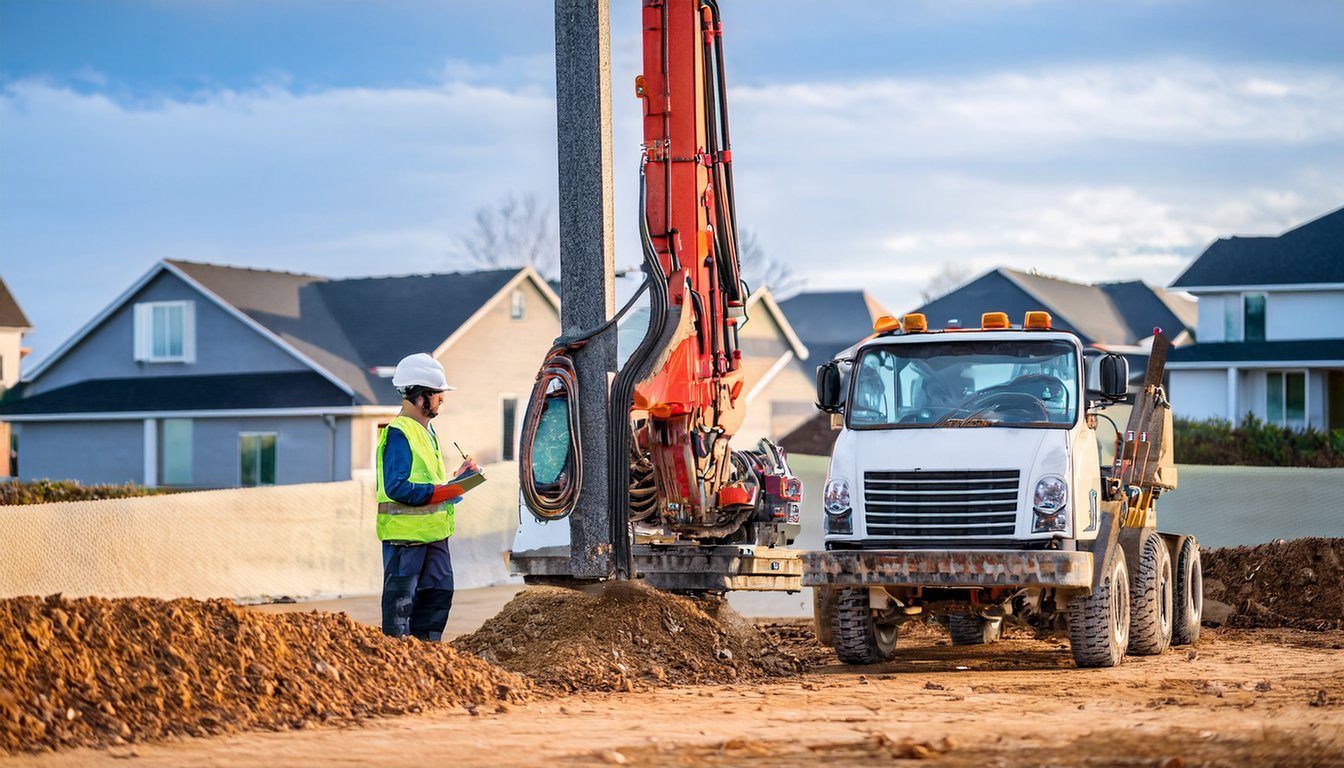
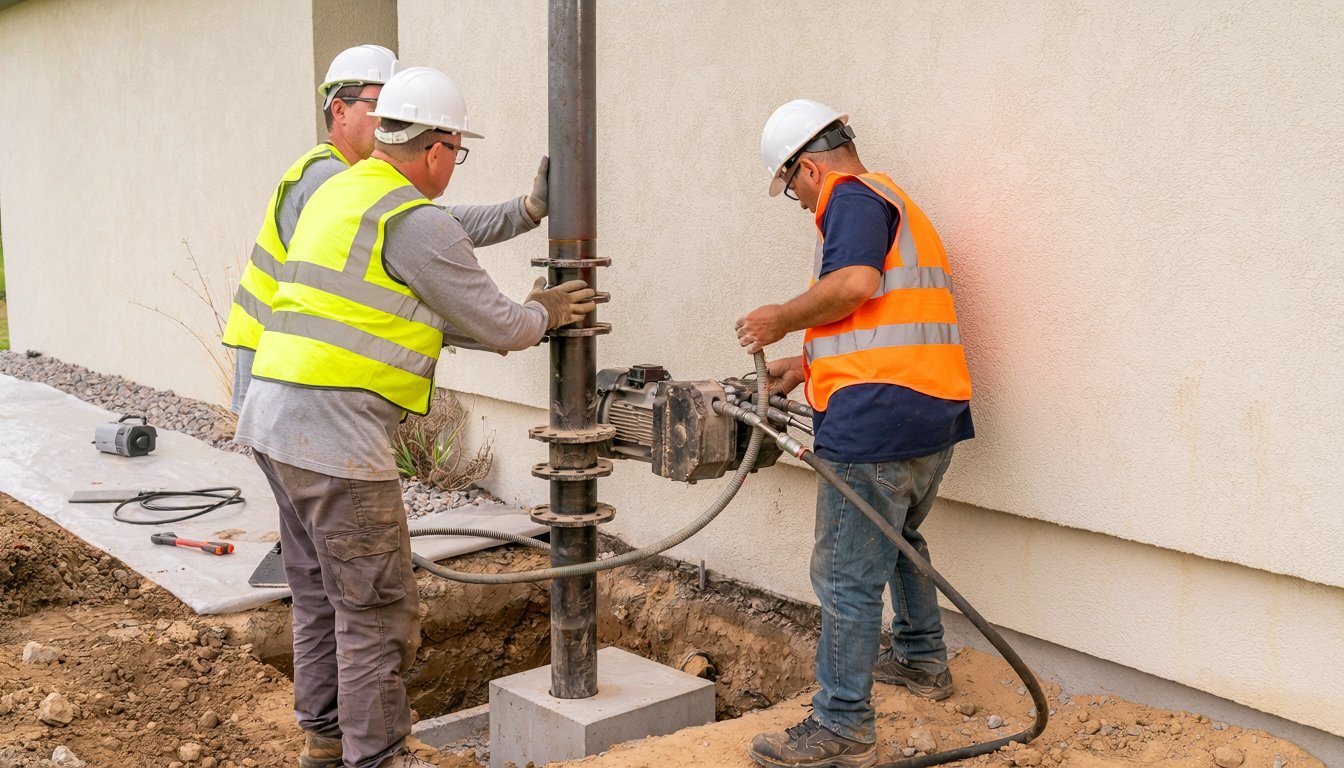
- Support the footing that's sinking. When the soil can't carry the load, the engineer may specify underpinning: piers driven or screwed down to firmer soil, or new concrete placed under the existing footing. On hillside fill, the support may need to reach well below the fill into native ground.
- Level what can be leveled. On a raised foundation, low spots in the floor framing can often be shimmed or jacked back toward level from the crawlspace. A slab is harder; lifting it is a specialty job, and some slope may be left in place if it's stable.
- Repair the finishes last. Cracks in drywall and stucco, sticking doors and trim gaps are fixed after the structure is stable, so they don't reopen.
Expect the engineer, not the repair contractor, to choose the method. A bid that recommends piers before anyone has looked at drainage or taken readings is skipping the diagnosis.
What to do next
- Write down what you see and when. Crack widths, doors that stick, and when each started.
- Record a baseline. Mark a few floor points and take readings, then repeat them in a few months.
- Look for a change around the house. New drainage, a leak, a regraded yard or a big tree nearby.
- Call a structural engineer if readings or cracks are changing, or if you're about to buy or sell. Repair options are the engineer's call once the cause is known; our foundation repair process guide explains what happens after that. If the soil under the footings turns out to be the problem, our guide to foundation underpinning covers the options.
Medici Construction Group is one licensed option for foundation and drainage work, holding California A, B and C-10 licenses under CSLB #1114433. If the house does need lifting, our guide on how to level a house foundation explains why the goal is acceptably level, not flat.
Frequently asked questions
Is it normal for a house foundation to settle?
Yes. Every house settles a little as the soil compresses under it. Even settling across the whole foundation usually causes little or no cracking; uneven settling is what causes damage.
How long does a house keep settling?
Most settlement happens in the first few years after construction, according to Vertex, a forensic engineering firm, unless drainage, weather or other outside conditions change. New movement in an older house usually has a new cause.
How do I know if it's just settling or a foundation problem?
Settling that stopped years ago and left old, stable cracks is usually not a concern. Movement that's uneven and still happening is. Repeated floor elevation readings and a crack log over several months show which one you have.
How can I tell if my foundation is sinking?
Measure floor elevations at fixed points with an accurate level and repeat the readings later. The Foundation Performance Association's guidelines call for a device accurate to ±1/8 inch and comparing the same monitor points over time.
How much foundation settling is acceptable?
There's no California code limit for an existing house. A Texas ASCE guideline offers L/360 as a benchmark and notes a floor slope over 1 percent is usually noticeable; for an older house, whether the slope is changing matters more than a single number.
What causes a foundation to settle?
Soil compressing under the house's weight, plus changes that affect the soil later: water from leaks or drainage, clay drying and wetting, poorly compacted fill, and on loose saturated ground, earthquakes.
Can an old house start settling again?
Yes. When drainage patterns change, a pipe leaks, the weather swings hard or the soil under part of the house loses support, an old house can start moving again, usually unevenly.
How do you fix a settling foundation?
Fix the cause first, usually water from leaks, drainage or irrigation, then measure again to see if the movement has stopped. If the soil still can't carry the load, an engineer may specify underpinning, and floors can then be leveled where practical before cracks and finishes are repaired.