Most property owners meet their sewer lateral for the first time when it fails: a backed-up drain, a wet patch in the lawn, or a plumber’s camera showing roots and a broken clay pipe. In the City of Los Angeles and most neighboring cities, that pipe is the owner’s responsibility all the way to the public main, including the section under the sidewalk and street. This is what a correct replacement involves.
Step 1: Camera inspection and locate
Before anyone digs, the line is video-inspected end to end. The camera tells us the pipe material, where it is broken, how deep it runs, and where it ties into the main. We mark the route on the surface and call in utility locating so gas, water, power, and communications are painted out before the first cut. Skipping this step is how a sewer job turns into a gas leak.
Step 2: Choose the method
There are two ways to replace a lateral, and a good contractor will explain which one fits your site and why.
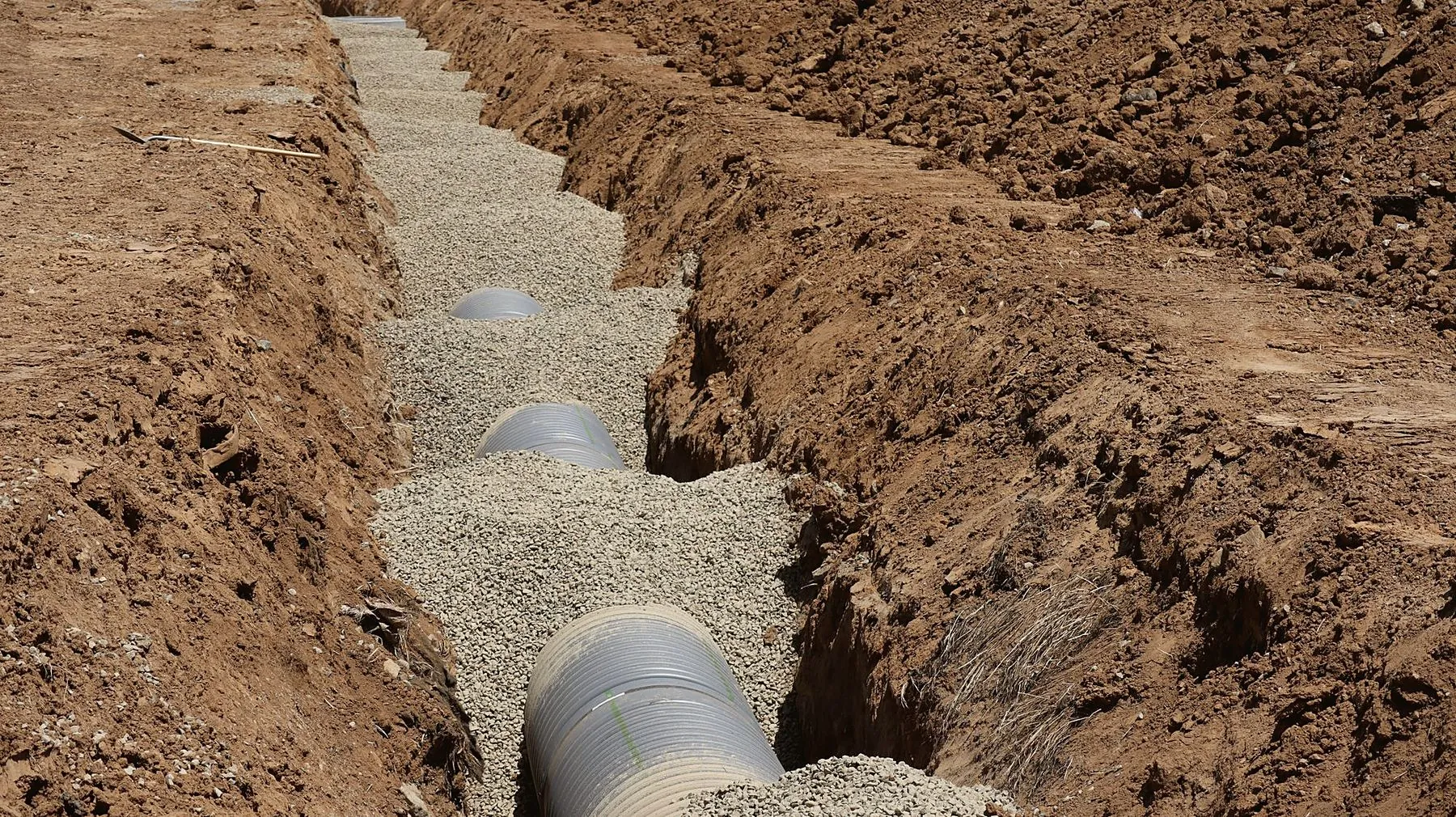
- Open trench. The old pipe is excavated and replaced with new pipe on engineered bedding. It is the right call when the pipe is shallow, the grade is wrong, or the line has bellied and needs to be re-laid to slope.
- Trenchless (pipe bursting). A new pipe is pulled through the path of the old one from two small pits. It saves driveways, mature landscaping, and street pavement. It requires the existing line to have reasonable grade and no collapsed sections.
The price difference is usually smaller than people expect once surface restoration is added to the open-trench number.
Step 3: Permits
A lateral replacement needs a plumbing permit from the city. If any part of the work is in the public right-of-way, which it almost always is, it also needs an excavation or street-use permit, and the contractor must carry the insurance and license the city requires to work in the street. Only a licensed Class A General Engineering contractor can self-perform that part of the work in California. Ask who is pulling the permits and whose license is on them.
Step 4: Excavation and shoring
Any trench five feet or deeper must be shored, sloped, or shielded under Cal/OSHA rules, and the crew needs a competent person on site. Sewer laterals in the Valley and the basin commonly run six to twelve feet deep at the main. This is where experience shows: the trench is boxed, the spoil is staged away from the edge, and traffic control is in place before the excavator arrives.
Step 5: Pipe, bedding, and the tie-in
New laterals are typically SDR 35 PVC or, in some jurisdictions, cast iron or HDPE. The pipe is laid on compacted sand or gravel bedding to a continuous slope of at least an eighth of an inch per foot, a quarter inch where the grade allows. A two-way cleanout goes in near the property line so the line can be serviced without digging again. The connection to the city main is made with an approved saddle or fitting and inspected before backfill.
Step 6: Inspections
Expect at least two: a rough inspection with the pipe exposed and, where required, a pressure or water test, then a final after backfill and surface restoration. The city inspector’s sign-off is what protects you at resale and in any insurance claim.
Step 7: Backfill, compaction, and restoration
The trench is backfilled in lifts and compacted to the city’s specification, then the surface is restored: concrete sidewalk to city standard, asphalt to the required depth and pattern, landscaping to your standard. A trench that settles six months later means the backfill was not compacted. That part of the job is invisible on day one and obvious a year later.
What to ask before you hire
- Can I see the camera video before and after?
- Which method are you proposing and why?
- Whose license is on the street permit? Is it Class A?
- How will the trench be shored?
- What compaction standard will you meet, and who inspects it?
Medici Construction Group self-performs sewer laterals, mains, and the concrete and paving restoration that follows under one Class A, B, and C-10 license. If your line is failing right now, we answer the phone 24 hours a day. Otherwise, request a bid and we will start with the camera.